

Quick answer
Cam model pricing should start with a retained-income floor, then arrange offers by access, attention, scarcity, and labor. Calculate requirements on both paid-hour and total-working-hour bases, and compare like with like. Give tips, private sessions, ticket shows, memberships, bookings, and custom work distinct boundaries. Test one change against monthly take-home and total labor; saved preparation time creates income only when there is demand to fill it.
Cam model pricing is an architecture, not a menu
Choose prices together, not offer by offer. The right structure gives casual viewers an easy first purchase, protects the premium attached to dedicated attention, and prevents labor-heavy benefits from quietly undercutting the rest of the business.
A creator can have sensible-looking prices and still have a broken business. A cheap private rate may pull spend away from public tipping; a generous membership may turn recurring revenue into an open tab for unpaid messages; a custom request may look lucrative until planning and revisions are counted. The reader's real decision is therefore not "What should this item cost?" It is "What job should each offer do, and what must remain more valuable than it?"
Use four dimensions to separate offers: access, attention, scarcity, and labor. Access asks who can enter. Attention asks whether the buyer shares the creator or has exclusive focus. Scarcity covers a fixed event, limited slot, or deadline. Labor includes preparation, moderation, follow-up, editing, and delivery as well as camera time. If two offers score alike on all four dimensions but carry very different prices, the gap needs a reason. If the cheaper one delivers more, it is probably cannibalizing the expensive one.

For a platform operator, this architecture must also be legible in the product. Creators need to understand what the buyer receives, when charging starts, what happens after a session, and which work is included. Buyers need visible boundaries before paying. Clear offer definitions reduce the temptation to solve every sales objection with a discount. They also make creator performance comparable without pretending that gross spend and creator earnings are the same number.
Calculate the minimum sustainable rate first
Calculate the retained revenue needed to cover the income target and creator-paid costs. Divide by expected paid hours for a paid-hour floor, or by total working hours for a whole-workload floor. Both describe the same requirement; neither can be compared with a rate using the other denominator.
Use this proposed calculator: required retained receipts = target take-home plus creator-paid operating costs. Paid hours = total working hours multiplied by paid utilization. Divide the requirement by paid hours, then by the retained share, for required gross receipts per paid hour. Keep one accounting period. Here, take-home is after operating costs but before personal taxes; add an applicable tax reserve separately.
Consider a hypothetical four-week month: a $4,000 take-home target, $800 in creator-paid operating costs, 120 total working hours, 40% paid utilization, and a 70% retained share after the platform share. Assume no other deductions or refunds. Paid time is 48 hours, leaving 72 unpaid hours. The $4,800 retained requirement means $100 per paid hour or $40 per total working hour. Dividing the paid-hour requirement by 0.70 gives about $142.86 gross per paid hour. These are planning assumptions, not benchmarks.

The paid-hour floor is a blended portfolio requirement, not an automatic private-show price. Shared tickets and custom purchases need their own workload accounting. Monthly utilization already allocates free-room time, preparation, editing, and administration across paid hours. Do not allocate that unpaid work again. An offer-level labor calculation explains time use, but needs the same denominator as the floor before comparison.
Run the calculation on money the creator can actually withdraw. Token conversion, platform share, payment fees, currency conversion, reserves, and payout charges may sit at different points in the flow. Map them once and avoid deducting the same cost twice. The adjacent guide to cam model payout methods is useful here because a nominal rate cannot protect margin when the cash-flow model is misunderstood. A reserve can delay cash availability without becoming a permanent expense; record the distinction.
Build the offer-ladder worksheet
Give each format one commercial role and one explicit boundary. The worksheet below is a decision tool: complete every row, compare neighboring offers, and repair any step where the cheaper option gives equal or greater access, attention, scarcity, or labor.
| Offer | Commercial role | Included value | Protect this boundary |
|---|---|---|---|
| Public tips | Easy participation | Brief shared recognition or room progress | No open-ended personal labor |
| Private session | Dedicated live attention | Exclusive or limited-audience time | Clear start, minimum charge, and end |
| Ticket show | Shared premium event | Scheduled themed access | Do not promise private attention |
| Membership | Continuity and retention | Repeatable access or content benefits | Cap labor-intensive benefits |
| Booking | Reserved availability | A protected time slot and defined session | State cancellation and no-show rules |
| Custom work | Bespoke outcome | Agreed scope, production, and delivery | Price revisions, rush work, and usage separately |
Read the table vertically. Public tips convert attention already being supplied to the room; they should not buy the same sustained focus as private time. A ticket show sells admission to a shared, scheduled experience, so it can sit above casual tips without becoming a discounted private. A booking sells certainty of availability, which may justify separate cancellation terms. Custom work sells a scoped outcome rather than a clock alone. Membership sits across the ladder: it should encourage return visits while preserving reasons to purchase higher-labor offers.
Use a simple cannibalization test. For each neighboring pair, ask whether a rational repeat buyer could obtain the desired result more cheaply by choosing the lower rung. If yes, change the benefit, boundary, or price—not all three at once. A membership that includes frequent bespoke requests is not merely generous; it has absorbed custom work. A ticket show with prolonged individual attention has drifted toward private service. The label cannot rescue an offer whose economics say otherwise.

The ladder does not dictate one universal mix. A performance-led room may rely on public momentum and ticket events; a consultation-led creator may emphasize bookings and private sessions. If the boundary between those live formats remains unclear, compare public vs private cam shows before changing rates. The useful question is not which format is superior, but which kind of attention the audience is buying and whether the interface communicates that distinction.
Work the numbers across the whole month
The hypothetical plan already meets its income goal at the current rate. Test that conclusion on monthly receipts and paid hours before changing prices. Preparation savings may improve the workload, but they increase monthly income only when the released capacity attracts additional paid demand.
Return to the hypothetical monthly plan. Assume all 48 paid hours earn $150 gross per paid hour, with the same 70% retained share and $800 costs. Gross receipts are $7,200; retained receipts before costs are $5,040; take-home after costs is $4,240. That exceeds the $4,000 goal. The retained paid-hour rate is $105 against a $100 requirement. Across all 120 working hours, retained receipts before costs are $42 per hour against a $40 requirement. Both comparisons reach the same conclusion.
Now assume, hypothetically, each paid hour involves 15 unpaid minutes of setup and follow-up. Across the month that is 12 hours, already inside the 72 unpaid hours, leaving 60 for other unpaid activity. The resulting $84 retained per hour of session-related labor describes only that slice of work; comparing it with the $100 paid-hour floor would be invalid. The worksheet's discovery is a possible capacity improvement, not a shortfall that requires a higher private rate.
In a separately named efficiency scenario, assume preparation falls to 6 minutes per paid hour, with paid demand still at 48 hours and all other inputs unchanged. Preparation becomes 4.8 hours, freeing 7.2 hours. Take-home remains $4,240; the creator can stop earlier or use the time elsewhere. If the same 60 hours of other unpaid activity remain necessary, actual work falls to 112.8 hours. Additional sales require demand and their own preparation time. Freed hours are capacity, not receipts waiting to be collected.
Keep the current rate as the baseline. Track gross receipts, creator-retained receipts, operating costs, paid hours, total labor, refunds, and movement between offers. Here, retained receipts are after the platform share but before the separately stated costs; take-home subtracts those costs once. For a real portfolio, include each offer's receipts and labor in the monthly totals rather than assuming private time earns everything. Pair this ledger with cam model analytics to check conversion and repeat purchase. A rate increase is a separate demand test, justified by evidence about capacity or value, not by mixing hourly denominators.
Test one controlled change, then operationalize it
Document the current ladder, identify its weakest economic boundary, change one variable, and evaluate a complete buying cycle. Keep the baseline definitions fixed. Retain a change when the portfolio or workload improves, rather than when an isolated hourly figure merely looks larger.
- Map every offer, its buyer promise, charging unit, included labor, refund path, and creator-retained share.
- Calculate the monthly retained requirement and express it on both paid-hour and total-working-hour bases.
- Complete the ladder worksheet and flag any cheaper offer that supplies equal or greater value on the four dimensions.
- Choose a specific leak or capacity constraint; do not treat an already viable baseline as a compulsory price increase.
- Test one change, recording receipts, deductions, paid hours, total labor, and where any saved time actually goes.
- Keep, revise, or reverse the change using monthly take-home, workload, conversion, repeat purchase, refunds, and offer movement.
This method does not produce a universal rate card. Without demand evidence, utilization is provisional; a waiting list suggests a capacity decision. Check whether saved minutes form usable slots or scattered gaps. Payment arrangements, taxes, and consumer-protection rules change the feasible structure. Validate age assurance, performer verification, consent, content controls, privacy, and payout compliance with qualified advisers and providers for each market.
Compare like with like. A rate tested during a different traffic window may appear responsible for demand that actually came from scheduling. Establish the best time to cam for the relevant audience before attributing a revenue change to price. Likewise, a creator assisted by an agency may face different retained shares, operating support, and control; the cam model agency vs independent comparison matters before copying another creator's public menu.
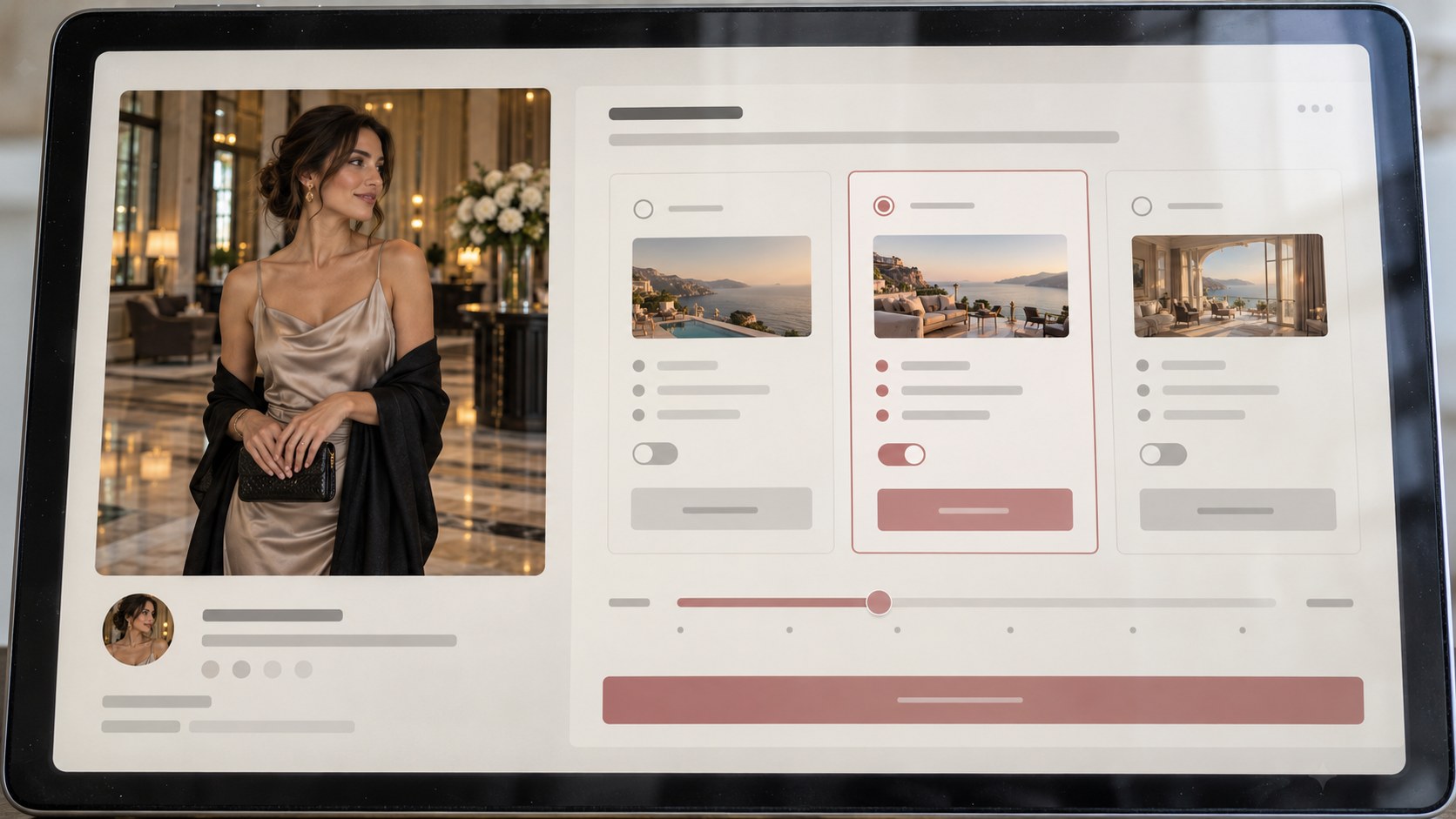
Verify the change in staging: configure the offer, complete a buyer payment, reconcile the creator balance, simulate a cancellation or refund, and export calculator inputs. Confirm which fees survive a refund and whether no-show charges are retained or returned; record each flow once. Give creators a written test brief holding promotion and schedule steady. Finish with a reconciled monthly ledger and labor log.
Turn the pricing ladder into platform logic
A coherent ladder needs software that can express its differences. Scrile Stream is a customizable white-label platform for branded live streaming and paid video chat, with private and group HD streaming, pay-per-minute sessions, tips, paid content, payment integrations, admin controls, and custom branding. Scrile also provides custom development and project management when the commercial model needs tailored workflows.
Use the calculator and worksheet to define what each offer must protect, then bring that logic to a demo or consultation. The useful conversation is concrete: how buyers pay, how creators earn, which boundaries the interface enforces, and what must be customized before launch.
Frequently asked questions
How should a new cam model set prices?
Start with a minimum retained hourly floor based on income target, costs, total working time, paid utilization, and retained share. Then give public tips, private time, events, memberships, bookings, and custom work separate roles. Early prices are hypotheses; change one variable and measure total labor as well as paid time.
Should private shows always cost more than public tips?
Compare the value delivered, not just the displayed units. Private service should protect the premium for dedicated attention, while public tips buy brief shared participation. If repeated public purchases buy the same sustained attention more cheaply, one of the boundaries is unclear.
How do I calculate a minimum cam rate?
Divide the take-home target plus creator-paid operating costs by expected paid hours to get required retained revenue per paid hour. Then divide by the creator's retained share to get required gross receipts. Recalculate using total labor when evaluating a specific offer.
What costs belong in cam model pricing?
Include creator-paid fixed and variable costs that support the work, plus unpaid preparation, moderation, messaging, editing, delivery, and administration. Map platform and payment deductions in their actual order, and do not deduct a fee twice when starting from a net figure.
Can a membership cannibalize private sessions?
Yes, if the membership includes labor or dedicated access that buyers would otherwise purchase privately. Preserve the membership's continuity role with repeatable, bounded benefits, then charge separately for scarce time, bespoke attention, and custom production.
How often should cam prices change?
Change them when evidence identifies a specific problem, not on an arbitrary calendar. Test one variable through a complete buying cycle, compare it with a consistent baseline, and keep or reverse it using effective net revenue, conversion, repeat purchase, refunds, and offer movement.
Which metric best shows whether a price works?
Use creator-retained net revenue per total working hour as the primary economic check, then review conversion, repeat purchase, refunds, and movement between offers. No single metric is sufficient: a higher hourly return can still damage the portfolio if demand or retention falls sharply.
What should a cam platform operator provide for pricing?
Provide distinct offer types, clear charging and cancellation logic, transparent creator balances, configurable boundaries, and exports that reconcile purchases, deductions, refunds, and payouts. Operators should also make buyer promises visible before payment and validate compliance for each market served.