

Quick answer
In the cam model agency vs independent decision, choose independence when you can manage your workspace, equipment, promotion, safety, records, and schedule without operational help. Consider a studio when you genuinely need a secure room, reliable internet, equipment, or hands-on training. Consider an agency when it can prove valuable promotion or management without taking ownership of your identity, accounts, audience, or exit. Compare retained income and contractual control—not promises—before signing.
Cam model agency vs independent: which model fits your situation?
Independent work offers the greatest control over schedule, boundaries, branding, customer relationships, and earnings. A studio solves physical operating problems; an agency is supposed to solve commercial ones. Neither deserves a share merely for being present.
Start with the scarce resource. If you lack privacy, stable internet, suitable equipment, or a safe place to stream, a reputable studio may make work possible. If those basics are covered but discovery, administration, or negotiation consume too much attention, an agency may help. Otherwise, independence avoids another party controlling decisions you can already make. Creators still learning how to be a cam model may value structured onboarding, but training must lead to transferable skills rather than permanent dependence.
| Model | Best fit | Main advantage | Main exposure |
|---|---|---|---|
| Independent | Creator has workspace and operating discipline | Maximum control and direct account access | Creator handles setup, promotion, records, and support |
| Studio | Creator needs facilities or close practical help | Room, equipment, connectivity, and on-site assistance | Revenue share, surveillance, schedules, or weak exit terms |
| Agency | Creator has production capacity but needs commercial execution | Promotion, administration, and management | Fees without measurable lift; possible loss of account control |

Treat labels cautiously. One “agency” may only answer messages, while another supplies an account manager, campaign planning, editing, and reporting. A “studio” may provide an excellent private room or little more than a webcam and a key. Ask for a written inventory of services, who performs each task, and what evidence will show that it happened. If the provider cannot translate support into observable deliverables, compare it as rented infrastructure—not as a growth partner. Your next action is to describe the operational gap in one sentence before discussing any revenue share.
Compare retained value, not the advertised revenue share
The cheapest-looking option is not always the most profitable, and the highest gross payout is not always the best business. Compare what you retain after platform deductions, partner fees, operating costs, unpaid administration, and restrictions that weaken future earning power.
Put every offer into the same operating model. Record who pays for the room, connection, camera, lighting, wardrobe, editing, chargebacks, promotion, and payout administration. Then identify what the agency or studio changes: more paid sessions, higher customer retention, fewer cancelled hours, or simply less work for you. A provider that takes a share while offering vague “exposure” has supplied a noun, not a service. Independents should likewise count replacement equipment, bookkeeping, moderation, and the opportunity cost of handling everything alone.
| Decision factor | What to verify | Warning sign |
|---|---|---|
| Fees | Complete deduction order and payout statement example | Undefined expenses or deductions changed verbally |
| Scheduling | Minimum hours, penalties, leave, and availability rules | Flexibility promised but not written |
| Promotion | Named channels, deliverables, reporting, and account access | Guaranteed growth without a measurable plan |
| Equipment | Condition, privacy, maintenance, and replacement responsibility | Costs charged without approval |
| Support | Named contact, response process, and boundaries protocol | Pressure to remain live or accept unwanted activity |

Revenue is only one line in the decision. A studio that removes a serious privacy problem may be worth more than its nominal cost, while an agency that brings no trackable customers may be expensive even at a modest fee. Run a short measurement period if the contract permits it. Track paid activity, returning customers, cancellations, administrative hours, and costs attributable to the partner. Compare the result with your independent baseline. Do not credit ordinary seasonal variation to the partner merely because it appeared on an invoice wearing a confident expression.
Use a weighted matrix before trusting your instincts
A weighted decision matrix turns a persuasive sales conversation into a comparable business choice. Weight the criteria that matter to your circumstances, score each option from evidence, and reject any arrangement that fails a non-negotiable safety or ownership condition regardless of its total.
Consider this worked example. The following figures are hypothetical assumptions, not industry benchmarks: a creator assigns account ownership 25%, retained economics 20%, privacy and boundaries 20%, schedule control 15%, equipment and support 10%, and promotion 10%. Each option receives a score from 1 to 5, where 5 is strongest. Suppose independent work scores 5, 4, 5, 5, 3, and 2 in that order; multiplying each score by its weight produces 4.35 out of 5. Suppose a studio scores 2, 2, 3, 2, 5, and 3; the same calculation produces 2.65 out of 5. The arithmetic favors independence, but a missing private workspace could still make the studio the practical short-term choice.
- Choose weights before receiving a sales pitch.
- Score only from contract terms, demonstrations, references, and records you can inspect.
- Make consent, legal compliance, identity security, and access to earnings pass-or-fail gates.
- Recalculate when your workspace, skills, audience, or support needs change.

What must the contract protect?
The contract should preserve informed consent, identity security, access to records, clear payment accounting, and a workable exit. Account ownership is especially important: losing a profile, customer history, or login can erase the business value created during the relationship.
Ask who creates each platform account, whose legal identity is attached, who accepts the terms, and who controls the email address, multifactor authentication, content archive, and payout details. Confirm whether you may inspect statements and download records. Define where recordings and identity documents are stored, who can access them, and what happens after termination. Review exclusivity, notice, penalties, non-compete language, content rights, geographic restrictions, and any rule allowing fees to change. Obtain independent legal advice where enforceability or local worker classification is uncertain.
- Can I refuse a category of performance or end a session without partner retaliation?
- Will I personally review and accept every platform agreement connected to my identity?
- Can I change credentials and retain eligible accounts when the relationship ends?
- How are gross receipts, platform deductions, partner charges, taxes, refunds, and payouts documented?
- May the partner record, reuse, edit, advertise, or license content, and for how long?
- What equipment, cleaning, privacy, security, and incident-reporting standards apply?
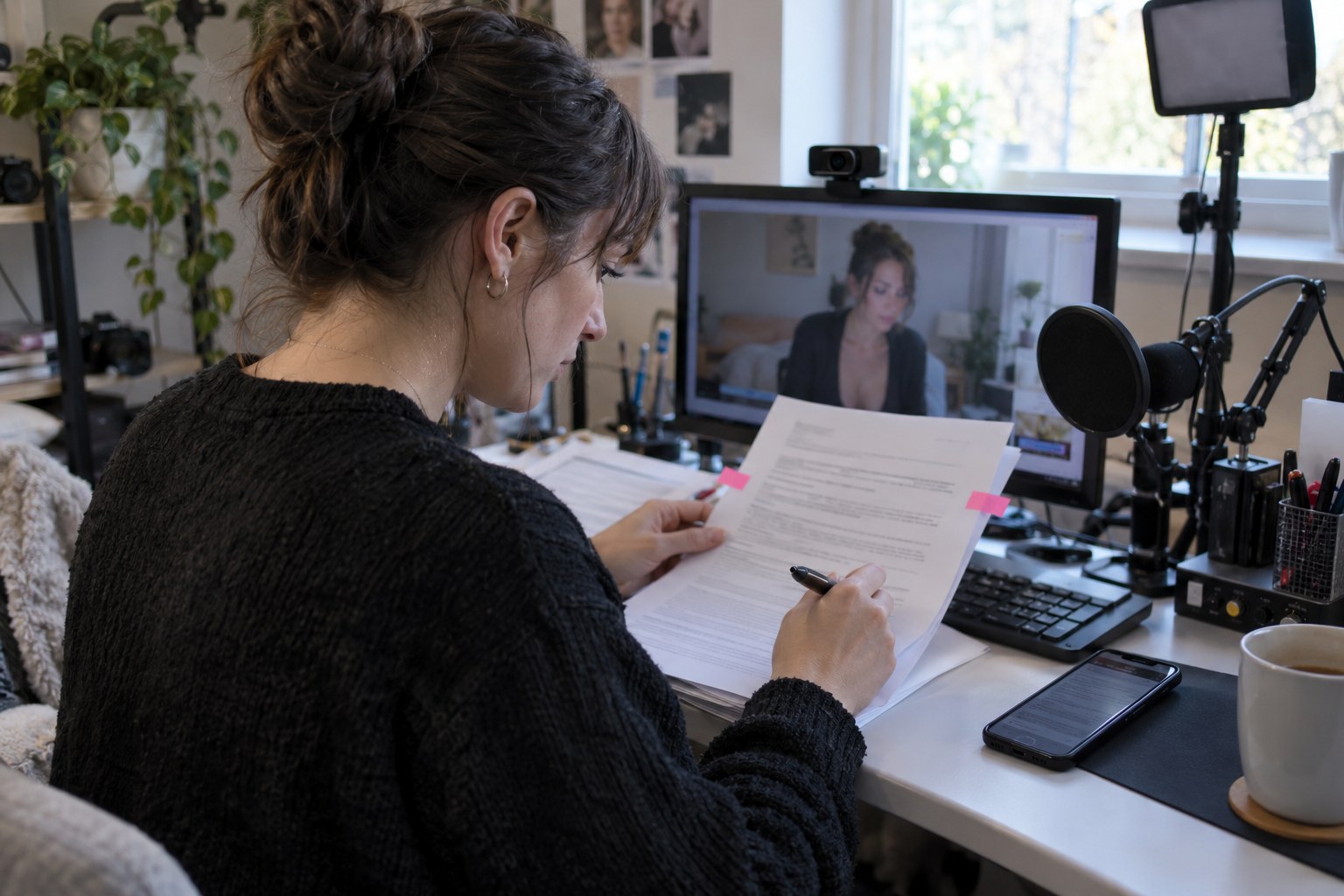
A clean exit is not pessimism; it is a test of whether the relationship is genuinely voluntary. Ask the provider to walk through termination as if it happened today: which accounts remain usable, when the final statement arrives, how disputed deductions are handled, when promotional content is removed, and how personal documents are deleted or retained. Confirm the answers in the signed agreement. If a representative becomes evasive precisely when the questions become operational, the ambiguity is itself decision evidence. Pause before handing over identity documents or credentials.
How should you make and implement the choice?
Choose the least restrictive model that solves the problem you actually have. Begin with non-negotiable protections, compare documented value, test the arrangement where possible, and preserve the ability to move toward greater ownership as your operation matures.
- Write down your constraints: privacy, equipment, connectivity, skills, available hours, promotion, and administration.
- Set pass-or-fail conditions for consent, account access, payment visibility, data handling, and exit.
- Request the full contract, deduction example, service inventory, facility rules, and account-ownership process.
- Score independent, studio, and agency options with your weighted matrix; verify every high score.
- Build an operating baseline covering paid activity, returning customers, cancellations, expenses, and administrative workload.
- Review results against the baseline and renegotiate, continue, or leave according to the written terms.
Independence also needs systems. Establish a repeatable schedule using evidence about the best time to cam, document boundaries, secure accounts, and maintain a private customer-management process. Improve controllable production factors through a suitable cam model microphone setup rather than expecting management to rescue weak audio or an inconsistent room. If repeat customers request appointments, a cam model booking system can reduce manual coordination while keeping the relationship organized. The verifiable next action is a completed matrix plus a folder containing every contract, statement, credential owner, and exit requirement.
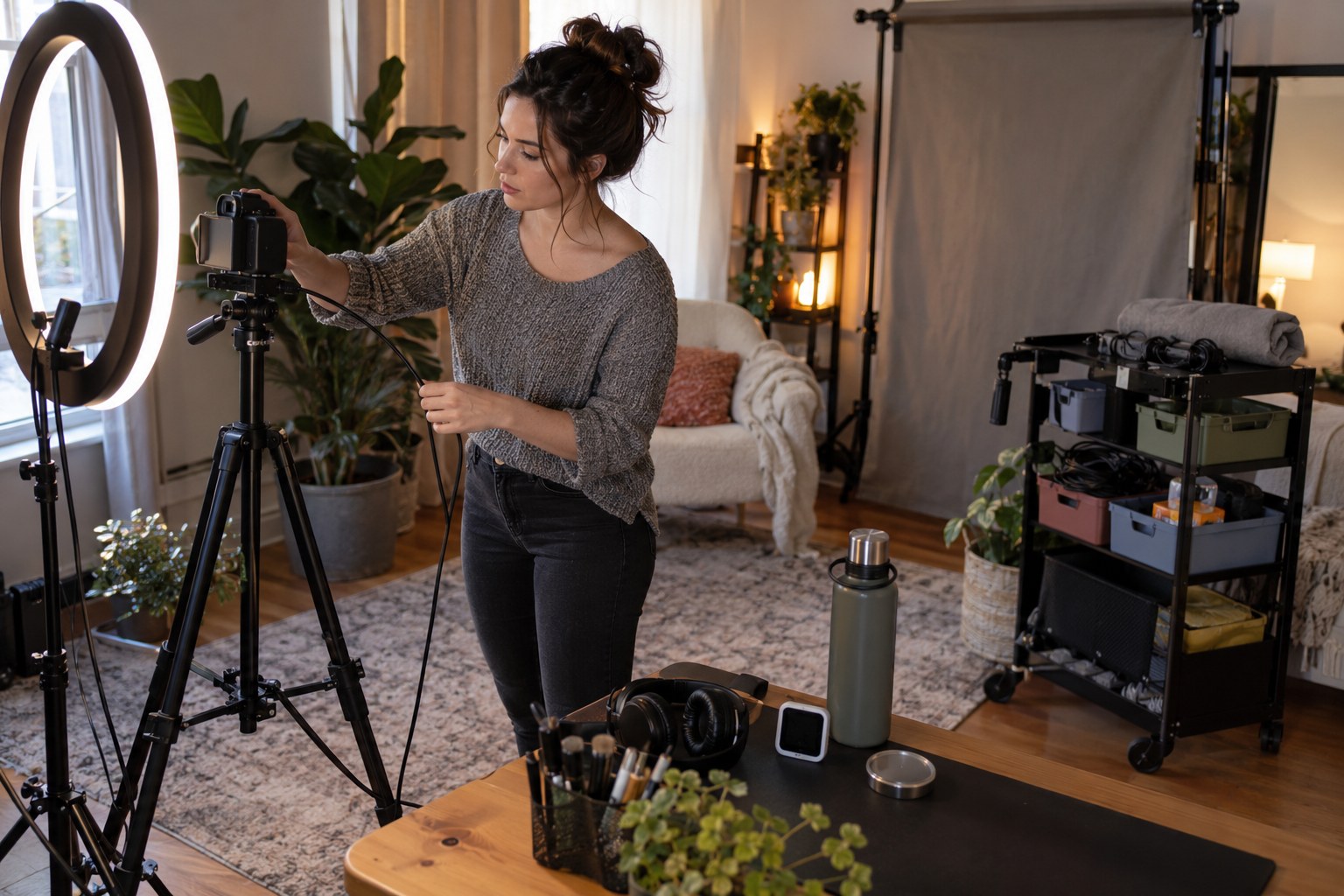
For some creators, the next step is not choosing a better intermediary but building shared infrastructure. A creator collective or experienced agency may eventually want its own branded service, direct customer journey, private and group video options, and monetization rules. That move creates merchant, compliance, moderation, support, and technical responsibilities; ownership is not a magic trick that makes operations disappear. It can be rational when the team has repeat demand and the capacity to run a platform, but premature when the underlying creator business is still unproven.
Move from rented access to controlled infrastructure
Once a creator group or agency can prove repeat demand, the same ownership test applies to its technology. Depending entirely on third-party marketplaces can limit branding, customer relationships, monetization design, and operational control. Building from scratch, however, adds a large technical project before the business has earned it.
Scrile Stream is white-label webcam software for branded private live streaming and monetized video sites. It supports WebRTC and RTMP streaming, private and group video chat, pay-per-minute access, tips, premium content, built-in chat, administration, referral features, and direct payment integrations to the operator's merchant account. Custom development, design, hosting, technical support, and project management are available for teams that need a tailored path from roadmap to launch.
Frequently asked questions
Is it better to be an independent cam model or join an agency?
Independent work is generally better for control and long-term ownership when you have a suitable workspace and can manage operations. An agency is preferable only when its documented promotion or administration creates enough value to justify its fee and restrictions.
What is the difference between a cam studio and a cam model agency?
A studio primarily provides physical infrastructure such as a room, equipment, connectivity, and on-site help. An agency primarily provides commercial or administrative services such as promotion, scheduling, account management, or strategy. Some businesses combine both roles, so verify actual deliverables.
Who should own a cam model's platform account?
The creator should understand and approve whose identity, email, credentials, payout details, and contractual acceptance control each account. Favor arrangements that preserve creator access and clearly state what happens to eligible accounts, content, and records after exit.
How can I tell whether an agency fee is worth paying?
Compare results with an independent baseline. Measure attributable paid activity, returning customers, cancellations, administrative time saved, and partner-related costs. Require named deliverables and reporting instead of accepting exposure or growth as undefined benefits.
What should I ask before joining a webcam studio?
Ask about deductions, schedules, penalties, cleaning, room privacy, surveillance, equipment maintenance, account ownership, consent procedures, statement access, content rights, incident reporting, document storage, and termination. Put every material answer in writing.
Can a cam agency control my schedule or content?
Only to the extent permitted by applicable law and the agreement, but a written term does not automatically make every restriction lawful or acceptable. Review scheduling, exclusivity, content, consent, and penalty clauses with qualified local counsel before signing.
What are the biggest risks of leaving a cam agency?
Potential risks include losing account access, delayed payouts, disputed deductions, continued use of promotional content, confidentiality problems, and restrictive exit clauses. The contract should define credentials, final accounting, content removal, data retention, and dispute handling in advance.
Can an agency or creator collective launch its own webcam platform?
Yes. A white-label platform can provide branded streaming, chat, monetization, administration, and direct payment integrations, but the operator must still plan merchant relationships, compliance, moderation, creator onboarding, support, security, and local legal obligations.