

Quick answer
Choose a delivery pattern and viewing permission for every channel before specifying the player or infrastructure: archive-to-linear, continuous live ingest, or hybrid, paired with live-only, start-over, or catch-up access. This approach fits operators that already have or license scheduled channels or live feeds and need to deliver them reliably in browsers; it does not cover content acquisition, validation of the wider TV business, or native-app architecture. First, complete a channel decision table and treat every unconfirmed feed, replay right, territorial rule, advertising behavior, and failure fallback as a launch blocker.
Which delivery pattern and viewer permissions should each launch channel use?
Choose a single delivery pattern for each channel—archive-to-linear, continuous live ingest, or hybrid—and pair it with one viewer permission: live-only, start-over, or catch-up. For this decision, treat the declared input as the first gate. Uploaded files can support the described archive route: they are transcoded into multiple quality levels, arranged into a round-the-clock schedule, and presented through an embeddable player. Do not extend that description to live feeds, switching between sources, stored playback, or expiry controls. If a channel depends on any of those behaviors, mark the relevant provider or rights-holder confirmation as unresolved rather than quietly promoting hope into architecture. The decision table should expose that distinction row by row.
Test the rule against a proposed themed channel assembled from an available catalogue, with occasional premieres that the operator wants viewers to restart after joining late. The files point toward archive-to-linear, but the requested permission is not automatically supported merely because scheduled playback is possible. Ask whether restart playback is permitted, whether media may be retained for that purpose, which territories may receive it, and what happens when a title reaches its instructed end date. If any answer is missing, keep archive-to-linear as the proposed pattern but record start-over as blocked; select live-only only if stakeholders accept that narrower offer. If they do not, defer the channel rather than relabeling an unconfirmed feature. A fallback should describe the viewer-safe result if the requested playback cannot be offered, without presuming that another mode will take over.
| Channel | Declared input | Delivery pattern | Schedule owner | Live override | Playback permission | Required provider confirmation | Failure fallback |
|---|---|---|---|---|---|---|---|
| Example: News | Continuous contribution feed | Continuous live ingest | Feed provider | Required for breaking coverage | Live-only | Feed protocol, override behavior, territorial rules and recovery process | Show an unavailable message and the next scheduled update |
| Example: Film channel | Licensed media inventory | Archive-to-linear | Operator | Not required | Catch-up within an approved window | Transcoding workflow, recording authority, retention period and title expiry | Keep the schedule visible and disable unavailable playback |
| Example: Sports channel | Scheduled media plus event feed | Hybrid | Operator with feed provider | Required for live events | Live-only unless replay is separately approved | Transition method, event rights, blackout instructions and replay expiry | Return to the scheduled slate or display a rights-specific denial |

Make the final choice only when the input, operational authority, and viewing permission agree. Use archive-to-linear when the offer is based on supplied files and no unverified live behavior is required. Use continuous live ingest only if the contribution method, recovery behavior, override authority, territorial limits, and permitted viewing mode are explicitly confirmed. Use hybrid only if both source paths and the handoff between them are confirmed, including what viewers may do before, during, and after the switch. Recording, retained media, replay windows, and expiry handling remain blockers wherever they have not been approved. Then approve a channel delivery decision table with fields for Channel, Declared input, Delivery pattern, Schedule owner, Live override, Playback permission, Required provider confirmation, and Failure fallback.
What inputs and control rules must be verified before the channel can be specified?
Build a verified channel-input record before specifying the selected path. At minimum, capture media or feed availability, inventory where relevant, schedule owner, metadata source, permitted territories and availability windows, recording authority, advertising policy, expected audience scenario, channel visibility, playback authorization, blackout eligibility, and the concurrent-session rule. For this decision, treat a field as verified only when the responsible operator, provider, or rights holder has confirmed its current value and owner. Uploaded files may be transformed into multiple quality levels, arranged into a continuous schedule, and presented through an embedded player; that establishes a possible file-based input chain, but it does not settle the permissions or controls surrounding playback.
Read the completed record as a set of specification gates, not background notes. Media, schedule, and metadata fields define what can be assembled; territory, window, recording, advertising, visibility, playback, blackout, and concurrency fields determine which requests the proposed rules must address. Access control, digital rights management, and privacy watermarking may be considered as content safeguards, but their mention does not provide a complete design. This guide’s rule is therefore simple: if a rights or enforcement field lacks current confirmation, name it unresolved and defer the affected behavior. Do not silently invent a token format, location test, revocation response, blackout mechanism, session limit, redundancy method, or monitoring behavior; none follows from the available inputs.
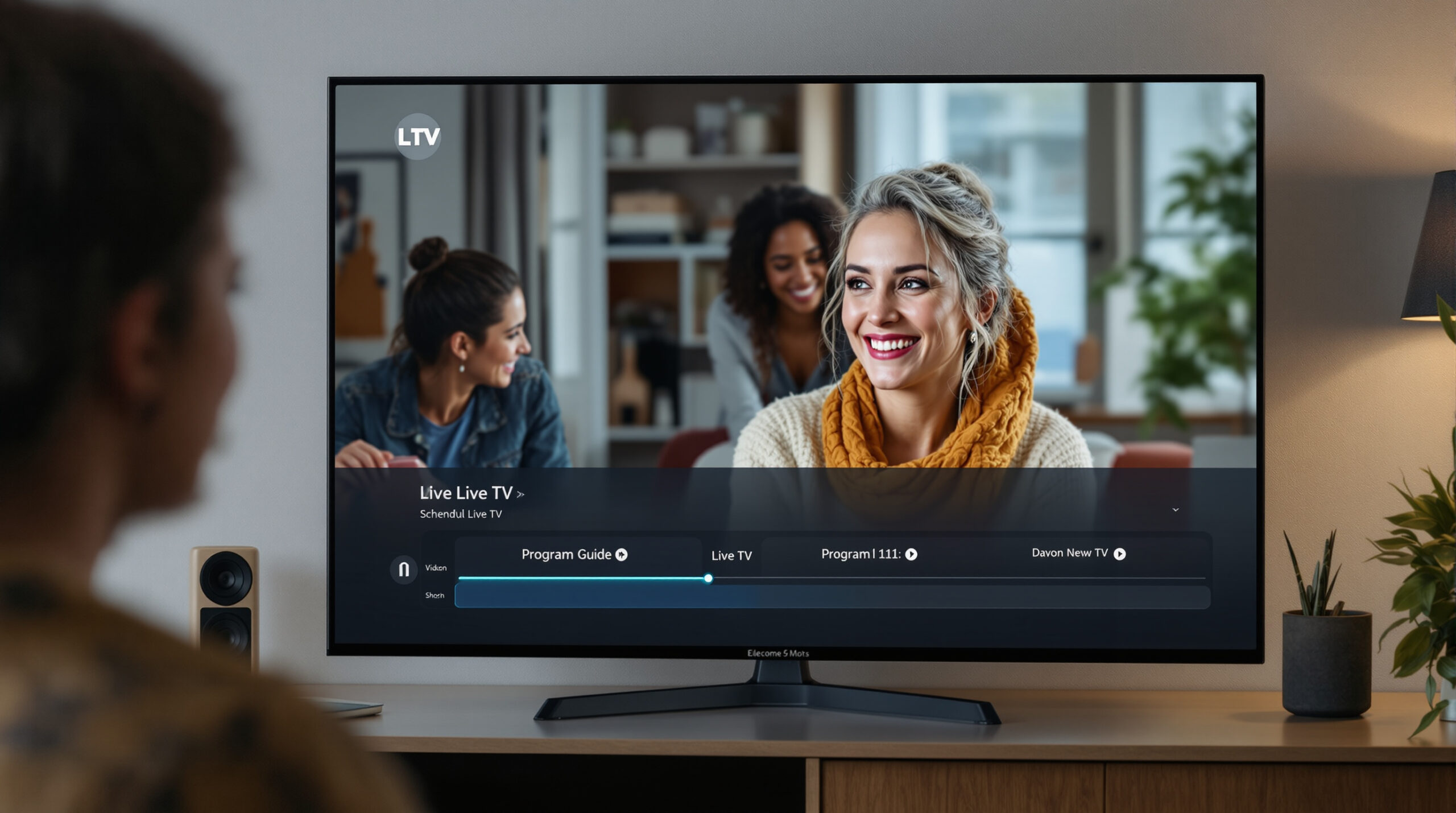
Test the record by completing one proposed launch channel. Enter the known inventory or feed, schedule owner, metadata source, audience scenario, and visibility, then mark every unavailable feed detail, rights instruction, denial response, and enforcement location as unresolved. Beside each unresolved item, assign the approving party and the decision needed—for example, whether recording is allowed, which territory and window apply, whether a blackout may be enforced, what playback authorization is required, and how concurrent use should be treated. If any request state lacks an approved outcome, the path is not ready to specify; a blank cell is not a control rule, however optimistic its formatting. Secure operator, provider, and rights-holder approval for every required field, then create an access-decision matrix covering anonymous, entitled, out-of-territory, blacked-out, expired-session, revoked-session, and concurrency-exceeded requests.
How should the viewer journey behave from site entry through interruption and recovery?
Consider one hypothetical viewer who opens the selected channel on an intended device and receives an authorized result. The page should acknowledge access, initialize the player, choose a playable rendition, expose the schedule, and show the current program’s progress. Record each as a distinct observable state rather than treating “the player opened” as proof that the path works. If startup does not complete, stop at the first missing state, show a concise message such as “Playback couldn’t start,” and offer the declared retry or alternate path. Once viewing is stable, a channel change should repeat the relevant authorization and startup checks; the prior stream should not count as evidence that the new selection succeeded. Use startup and switching goals as acceptance criteria across the browsers, devices, screen sizes, and constrained connections intended for launch.
During a scheduled break, suppose the channel requests an ad but none is returned. The expected response should be declared before testing: preserve the viewing session, present the approved break treatment, and return to the program path when the break state ends. The viewer message might be neutral—“Programming will resume shortly”—but its wording and display conditions need an owner. Later, imagine playback is interrupted. Mark the first state that fails to complete, such as media continuation after a previously healthy session, without guessing at the cause. Then run the approved recovery test: attempt the specified retry, recheck access if required, and restore the current channel position or invoke the declared fallback. If recovery fails, the interface should state that playback is unavailable and expose only an action the system can actually honor; optimism is not a recovery mode.
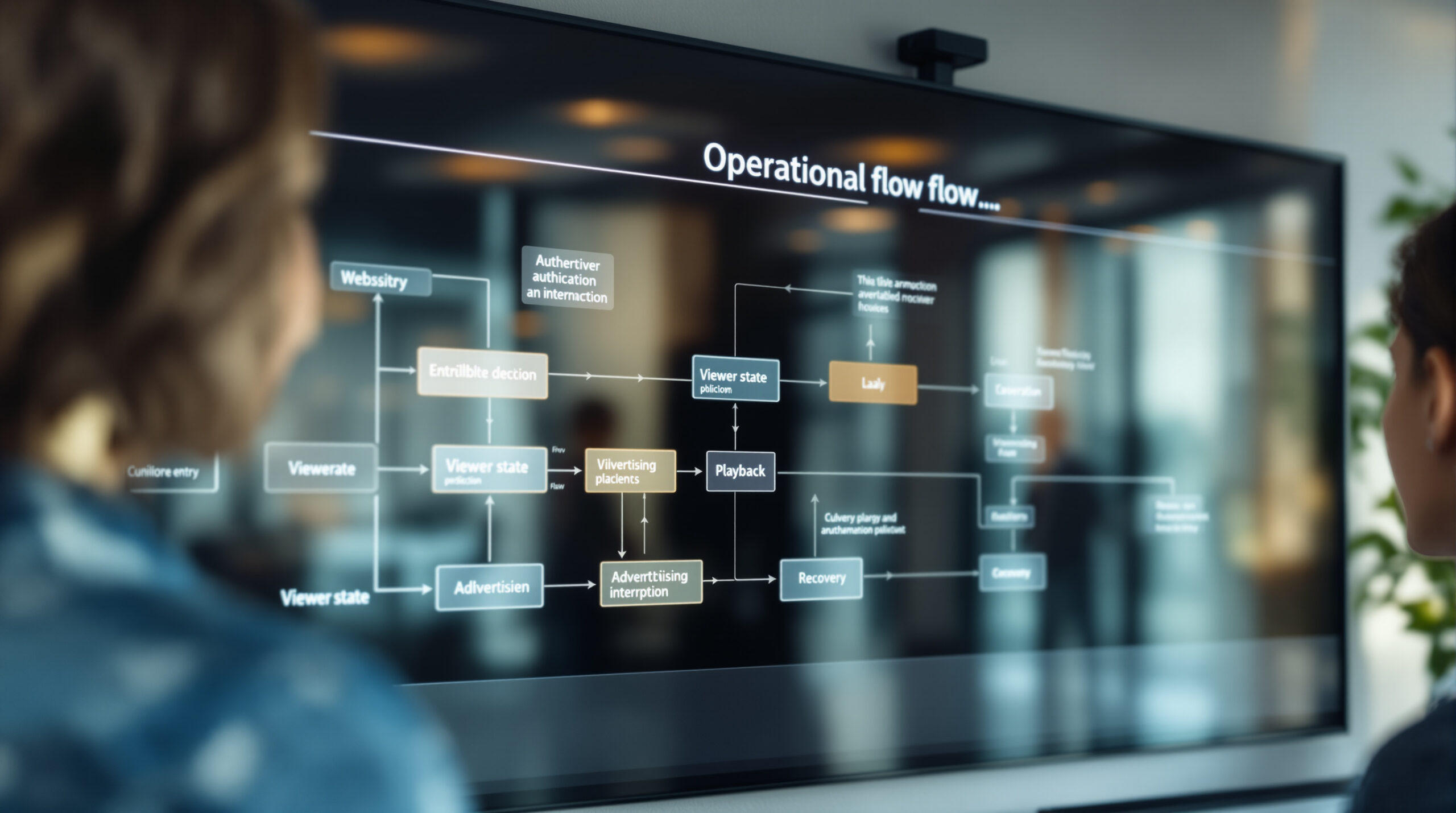
For this walkthrough, leave cue formats, insertion architecture, tracking standards, autoplay behavior, codec results, timing thresholds, and recovery measurements pending system validation. The available operating considerations support planning for cross-device and screen-size behavior, scalable infrastructure, access-controlled viewing, and either membership or free ad-supported treatment, but they do not establish the detailed implementation or performance envelope. Assign every transition an observable result, a responsible owner, and viewer-facing copy, then test the sequence on the intended environment and connection constraints. Approve a single state-transition walkthrough with an observable result, responsible owner, and viewer-facing response for every applicable transition.
What should the first build-and-launch package contain?
The first build-and-launch deliverable is a compact, linked specification package that turns the approved walkthrough into testable records. Create a channel registry, a program registry, a timing sheet, an access-and-feed map, and a readiness record joined by the same keys. A sample entry might pair channel key CH-NEWS-01 with program key PRG-OPEN-042, a declared UTC schedule window, feed status READY, playback rule MEMBER-VALID, territory set T1, and blackout rule B0. For this implementation, treat any broken reference as a release defect: if the schedule points to an unknown program, the feed is not in its required state, or the permission result cannot be reproduced, then that entry is not launchable. File uploads may be converted into multiple quality levels, assembled into a continuous schedule, and presented through an embedded player; the package should therefore connect the scheduled item to the playable output rather than merely naming the asset.
Add an execution matrix that converts the walkthrough’s unresolved transitions into owned tests. Each row should state the condition to introduce, where it applies, how the team will trigger it, which log, metric, decision code, freshness marker, or player state will prove the outcome, who responds, and what the viewer sees. Use this guide’s rule: record the first visible state that fails to complete, then test that boundary without guessing at its cause. If a listing does not refresh by the declared correction interval, preserve the last-known title only when that behavior has been approved; otherwise show neutral schedule copy and flag the freshness signal. If access cannot be decided, do not silently begin playback. If a break returns no applicable media, verify the declared continuation path. Repeat the matrix across the supported viewing environments because the intended service should be checked on desktop, mobile, varied screen sizes, and the selected devices—not on the launch lead’s unusually cooperative laptop alone.
- Assign stable identifiers to every channel and program, and define program start and end times using one declared time-zone basis.
- Link each schedule entry to the relevant feed state, playback permission, territory, availability window and applicable blackout decision.
- Document the correction cadence for schedule data and the viewer response when listings are missing, late or stale.
- Test anonymous, entitled, out-of-territory, blacked-out, expired, revoked and concurrency-exceeded requests, recording the expected decision and message for each.
- Validate startup, rendition changes, channel switching, background return and unsupported-playback behavior on the intended browsers, devices, screen sizes and constrained connections.
- Exercise each applicable advertising break, including the case where no ad is returned, and record the expected continuation or fallback behavior.
- Model sudden viewer arrival with approved concurrency and bitrate assumptions; for illustration only, 5,000 concurrent viewers at an assumed average of 3 megabits per second implies 15 gigabits per second before separately approved headroom
- Create a launch record with fields for Failure mode, Applicable channel, Test method, Observable signal, Owner, Expected system response, Viewer-facing fallback, Result, and Evidence or test record.
- Withhold launch approval until every applicable row has an owner, an executed result and a retained test record.

Attach a capacity worksheet to the same record and replace illustrative traffic and delivery inputs with approved analytics, registrations, prior-event observations, or planning figures. Declare peak arrival shape, average delivered bitrate, separately authorized headroom, and the test window, then exercise media delivery alongside permission decisions and schedule lookups so that a passing stream test does not conceal an incomplete launch path. No EPG standard, update protocol, daylight-saving treatment, verified concurrency, bitrate, latency target, origin ceiling, service level, load result, incident history, or measured event capacity is established here; mark each as pending, approved, or not applicable rather than inventing precision. The operator owns the completed artifact and its retained proof. Create the linear-channel launch-readiness checklist with fields for Failure mode, Applicable channel, Test method, Observable signal, Owner, Expected system response, Viewer-facing fallback, Result, and Evidence or test record; do not approve launch until every applicable row has a recorded outcome.
Frequently asked questions
Who should decide when channel requirements conflict across rights, editorial, advertising and operations teams?
Assign one accountable approver before build work begins. Record each unresolved conflict, the affected launch condition and the decision owner; if approval is not obtained, remove the disputed behavior from scope or delay the channel.
Can a channel launch when schedule or metadata updates still require manual handling?
Yes, only if a named operator owns the update, the handoff timing is defined and a fallback is documented for missed or invalid changes. Otherwise, treat the operational dependency as a launch blocker.
What should happen when a late feed, schedule or rights change invalidates an approved launch record?
Mark the affected record as superseded, identify every linked test and configuration that depends on it, and repeat only the impacted approvals and checks. Do not silently edit the approved record or assume an earlier sign-off still applies.