

Quick answer
If you start with app screens, you are late. A real plan for how to start a movie streaming service begins with rights scope, territory limits, and the exact catalog you can legally sell. Only after that do you choose SVOD, TVOD, or a hybrid model, then shape search, playback, and device support around the catalog you can actually launch. If you are building live streams or a social video app, this guide is the wrong one.
This article’s practical angle: This article adds a film-library launch lens that the SERP does not currently own: it explains the startup path as a rights-first, catalog-operations, and monetization-decision problem rather than a generic OTT build guide. That makes it harder to replace because the reader gets movie-specific launch criteria, not reusable streaming boilerplate.
Why movie streaming fails when the platform comes first
The most expensive mistake is treating a film service like a design project with video attached. A small distributor can launch a polished homepage, pay for mobile apps, and still discover that half the catalog is blocked by territory, term, or release window. By then, the app is not the problem. The rights chain is.
For movie streaming, the first hard question is not which player to buy. It is what you are legally allowed to carry, where, and for how long. A title cleared for TVOD in one country may be unusable in an SVOD bundle somewhere else. When that mismatch appears after launch, the fix is rarely cheap. One bad licensing decision can wipe out a large part of the launch catalog or force a regional relaunch after the customer base has already seen the service.
That is why rights review has to come before the build. If the catalog is narrow and local, the platform can stay simple. If the library will grow across territories, you need geo rules, language variants, and expiry dates from day one. WIPO’s copyright and licensing overview is a good baseline for the legal side of that planning: WIPO copyright and licensing overview.
There is also a sequencing trap. Teams often build the storefront first and only later discover that the title data cannot support the business model they picked. That is why the broader OTT guide on How to start a streaming service like Netflix is useful as context, while this page stays narrow on the movie-library version of the problem: what you can sell, not just what you can stream.

When a movie service should launch with SVOD, TVOD, or both
One indie distributor launches with a subscription because it sounds simple, then learns the back catalog is too thin to keep churn under control. Another starts with rentals, but the team keeps promoting the same titles instead of fresh releases, so repeat purchase never stabilizes. The model is not just pricing. It changes how the catalog has to behave, what the storefront must show, and how often the audience has a reason to come back.
| Model | When it fits | When it breaks | Launch signal |
|---|---|---|---|
| SVOD | Broad library, repeat viewing, steady content drops | Small catalog, weak retention, no reason to renew | You can keep enough titles active to justify a monthly habit |
| TVOD | New releases, premium titles, narrow audience intent | Library is too small to drive frequent rentals | Your rights allow rentals and you can market individual titles clearly |
| Hybrid | Core subscription library plus occasional premium releases | Catalog ops are weak and price rules get confusing | You need two storefront behaviors, not one pricing rule |
For most movie businesses, hybrid is the honest starting point. It lets the subscription library do retention work while rentals test higher-value demand. The catch is operational: included titles, rentals, and premium releases must be visually distinct in one glance. Vimeo’s streaming platform materials show how common multi-model OTT has become, but the movie version needs stricter title-level control than a generic creator library: Vimeo Streaming overview.
The launch rule is simple. If your rights are shallow and your release cadence is slow, start with TVOD or a very narrow SVOD offer. If the library is deep enough to support weekly discovery, a subscription can work. If you have both a stable back catalog and a handful of premium titles, hybrid is usually the least fragile path.
Budget is tied to that choice. A rental-heavy launch has different product costs than a subscription library with apps, billing automation, and customer support. If you still need the financial side mapped out, the sister guide on How much it costs to start a streaming service is the right next stop.

The movie catalog people can actually browse
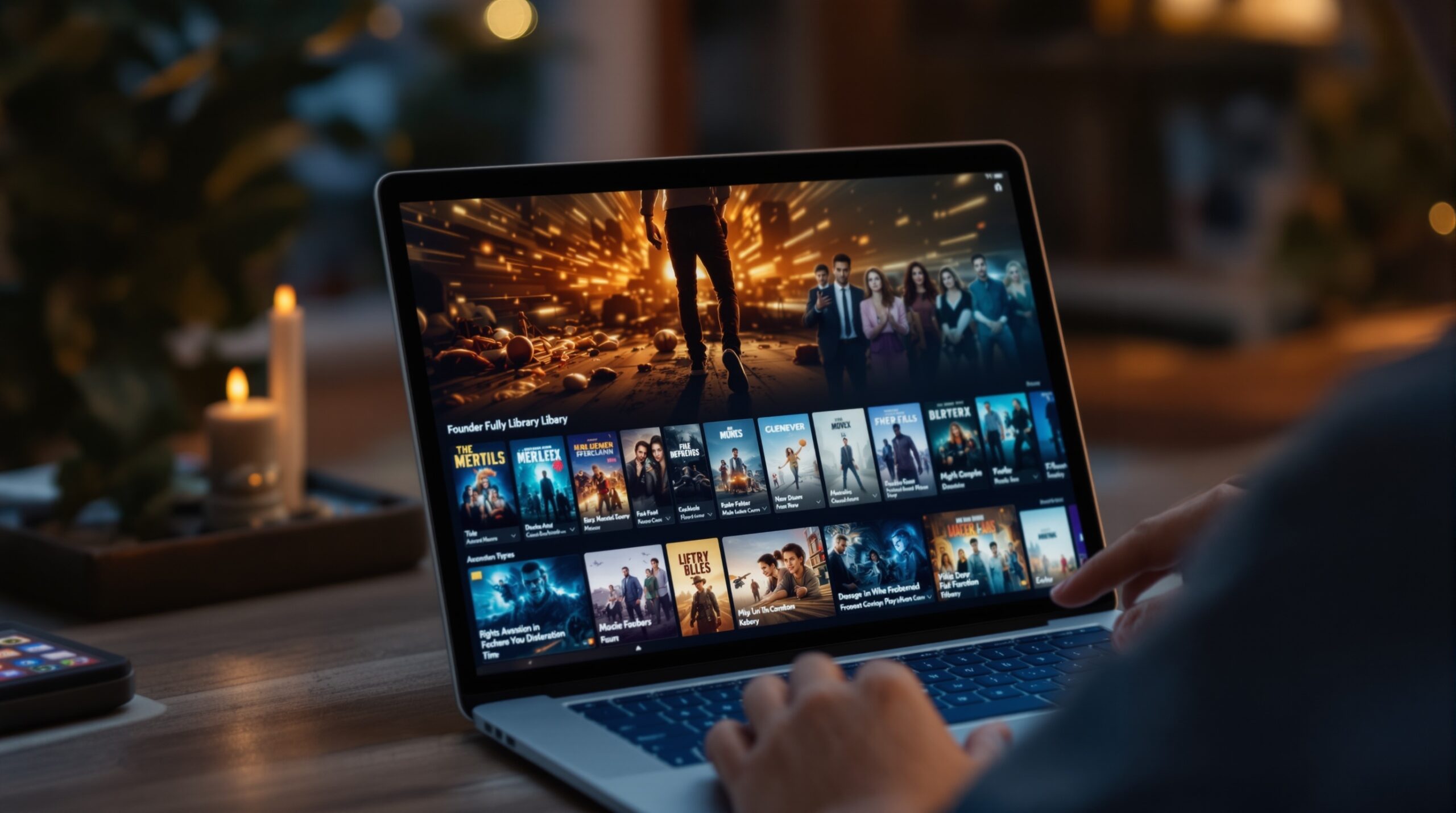
Film libraries fail when metadata is treated like admin cleanup. A content manager uploads titles, but the front end shows only poster, synopsis, and one genre tag. Then users search for cast, franchise, runtime, language, or “new this week” and hit dead ends. Browse friction is not cosmetic. It cuts watch time and makes the service feel smaller than it is.
A working movie catalog needs enough structure to support browsing by title, series, director, cast, genre, release year, language, subtitle set, territory, and availability window. It also needs lifecycle data so expired titles disappear cleanly instead of turning into dead links. That is the difference between a service that feels curated and one that feels like a spreadsheet wrapped in a player.
Do not underbuild the title page. If the page does not answer “what is this, why should I watch it, and how do I get it?” in under ten seconds, the service leaks intent. On small catalogs, every title has to work harder because there are fewer backup choices. That is also why watchlist, continue-watching, trailer previews, and clear “included” versus “rent” labels matter much earlier than teams expect.
| Field | Type | Owner | Required | Used by |
|---|---|---|---|---|
| Title | Text | Content ops | Yes | Search, detail page, recommendations |
| Rights_territory | Multi-select | Rights manager | Yes | Geo-blocking, storefront visibility |
| License_end_date | Date | Rights manager | Yes | Expiry rules, removals, renewal alerts |
| Monetization_mode | Enum | Product manager | Yes | SVOD, TVOD, hybrid storefront logic |
| Cast | Array | Metadata editor | Yes | Filters, search, related titles |
| Language_audio | Array | Localization lead | Yes | Playback options, discovery filters |
| Subtitle_tracks | Array | Localization lead | Yes | Accessibility, device playback |
That structure also shapes the viewer experience. Movie services usually need genre pages, franchise pages, a watchlist, continue-watching, trailer previews, and title cards that show whether a film is included or rented. Accessibility matters here too. Subtitle handling, keyboard navigation, and readable contrast are part of the catalog experience, not an afterthought. W3C’s WCAG guidance is a useful reference for those decisions: WCAG accessibility guidelines.
Teams usually feel the pain in the same place: the title page. If it does not make the decision easy, people bounce back to the browse grid and stall. The healthy state looks simple. Clear cover art, clear rights label, one obvious play action, and enough metadata to tell the viewer whether this is a good use of time.
What the platform must do before launch
A movie service does not need every feature on day one. It does need the right set. One team can survive with web playback and manual title curation. Another needs DRM, geo rules, billing automation, and device apps before the first subscriber arrives. The difference is not ambition. It is rights complexity and catalog size.
Platform selection should start with five questions. Can it enforce territory limits? Can it handle SVOD and TVOD without awkward workarounds? Does it support title-level pricing? Can you manage metadata cleanly? Can you ship the first devices you care about without rebuilding the app stack later?
Device strategy gets underestimated because it looks like a distribution detail. In practice, it decides where the business will feel useful. Some catalogs can launch on browser first. Others need mobile and TV from day one because the audience expects couch viewing and a quick handoff from phone to screen. If those surfaces are an afterthought, the service may still work, but it feels unfinished.
The technical base also matters. Movie streaming depends on adaptive bitrate delivery, stable encoding ladders, and secure playback. That is not glamour work, but it is what keeps quality complaints from turning into churn. Once a viewer sees buffering on a paid film, the value proposition drops in seconds. The issue does not always show up as a support ticket; it shows up as a canceled renewal.
In category terms, a branded platform such as Scrile Stream is a cleaner fit when the business needs one system for video delivery, payments, and branded control rather than stitching together a player, checkout, and admin layer. For movie libraries, that only works well if the platform can carry catalog logic, not just playback. If the platform cannot enforce title-level rights or organize storefront behavior by content type, it is too thin for launch.
Start with validation, not a giant build
Launching too much too early is expensive. Launching too little is usually worse, because the service looks unfinished and the catalog never gets a fair test. The cheapest way to cut risk is to validate the movie business in the order it will actually fail: rights, catalog, storefront, device, then scale.
- Audit 20 titles for rights scope, territory, and term. Within a week you will know whether the library can support SVOD, TVOD, or only a hybrid launch.
- Map the catalog into five browsing paths: genre, cast, franchise, new releases, and watchlist. If those paths feel thin on paper, they will feel thin in the product.
- Test one storefront rule set before building every device. A two-week pilot on one surface often exposes more friction than a three-month app project.
- Write the platform brief around outcomes, not features. If the outcome is “rent titles by territory,” the build list becomes shorter and more accurate.
This order saves time because it stops duplicate work. A team that builds apps before rights and pricing are settled usually pays twice: once for the first build and again for the relaunch when the catalog rules change. That is the real cost of skipping validation, not just wasted hours, but a launch that has to be reassembled after users have already seen the first version.
If you need the implementation path after the planning stage, the bridge article on video streaming app development shows how to turn a launch brief into a build sequence without turning the project into a custom-code trap.
How Scrile Stream fits this picture
For a movie streaming business, the hardest part is rarely the player itself. It is the mix of branded delivery, payments, and control over how content is presented once the catalog starts moving across devices. Scrile Stream fits best when the service needs a white-label setup with its own domain, direct payment handling, and a platform layer that can be shaped around monetized video rather than a generic social feed. That is useful when the launch model is still being shaped and the team wants to avoid building a separate checkout, moderation, and delivery stack from scratch.
It is not the right answer for every movie business. If your catalog is large, heavily licensed, and managed by a traditional media operations team, you may need deeper content workflows than a faster-launch platform usually provides. But for smaller and mid-sized teams testing a branded video service, especially where private access, premium content, and direct monetization are part of the plan, the value is in compressing the number of systems you have to hold together at launch.
Ready to build the setup behind this?
If this is the operating problem you need to solve, use the product page as the next step. It shows where build your setup fits and what the platform covers beyond a single payment widget.
Frequently asked questions
What happens if the catalog is too small for subscriptions?
SVOD usually churns too fast. A smaller library often works better as TVOD or as a narrow hybrid with a subscription core and premium rentals on top.
How do I know when territory rules are the real blocker?
If the same title is licensable in one country and unusable in another, territory rules are already shaping the business. That is a platform requirement, not a legal footnote.
Can a movie streaming service launch before the apps are ready?
Yes, if the first goal is to test catalog demand and pricing. It is risky only when the audience already expects TV or mobile playback on day one.
What is the main risk of hybrid monetization?
Confusing users. If included titles, rentals, and premium releases are not visually distinct, support load rises and conversion drops.
When does a simple video platform stop being enough?
Usually when rights, device support, and storefront logic all need to be controlled at title level. At that point, a basic player is too thin for the job.
What should I not build first?
Do not start with custom apps, elaborate marketing pages, or a full recommendation engine. If rights, metadata, and pricing are not settled, those layers only make the relaunch more expensive.