

Quick answer
If the first plan focuses on screens instead of rights, metadata, and launch scope, the project usually slips. Start by defining what content you can license, what track data you can trust, and which features you can support without breaking availability rules. That is what separates a working music service from a nice-looking clone. This guide shows the launch decisions that matter first, where music streaming differs from video OTT, and what belongs in the MVP versus later.
For neutral context, this guide cross-checks the topic against Goldman Sachs Research's creator economy outlook. So the recommendation is grounded in external market signals rather than only product claims.
How to start a music streaming service is mostly a product-ops question, not a UI question. The app matters, but only after the catalog, rights, and entitlement rules are clear. If those are vague, the build will drift, support will spike, and the launch plan will collapse into rework.
The cleanest way to think about the category is simple: music streaming is a search-and-playback system with a rights layer behind it. That makes it different from live video, TV, or movie platforms, which is why the sister guide on how to start a streaming service like Netflix is useful as a contrast, not as a blueprint.
Start with the launch problem, not the interface
The first mistake is building the player before the permissions model. Teams often sketch search, playlists, and subscriptions first, then discover that the catalog partner has territory limits, preview rules, or offline restrictions that were never written into the product plan.
That kind of gap is expensive. A rights mismatch rarely stays hidden: it shows up as missing songs, inconsistent playback, or support tickets from users who cannot understand why one track is available in one country and blocked in another. In a small launch, that can cost 4-8 weeks of rework before the team is back on track.
WIPO’s copyright overview at Wipo.int/copyright is a good reminder that recorded music is not one permission; it is a stack of permissions. Before the first sprint, write down what you need for playback, previews, offline listening, geographic availability, and content expiry.
The practical checkpoint is this: if the catalog partner can say “yes” to playback but “maybe” to downloads, the MVP cannot pretend downloads are a basic checkbox. The product plan must reflect the rights plan.
| Launch decision | Who owns it | What must be true before build | Typical failure signal |
|---|---|---|---|
| Playback rights | Legal / licensing | Territory and term are explicit | A track appears in one region and disappears in another |
| Offline downloads | Product + legal | Storage, expiry, and device rules are written down | Users keep files after entitlement ends |
| Preview clips | Product + rights holder | Clip length and bitrate are approved | Previews expose too much of the full track or violate label terms |
| Geo-restriction | Catalog ops | Country rules are encoded in the catalog | Support gets “missing song” tickets from blocked regions |
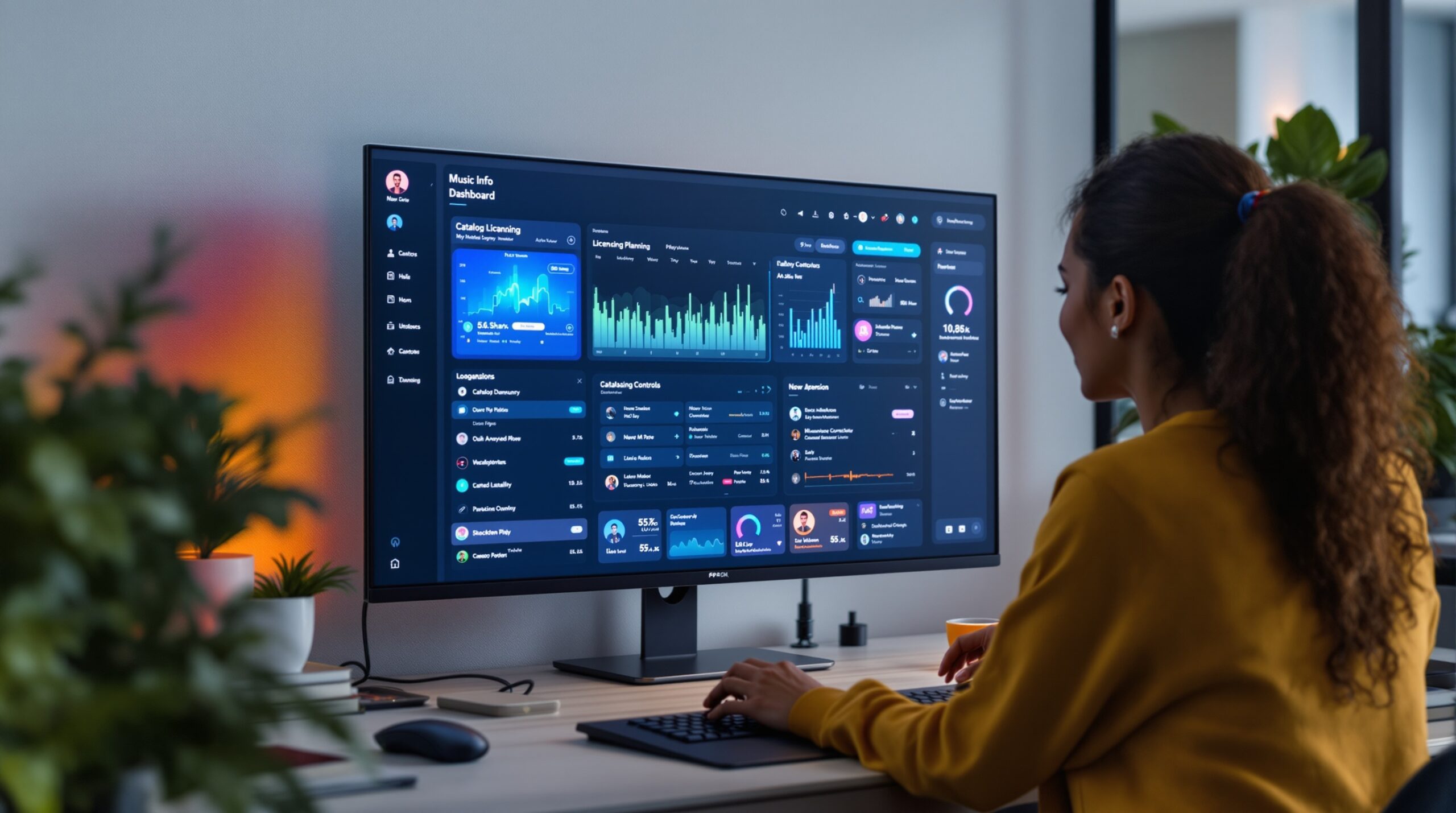
Music streaming is not video OTT with audio swapped in
Music and video fail in different places. Video services usually optimize for long-form viewing, series pages, and episode continuity. Music services depend on fast search, track-level metadata, queue behavior, and playlist logic. That difference sounds small until you try to launch.
If the backlog is built around “content pages,” the product feels wrong almost immediately. Listeners search by artist, album, label, mood, version, or even featured performer. They expect the app to move from search to play in seconds. A gallery-style interface from a video product will not handle that well.
For a clean side-by-side, compare this page with the sister article on how to create a live TV streaming website. That guide deals with event-like and channel-like logic; this one must deal with tracks, releases, and catalog trust.
Music is not just “content delivery.” It is a catalog system with playback attached. That is the boundary worth protecting if you want to avoid semantic overlap with OTT leaders and keep the page useful to a founder who has to decide what kind of service they are actually building.
| Dimension | Music streaming | Video/live OTT |
|---|---|---|
| Primary object | Track, album, artist, playlist | Episode, stream, event, channel |
| Discovery path | Search, playlists, recommendations, curation | Browse, continue-watching, recommendations |
| Metadata depth | Very high at track level | High at title and series level, lower at scene level |
| User tolerance for delay | Low; playback should start fast or churn rises | Moderate; buffering is more tolerated in many use cases |
| Offline value | Core for mobile use cases | Useful, but not always central |

The catalog needs a metadata model before it needs more features
A music service without clean metadata is a warehouse with no aisle labels. Tracks may exist, but nobody can trust the result in search, the order in a playlist, or the input to recommendations. The first visible symptom is usually support noise: “wrong version,” “duplicate track,” or “why is the clean edit missing?”
That noise is not cosmetic. In a growing library, every metadata error multiplies into search problems, editorial cleanup, and manual fixes. Even a modest catalog can create 2-4 extra hours of operational work per week per person if the field model is sloppy, and the pain grows faster than the user count.
What the catalog must know about each track
At minimum, the catalog should know the track title, artist, featured artist, album, genre, label, release date, version type, explicit flag, territory, language, mood or tempo hints, and rights state. If the team cannot answer “what exactly is this file?” in one glance, the service will struggle to scale.
Some of these fields are not search-only. Territory and rights state control availability. Version type stops duplicates from crowding the library. Mood and tempo help editorial playlists and discovery rows behave like a real listening product instead of a generic media archive.
Why the ingest flow matters as much as the fields
The useful pattern is ingest, tag, validate, surface, and measure. First the content arrives. Then the metadata gets cleaned. Then the rights flags are checked. Only after that should the track appear in search, playlists, or recommendations.
Teams that skip validation usually pay for it later in the worst possible place: user trust. A listener who sees broken versions or missing tracks does not blame the backend. They blame the service.
| Field | Type | Owner | Required | Used by |
|---|---|---|---|---|
| Track_title | Text | Catalog ops | Yes | Search, player, share cards |
| Artist_name | Text | Catalog ops | Yes | Search, artist pages, recommendations |
| Album_name | Text | Catalog ops | No | Library grouping, browse pages |
| Rights_state | Enum | Licensing | Yes | Availability, geo rules, offline logic |
| Territory | Country list | Licensing | Yes | Availability, app store behavior, support rules |
| Version_type | Enum | Catalog ops | Yes | Clean search, duplicate control, set versions |

Discovery only works when metadata and curation move together
Many teams say they need recommendations. What they actually need is a discovery pipeline that starts at ingest and ends in a queue the listener wants to keep playing. If the data is weak, the recommendations will be weak too, and the system will feel confident while being wrong.
This is why discovery should be treated as a workflow rather than a widget. The chain is simple: tag the content, verify the metadata, surface the item in the right context, and measure what users skip or save. Without that chain, “AI” just adds speed to bad decisions.
The first place this breaks is often the first 1,000 users. They will tolerate a rough layout, but they will not tolerate repeated bad suggestions. After a few bad sessions, they stop trusting “for you” rows and start going back to search only.
A practical way to reduce that risk is to treat playlists as the memory layer of the product. People save by activity, mood, routine, and context. If playlists are easy to build, edit, and share, the service gains retention without pretending personalization has solved everything.
Where playlists actually create value
Playlists are not decoration. They are the bridge between one-time listening and repeat use. A listener who can quickly assemble a workout set, a study list, or a commute mix is more likely to return than someone who sees endless generic cards.
That is why playlist ownership matters. If users can edit, reorder, and rebuild saved lists from their library, the product feels controlled rather than algorithmic. The user sees a system they can shape instead of a feed they must accept.
For the technical side of delivery, the IETF’s HTTP Live Streaming specification is a useful reference point for adaptive delivery mechanics. The app still needs catalog logic on top, but the transport layer should not become a guessing game.
Monetization works only when it matches rights pressure
Freemium, ads, and subscriptions are not just revenue labels. Each model changes how much entitlement logic the service must carry and how much pressure the catalog will feel. A subscription product needs enough premium value to justify recurring payment. An ad-supported product needs volume and inventory. Freemium needs both.
If the monetization plan is chosen too early, the catalog becomes the victim. A service that promises offline use, wide library access, and high bitrate playback without matching revenue logic often ends up squeezed between user expectations and licensing costs. That tension is concrete; it is where launch budgets disappear.
Ad-supported models are often the hardest to keep clean because interruptions require both user tolerance and enough inventory. Subscription models are easier to explain but harder to price if rights costs are high. Freemium is the most common trap: the free tier feels too generous, but the premium tier feels too expensive if the service has not earned trust yet.
Choose one economic story first, then build around it. If the service is subscriber-first, keep the catalog premium and the entitlement model simple. If it is ad-first, design for broad discovery and low-friction playback. If it is hybrid, expect more product and ops work from day one.
| Model | Best when | Breaks when | Cost signal |
|---|---|---|---|
| Subscription | Catalog depth is strong and loyal users return weekly | Price is too low for the rights cost | Stable recurring revenue, but higher licensing pressure |
| Ad-supported | Audience is broad and session volume is high | Targeting is weak or inventory is thin | Lower friction, tougher margin control |
| Freemium | You can separate preview value from premium access | The free tier feels complete enough to avoid upgrade | Highest product complexity; strongest conversion design needed |
Define the launch scope before the team starts building
An MVP is not the smallest possible app. It is the smallest version that can survive real users and real rights rules. That distinction matters because music services fail both ways: they can be overbuilt into delay, or underbuilt into chaos.
The safest MVP usually includes playback, search, playlists, saved library, rights flags, and one monetization path. Leave social layers, lyric sync, radio, and advanced personalization for later unless one of those features is the business model itself.
The reason is practical. A tiny launch that cannot explain availability or preserve listening flow will generate support work faster than product learning. A controlled MVP, by contrast, gives the team one catalog shape to stabilize before the library grows.
As a rule, if a feature does not help users find music, trust the music, or save the music, it probably does not belong in the first release. That rule cuts scope without cutting value.
| Launch tier | What ships | What to defer | Failure if skipped |
|---|---|---|---|
| MVP | Playback, search, playlists, rights flags, one monetization path | Lyrics sync, social feed, radio, advanced AI | Catalog chaos, delayed launch |
| V1 | Better discovery, playlist sharing, offline rules, reporting | Deep community layer, premium editorial tooling | Retention drops after the first usage cycle |
| Scale-up | Geo logic, recommendation tuning, admin automation, content ops tooling | One-off custom flows that only one team needs | Operations become the bottleneck |
What to defer even if it sounds attractive
Social profiles, comment systems, “music therapy,” live events, and trend-heavy community features are all easy to pitch and hard to justify at launch. They create surface area, but they do not fix the core problem of rights, search quality, and stable catalog behavior.
That is why the page should not read like a feature buffet. A music service wins early by making the library trustworthy, not by stacking on novelty before the basics hold.
Before development, assign the right owners
Write down five decisions before anyone opens a design tool: the rights model, the catalog fields, the geo rules, the monetization path, and the launch tier. Those five choices set the boundary for every later build decision.
Then map three owners. Catalog ops owns data quality. Licensing owns availability rules. Product owns the listening flow. When those jobs blur together, rework follows quickly because nobody can say which part of the system is wrong when a track disappears or an entitlement fails.
The healthy state is easy to describe: a new track lands, gets tagged, passes rights checks, appears in search, and shows the correct availability state in under a day. If that is not possible, do not add more features yet. Fix the pipeline first.
If the team is still debating whether the service should behave more like audio-first software or live-first software, compare it to how to create a live streaming website. That contrast usually makes the category boundary obvious.
Offline mode is a product feature and a rights feature at the same time
Offline playback looks simple from the outside, but it changes storage, entitlement, and rights logic at once. That is why it causes so many launch delays. A team may think it is only a download button, then discover they also need expiry rules, device limits, region rules, and bitrate controls.
If one rule is missing, support gets the fallout. The user keeps a file after entitlement ends, sync breaks across devices, or a download appears in a territory where the rights are not valid. That creates trust damage very quickly because the user sees the app as inconsistent.
Offline mode usually adds more work than the team expects, and not just on the engineering side. Product must define what happens when access expires, legal must approve the retention rules, and ops must know how to explain the policy when users ask why a track vanished.
The safest approach is to launch offline only if the rights and device rules are already crisp. If not, keep the first release online-only and use a stable playback experience to prove demand first.
Recommendation logic should not outrun catalog quality
Recommendation engines are not a substitute for a clean library. If tags are weak, versions are duplicated, and rights states are messy, personalization will simply amplify the mess. The result looks smart on paper and broken in usage.
That failure is easy to spot. Users skip what the system serves. They stop trusting “for you” rows. They fall back to search because the suggestions feel random. At that point the problem is usually not the algorithm itself; it is the input data.
Keep one rule in place: no recommendation layer should go live before the catalog can answer basic questions consistently. What is this track? Who owns it? Where can it play? What version is it? If the team cannot answer those quickly, any AI layer will be decoration.
This is also why music services should resist copying the shallow parts of competitor pages. “AI recommendations” as a slogan is easy to sell. A recommendation pipeline that depends on verified metadata is the part that actually keeps listeners from bouncing.
What a pilot should prove before the public launch
Do not ask whether music streaming is a good idea in the abstract. Ask whether the pilot can prove three things in 30-45 days: catalog access works, metadata is stable, and listeners can search and play without support help. Those are the signals that matter before scale.
A narrow pilot is useful because it exposes the real failure mode early. In most launches, the first problem is not demand; it is operational friction. One missed rights rule can generate 10-20 support tickets before the team even gets a full week of usage data.
IFPI’s global music reporting is a useful market reference, but the larger market does not reduce launch risk. It only confirms that recorded music is durable enough to reward disciplined entrants. The implementation rules are still unforgiving.
Use the pilot to answer one hard question: can the service stay trustworthy when the catalog grows faster than the team? If the answer is no, pause and fix the pipeline before you add more features.
Common mistakes that make a music launch look generic
The most common mistake is treating the service like a generic streaming shell. That leads to a design that looks familiar but ignores track-level data, versioning, and rights states. A user can spot that mismatch immediately, usually before the first minute ends.
Another mistake is overbuilding social and AI features before the catalog workflow is stable. A social feed can make the product look busy, but it will not fix missing metadata or broken availability. Likewise, a recommendation engine cannot rescue a catalog that cannot explain what is playing.
A third mistake is assuming offline mode is just a checkbox. It is one of the few features that changes licensing, storage, and entitlement logic together. If expiry and device rules are not defined, offline becomes a support burden instead of a user benefit.
The page should help the reader avoid these traps without pretending they are rare. They are common because teams copy the visible surface of existing products and skip the invisible rules that make the product work.
Use the right comparison when you evaluate the build partner
If your next step is selecting a development partner, compare candidates on how they handle catalog structure, rights states, offline rules, and searchable metadata, not only on how the screens look. That is the difference between a team that can ship a media shell and a team that can support a real music service.
For the adjacent vendor conversation, the guide on video streaming app development company is useful because it shows how a streaming build is evaluated when the product shape is already known. The question for a music launch is whether the partner can respect the differences that matter here.
When the scope is clear, the partner conversation becomes easier. The team can talk about ingest rules, search behavior, entitlements, and future scale instead of debating basic product category assumptions.
What to launch first if you want a viable first version
For most founders, the right first release is audio-only, rights-limited, and catalog-clean. That version is not flashy, but it is easier to trust and easier to learn from. A simple library with stable availability is better than a crowded product that cannot explain what it owns.
The aspiration is not minimalism for its own sake. The aspiration is a service where listeners can find a track, trust that it will play, and save it for later without hitting hidden rules. That is the kind of experience that creates a second visit.
Once that layer works, add depth in the order the business can support: better discovery, clearer offline logic, stronger reporting, and only then more ambitious personalization. The sequence matters because every new layer depends on the one below it.
If the platform you are evaluating needs a branded streaming base with controlled access, payments, and moderation, the commercial fit section below shows where a platform like Scrile Stream can be relevant. It is not a substitute for music licensing, but it can reduce the number of moving parts when the launch model is private or paywalled.
How Scrile Stream fits adjacent streaming launches
For a music service, the useful comparison is not “who has the fanciest app.” It is whether the platform can keep content, access, and monetization separate enough that the launch does not collapse into tool sprawl. That is why some live-video teams look at Scrile Stream when they need branded private streaming, payments, and moderation in one system: the product is organized around controlled access, direct payment flow, and a white-label setup rather than a generic content shell.
It fits best when the business model is member-only streams, paid live sessions, or private video interaction and the team wants ownership over checkout and branding from day one. It is less relevant for a pure music catalog with label-side licensing, because music still needs track-level metadata, rights states, and content availability rules that are different from webcam or live chat products. If the real problem is “we need a branded streaming product with monetization, moderation, and supportable admin workflows,” then this class of platform can remove a lot of setup friction.
Ready to build the setup behind this?
If this is the operating problem you need to solve, use the product page as the next step. It shows where build your setup fits and what the platform covers beyond a single payment widget.
Frequently asked questions
What should be decided before building a music streaming MVP?
Decide the rights model, the catalog fields, the geo rules, the monetization path, and the launch tier. Those five decisions control almost every later product choice.
Why do music platforms need more metadata than video platforms?
Because discovery happens at the track level. Search, playlists, version control, and availability all depend on fields that video products usually do not need as deeply.
Is offline download safe to include in the first release?
Only if expiry, device count, storage behavior, and territory rules are already clear. Otherwise offline mode becomes a support problem and a rights problem at the same time.
What is the biggest sign that the catalog is too messy?
Users keep finding the wrong version, search results are inconsistent, and the team spends time fixing duplicate tracks by hand. That usually means the metadata model needs work before more features.
Should a music service start with recommendations or search?
Search first. Recommendations only work when the catalog already knows what each track is and where it can play.
When should a founder avoid launching at all?
Do not launch yet if nobody owns licensing, catalog ops, and product separately, or if the service cannot explain availability in simple terms. The launch will turn into rework before users trust it.