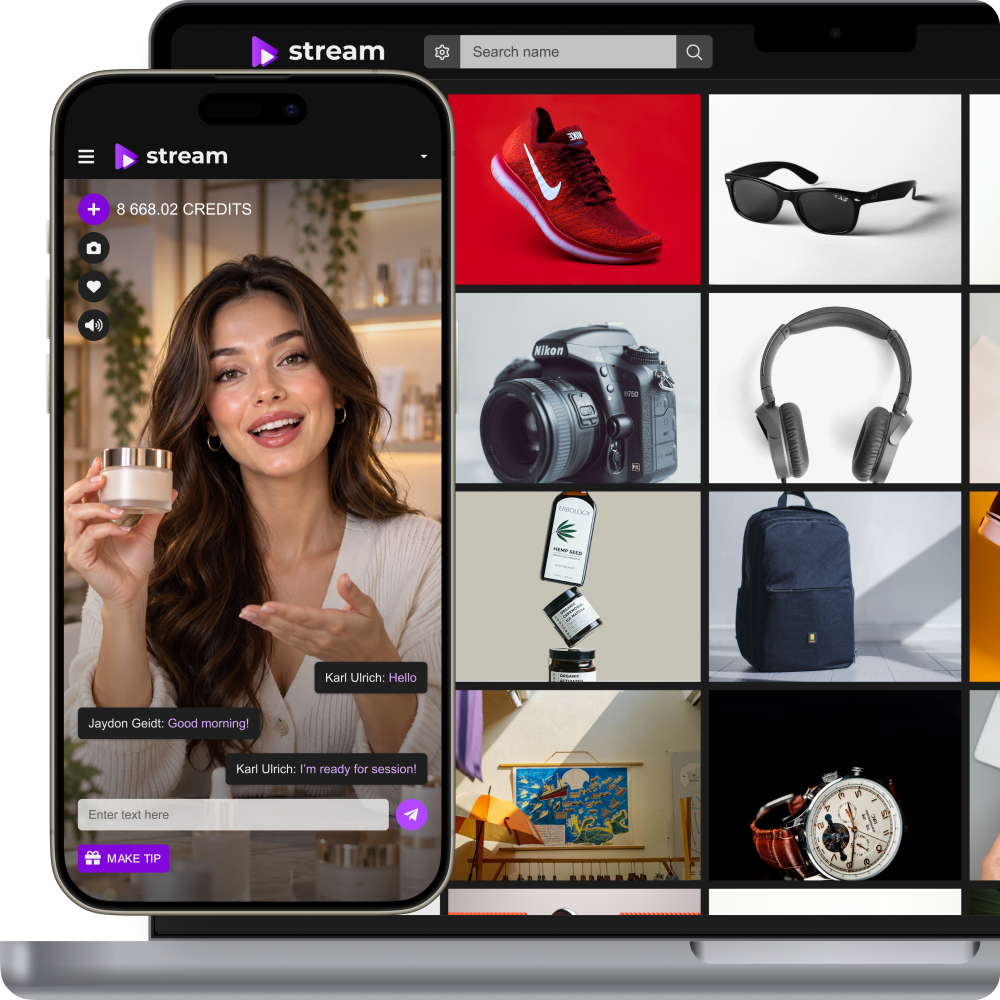
Live Shopping Platform
Live Shopping Platform for Interactive Commerce
Build a branded live commerce experience where hosts present products in real time, viewers interact around the stream, and product discovery or checkout can be connected with your existing commerce stack through custom integration.
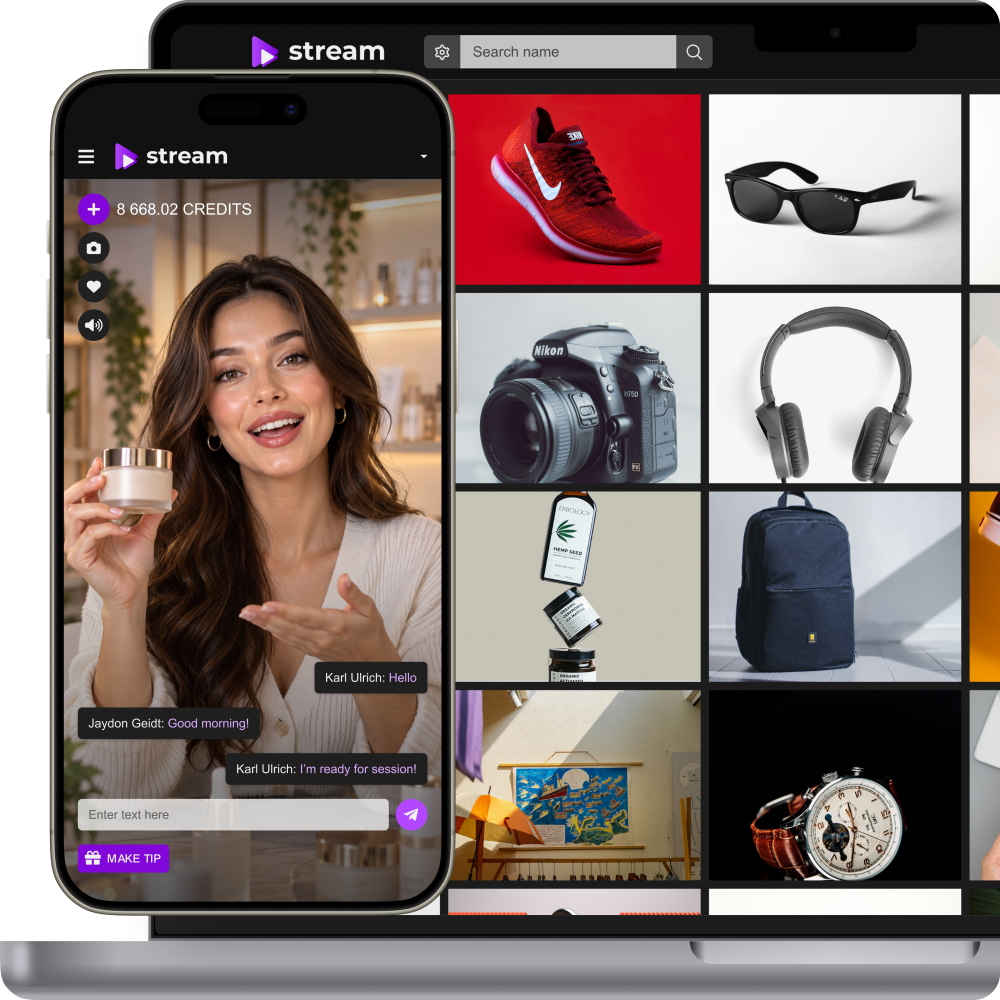
Turn live video into a branded sales channel
Live shopping combines product demonstration, audience interaction, and buying intent in the same session. Building the experience around your own brand gives you more control over the customer journey and lets you connect live video with the commerce systems your business already uses.
Sell through interaction, not only product pages
Let hosts demonstrate products, answer questions, compare options, and respond to audience interest while viewers are actively considering a purchase.
Keep the live commerce experience under your brand
Run sessions on your own domain and interface instead of making a third-party marketplace the main destination for your audience.
Connect video with your existing commerce model
Integrate product data, checkout, orders, promotions, or other commerce workflows according to the systems and business rules already used by your company.
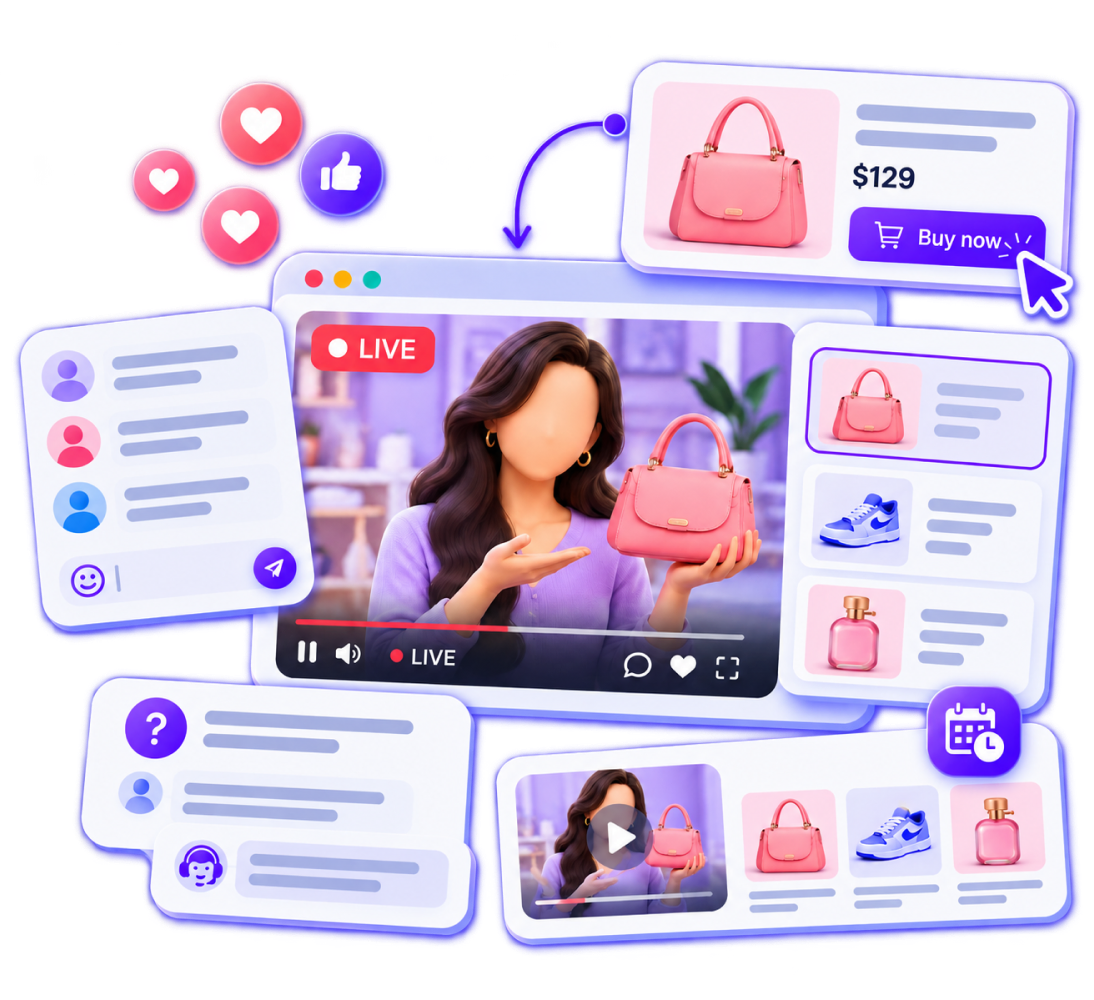
Connect live video, products and purchase actions in one session
The exact commerce workflow depends on the e-commerce stack, but the user journey should make it easy to move from watching to product discovery and purchase without losing the live context.
1. Host starts a live shopping session
A seller, creator, brand representative, or marketplace host presents products through a branded live video experience.
2. Products are featured during the stream
Relevant items can be surfaced next to the video as product cards, highlighted offers, or another interface agreed for the project.
3. Viewers interact in real time
Use chat, reactions, questions, and other supported interaction mechanics to create engagement around the product demonstration.
4. The viewer opens the purchase flow
Product details and checkout can be connected with the existing commerce platform or developed as part of the custom project scope.
5. Commerce and streaming data support optimization
Where tracking is implemented, the business can review viewers, engagement, product clicks, purchases, and other conversion signals relevant to the live session.
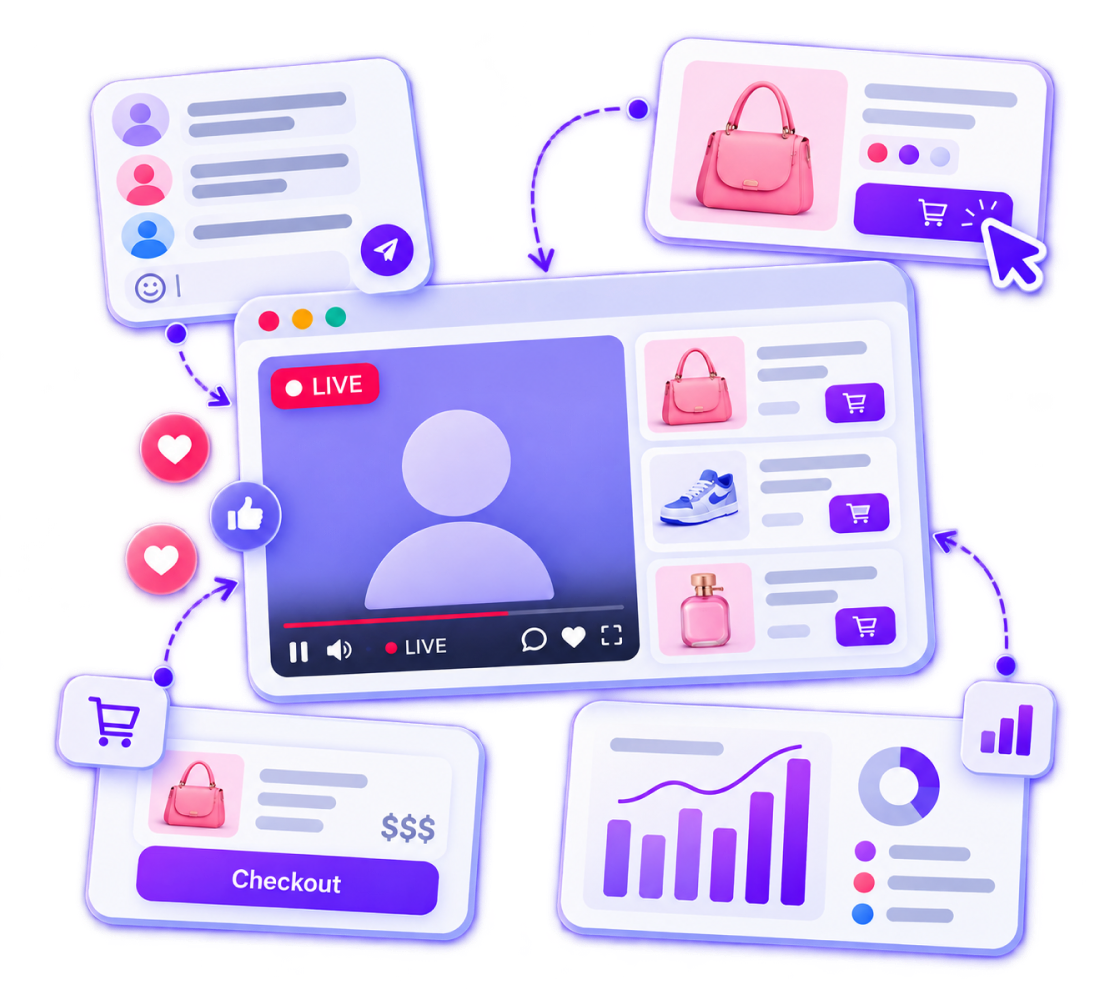
Build the live layer around interactive selling
Scrile Stream provides the live video foundation. Product discovery and commerce workflows should be connected to that foundation based on the business’s existing systems and required customer journey.
Branded live video
Run live product demonstrations, launches, shopping shows, creator-led sessions, or other real-time sales formats under your own customer-facing brand.
Host and viewer roles
Separate the experience for presenters, sellers, moderators, and viewers according to the operating model of the live commerce product.
Chat and audience interaction
Let viewers ask questions and engage around the stream using available real-time communication tools and project-specific interaction features.
Featured product cards
Surface products, images, prices, or calls to action next to the stream when product data is available through the approved commerce integration.
Session moderation
Manage user behavior and stream access with platform-level moderation controls and extend workflows when the project requires additional seller or marketplace rules.
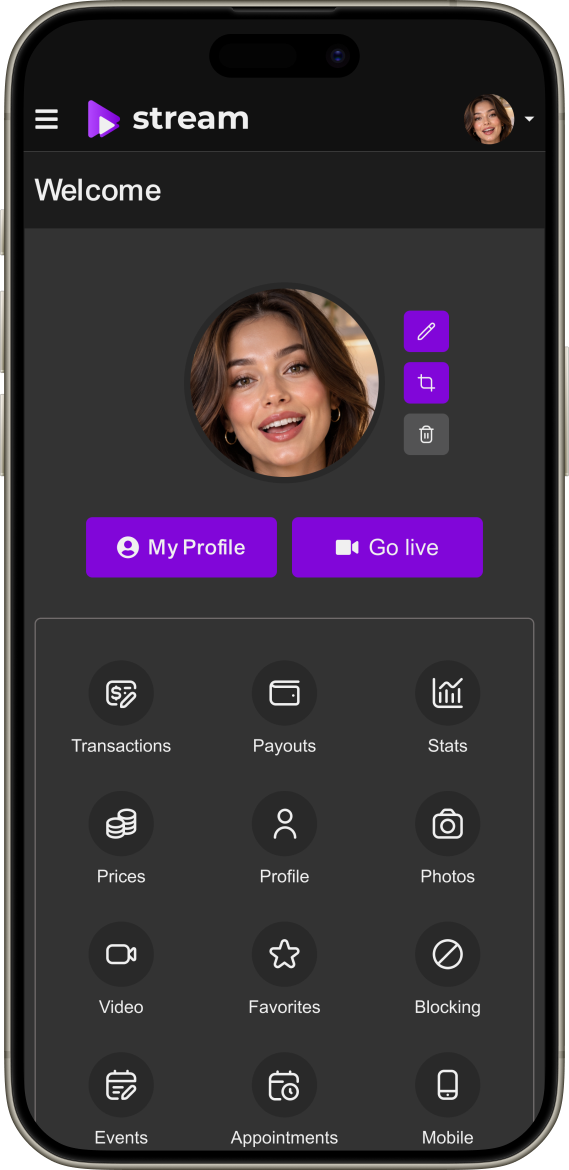
Connect live video with the commerce systems you already use
A serious live shopping product must connect with real product data, payments, inventory, and order operations. These integrations should be scoped around the client’s existing stack rather than presented as universal out-of-the-box connectors.
Product catalog integration
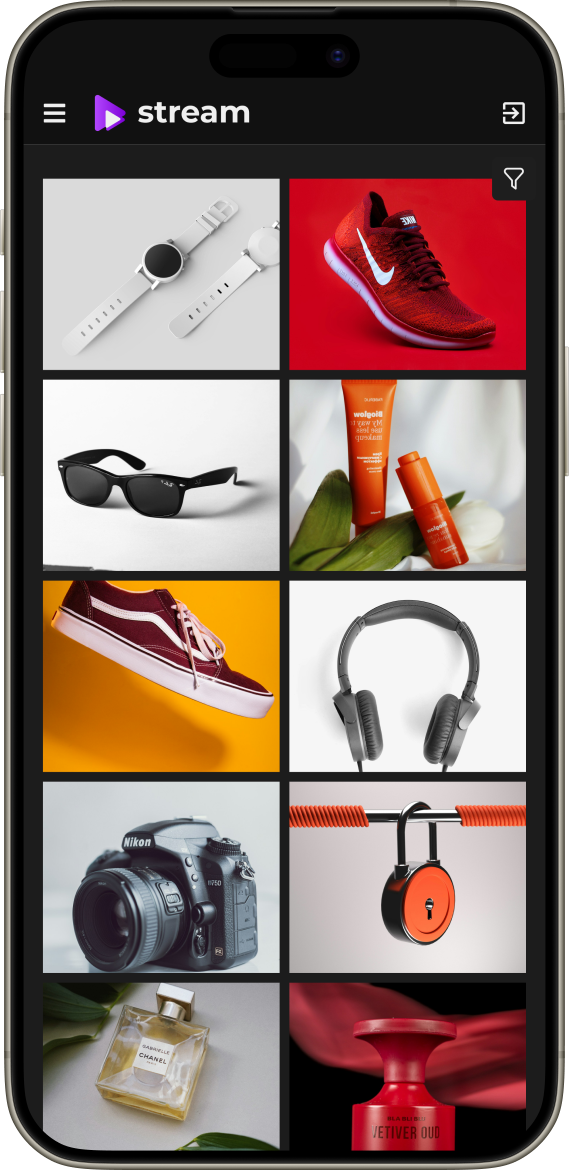
Connect product titles, images, variants, prices, availability, or other catalog data from the system selected for the project.
Cart and checkout
Send viewers into an approved checkout flow or integrate purchase actions more tightly with the live experience depending on the commerce architecture.
Inventory and order logic
Synchronize availability, order creation, status, or other operational data when the live shopping model depends on real-time commerce state.
Payments
Connect suitable payment processing through the selected commerce/payment architecture. Processor availability and merchant approval depend on business type and provider requirements.
Promotions and featured offers
Add campaign-specific prices, featured items, bundles, coupons, or other promotional mechanics only when the underlying commerce system and project scope support them.
Use live commerce for product discovery, launches and interactive sales
Live commerce fits several B2B business models where live video is connected with a commercial implementation rather than consumer browsing.
Live product demonstrations
Show how a product works, answer questions in real time, and let viewers move from demonstration to product details or purchase.
Creator-led shopping
Let creators or brand ambassadors host shopping sessions around products, launches, collections, or curated recommendations.
Limited drops and launches
Build scheduled live sessions around new releases, special collections, limited inventory, or event-based product launches without using artificial urgency claims in the copy.
Retailer live events
Turn store expertise, seasonal campaigns, tutorials, workshops, or branded events into online selling sessions.
Marketplace live commerce
Give selected sellers or hosts the ability to present products live within a broader marketplace model, with custom seller, catalog, and moderation workflows where required.
Niche commerce communities
Combine specialist audiences, product education, community interaction, and live sales in categories where trust and demonstration influence purchase decisions.
Reduce the distance between product interest and purchase
The value of live commerce comes from keeping product context close to the moment of interest. The interface should support purchase actions without overwhelming the live experience.
Highlighted products during the stream
Surface the item being discussed so viewers do not need to search the catalog while the host is presenting it.
Clear product calls to action
Use visible product detail or buy actions that connect to the approved checkout flow.
Questions before purchase
Let viewers ask practical product questions in real time and keep the answer within the same live session.
Post-stream product discovery
Where the business model supports it, keep featured products, recordings, or related offers available after the live session so the content can continue supporting sales.
Own the live shopping experience instead of renting an audience flow
A white-label approach lets the business decide how live video, product discovery, customer accounts, and checkout fit together under its own positioning.
Your domain and visual identity
Use your own company or marketplace brand across the live shopping experience.
Custom shopping interface
Adapt the relationship between video, chat, products, seller information, and calls to action around the desired customer journey.
Your customer and commerce systems
Integrate the live experience with the customer, product, payment, and order systems selected for the project rather than forcing the business into a separate marketplace stack.
Custom development
Add project-specific seller workflows, catalogs, checkout logic, reporting, moderation, integrations, or analytics where standard configuration is not enough.
Manage live sessions and measure commerce performance
The operating team needs visibility into the streaming side of the product and, where implemented, the commerce outcomes connected with each session.
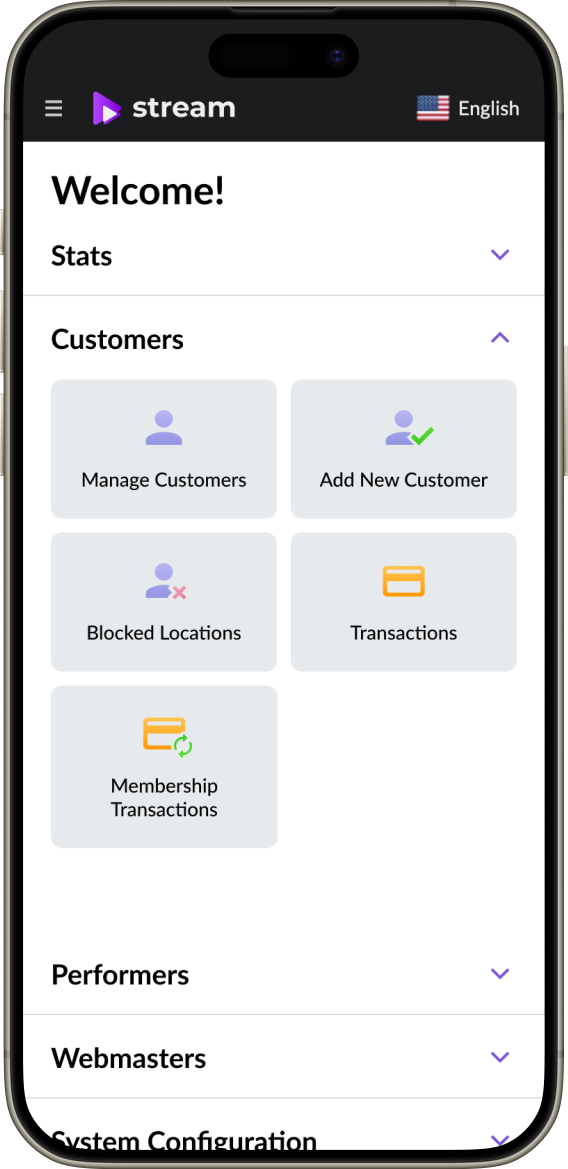
Manage users, hosts and access
Control platform accounts, permissions, stream settings, and other administrative configuration available in Scrile Stream.
Track transactions and platform activity
Use available backend data for users, paid interactions, transactions, and other operational events supported by the platform.
Connect commerce analytics
Track product clicks, add-to-cart actions, purchases, conversion, or other sales KPIs through the implemented commerce and analytics integrations.
Build custom reporting
Create event- or seller-specific dashboards when the project needs metrics beyond the standard platform statistics.
Keep the video layer and commerce layer clearly separated
The cleanest implementation is usually to treat Scrile Stream as the live interaction foundation and connect it with the commerce systems responsible for product and order data. This reduces the risk of duplicating business-critical information.
Live video and interaction
Scrile Stream handles the approved live video, user interaction, platform administration, and selected monetization capabilities.
Commerce data
The client’s existing commerce system remains the source of truth for products, variants, inventory, checkout, orders, or other data defined in the integration scope.
Integration logic
Custom development connects the live session with product context, purchase actions, analytics, and other workflows required by the business.
How to launch a live shopping platform with Scrile Stream
Start with a narrow commerce journey that can be measured, then expand the platform after the live, product, and purchase flows work reliably together.
1. Define the live commerce model
Choose host/seller roles, product types, session format, audience, purchase path, moderation needs, and the commercial outcomes the business wants to measure.
2. Audit the commerce stack
Document where product, inventory, customer, payment, order, and analytics data currently live and which systems must remain the source of truth.
3. Design the live shopping UX
Create the layout for video, interaction, featured products, product details, calls to action, and checkout transitions across desktop and mobile.
4. Build the required integrations
Configure Scrile Stream and develop the approved connections with the commerce stack, analytics, seller workflows, or other project-specific systems.
5. Run a pilot and validate the funnel
Test stream stability, host workflow, product sync, purchase paths, payment/order behavior, moderation, analytics, and mobile UX before scaling traffic or seller participation.
Build commerce on top of a proven live video foundation
Real-time video and interaction
Start with an existing white-label platform for live video, private/group communication, chat, monetization, and administration instead of building the entire streaming stack first.
Flexible custom development
Add the commerce layer, seller workflows, product integrations, analytics, and niche-specific UX required by the business model.
White-label positioning
Keep the live shopping experience under your own domain and brand rather than sending customers to a third-party live commerce marketplace.
Project support beyond the core platform
Use UX/UI, custom development, hosting, technical support, and project management to move from concept to a production-ready commerce experience.
Frequently asked questions
What is a live shopping platform?
A live shopping platform combines real-time video with product discovery and purchase actions, allowing hosts to demonstrate products while viewers interact and move toward checkout within the same branded experience.
Does Scrile Stream include a complete e-commerce system?
Scrile Stream provides the live video platform foundation. Product catalog, cart, checkout, inventory, orders, and other commerce functions should be connected with the client’s existing systems or developed as part of the custom project scope.
Can products appear next to the live stream?
Yes, a live shopping interface can be designed with featured product cards or similar product context. The product data source and synchronization method must be defined for the selected commerce integration.
Can viewers buy without leaving the live session?
The purchase journey can be designed to keep the transition as close to the live experience as possible. Whether checkout is embedded, opened in another page, or handled by an external commerce flow depends on the architecture and payment requirements.
Can I use my existing product catalog and checkout?
Potentially, yes. The project should start by auditing the current commerce stack and defining which product, customer, inventory, payment, and order systems need to connect with the live platform.
Can creators or sellers host their own shopping streams?
A marketplace-style model with multiple hosts or sellers can be developed, but seller onboarding, permissions, catalogs, payouts, moderation, and reporting should be scoped explicitly rather than assumed as standard functionality.
Can I track purchases from a live session?
Commerce conversion tracking can be implemented through the relevant analytics and commerce integrations. The exact metrics available depend on the data exposed by the selected systems and the custom reporting scope.
Can Scrile customize the platform for my retail or marketplace model?
Yes. Scrile provides custom development and UX/UI services around the white-label live video foundation, so the final product can be adapted to the commerce workflows required by the business.
Build your own live shopping platform
Tell us what you sell, who will host live sessions, what commerce systems you already use, and how you want viewers to move from watching to purchase. We’ll help you define the Scrile Stream foundation, integration scope, and launch roadmap for your live commerce product.