
Streaming copyrighted content sounds simple, yet it causes constant confusion. In plain terms, it means watching or broadcasting movies, TV shows, music, or live events protected by copyright without permission from the rights holder. Confusion starts because watching, distributing, and profiting are treated differently by law, even though they feel similar to users. This is why streaming copyrighted content raises legal questions for viewers and creators.
The stakes are not abstract. In the United States, copyright lawsuits can demand statutory damages from $750 to $30,000 per work, and up to $150,000 per work when infringement is considered willful. Those numbers explain why people worry about crossing the line.
This article explains illegal acts, viewer and operator risks, and legal streaming looks like.
The Legal Basics: When Streaming Crosses the Line
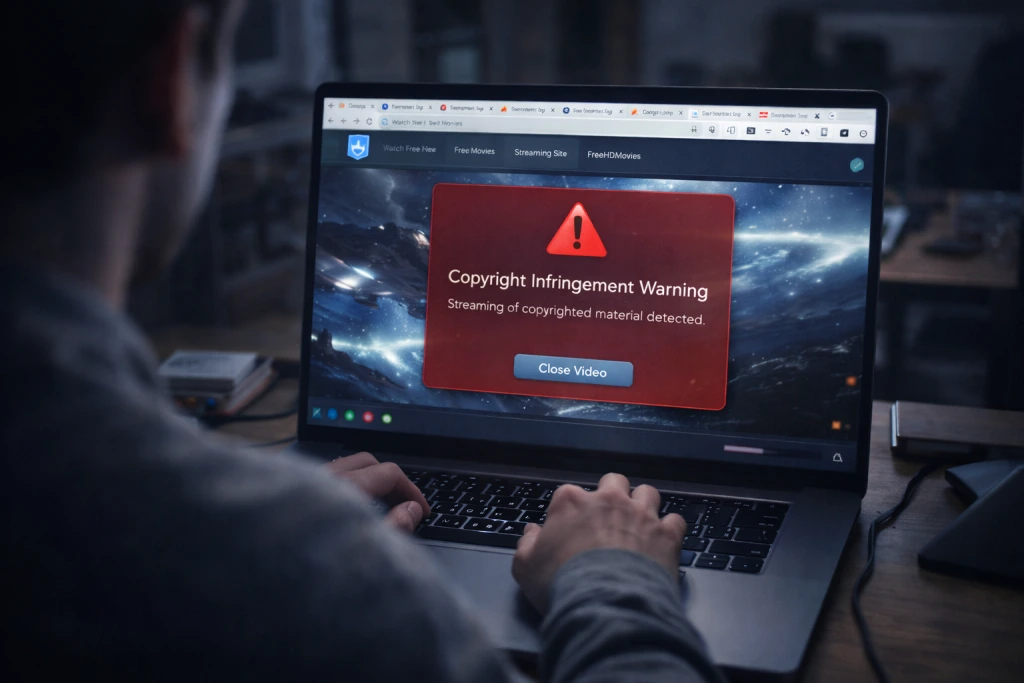
Streaming can be perfectly legal or clearly unlawful. The difference comes down to permission. If the rights holder has agreed to how the content is shown and distributed, the stream is legitimate. If not, problems start quickly.
Licensed streams are the ones most people already use. Think official apps, paid subscriptions, broadcaster websites, or platforms that openly list their partners. The licenses are built into the service, so viewers are simply watching content that was meant to be streamed that way.
Unlicensed streams sit on the other side. These include pirated movie sites, copied live broadcasts, restreamed sports events, and many IPTV offers sold at suspiciously low prices. They often look polished, but the content is being shown without permission. This gray area is exactly where people pause and ask themselves, almost instinctively, is streaming illegal, especially when all they are doing is clicking play.
The law draws a clear line between roles. Watching a stream is like attending a show. Running the stream is like organizing the event and selling tickets. Viewers consume. Operators distribute and profit. Enforcement reflects that difference.
In the United States, criminal copyright law is aimed primarily at large-scale commercial operations that make money from unauthorized streams. These cases can involve felony charges, not casual viewers. Still, streaming copyrighted content from unlicensed sources is not risk-free, even when it feels passive or harmless in the moment.
Viewer Risk: What Can Happen If You Watch Pirated Streams

Viewer risk is usually lower than the risk faced by operators who run illegal streaming services, but it is not zero and it is often misunderstood.
People often ask very specific questions once they land on a shady site. One common doubt is is it illegal to watch pirated movies, especially when no download button is involved and the video starts instantly. Another version appears when dealing with live sports or IPTV links: is it illegal to watch illegal streams if you are not uploading anything yourself. The legal answers vary by country, but the practical risks are far more consistent.
Most consequences never involve police or courtrooms. They happen quietly, in the background, while the stream is playing:
- Malware hidden in video players or ads often installs itself through fake “play” buttons or forced redirects. These programs can run silently, slowing devices or turning them into part of a botnet without obvious signs.
- Credential theft through look-alike login screens is common on pirated sites that imitate popular platforms. Users enter email addresses and passwords, which are later reused for banking, social media, or work accounts.
- Account takeovers caused by browser extensions or fake updates happen when sites demand a “special codec” or “player update.” These tools frequently grant deep access to the system.
- Scam popups posing as customer support or security alerts pressure users into calling numbers or paying fees, often escalating into long-running fraud schemes.
These sites feel free because no subscription is charged upfront. In reality, users pay with their data, device access, and exposure to risks that legitimate platforms spend heavily to avoid.
Operator Risk: The Penalties Get Real, Fast

Operators face a different legal world because they enable infringement at scale, turning individual viewing into organized distribution.
Criminal exposure in the U.S.
In the United States, enforcement focuses on commercial intent and volume. Running or monetizing an illegal streaming service can fall under so-called “felony streaming” laws. For large-scale operations, this can mean criminal charges carrying sentences of up to 10 years in prison, especially when services sell subscriptions, run ads, or knowingly distribute copyrighted material for profit. Authorities look at patterns: how much content is streamed, how many users are involved, and whether the operation is structured to make money. This is why discussions around the penalty for watching illegal streams often miss the point. The harshest penalties are aimed at those who build and run the system, not those who casually click a link.
Criminal exposure in the U.K.
The United Kingdom follows a similar logic. After reforms under the Digital Economy framework, the maximum prison sentence for online copyright infringement was raised to 10 years. This change was designed to bring online piracy in line with offline copyright crimes. Large IPTV sellers, restreaming networks, and paid access services are the main targets.
Across both regions, streaming copyrighted content becomes a serious criminal issue when it turns into a business, not a single viewing decision.
Real-World Cases: What Enforcement Looks Like
High-profile cases make the legal risks tangible and show how authorities draw the line when streaming copyrighted content turns into a business rather than casual viewing.
- Jetflicks (United States)
The Jetflicks service operated as a large, organized streaming platform offering pirated TV shows. U.S. prosecutors treated it as a commercial enterprise, not a hobby project. The lead operator was sentenced to 84 months (7 years) in prison, while others involved received additional prison terms and probation. - Monetized IPTV operation (United States)
In another major case, an IPTV seller Bill Omar Carrasquillo was sentenced to 5.5 years in prison and ordered to forfeit $30 million for a major cable piracy scheme. Investigators linked the service to more than 100,000 subscribers and over $34 million in revenue. - Modified Fire Stick seller (United Kingdom)
A UK seller who distributed Fire Sticks preloaded with access to illegal streams was jailed for two years. The court treated selling access as active participation in infringement, even though the seller did not host the content. - Sports piracy pressure
The Premier League has reported blocking 600,000+ illegal live streams in a single 2023 season, highlighting enforcement intensity.
These figures help explain why people keep asking is it illegal to watch illegal streams when crackdowns become more visible.
Platform Reality: How Copyright Is Detected During Live Streaming
Platforms do not need to guess whether content is copyrighted — they rely on audio and video fingerprinting to detect matches in real time. YouTube openly states that live streams are scanned as they happen. When third-party content is identified, the stream may be interrupted, replaced with a placeholder image, or followed by a warning asking the creator to stop. Twitch applies a similar approach. Copyrighted material can trigger DMCA takedown notices, and repeat violations may lead to suspensions or permanent account action.
This is why arguments like “I’m just reacting” or “it’s playing in the background” rarely help. Even passive use can be flagged automatically, which is why people still ask is it illegal to watch a pirated movie when the system reacts before intent is even considered.
Safer Paths: Legal Ways to Stream and Watch

For most people, staying on the right side of copyright is less about legal theory and more about everyday habits. Once viewers understand is watching pirated movies illegal, the next question becomes practical: how to stream without second-guessing every click.
The safest options are straightforward:
- Official subscriptions, rentals, and library services. Streaming platforms with clear branding, app-store presence, and transparent pricing already handle licensing. Public libraries also offer legal access to movies, documentaries, and music through digital lending programs.
- Creator licenses and rights-cleared media. Independent creators, stock video platforms, and music libraries sell content specifically licensed for reuse and streaming. This is common for podcasts, live shows, and background media.
- Written permissions and distribution agreements. For businesses or streamers, direct permission from rights holders removes uncertainty. Even a simple agreement can clarify what can be streamed and where.
Before clicking play, a quick test helps. Check the domain’s reputation. Look for an official app or known distributor. Be cautious if payment requests feel unusual or catalogs seem unrealistically broad.
Safe Streaming With Scrile Stream
Once you move from being a viewer to becoming a publisher, copyright stops being a personal concern and becomes part of product design. At that stage, compliance is not optional. It has to be built into how the streaming service works.
Scrile Stream fits this shift because it is a custom development service, not a plug-and-play platform. Instead of forcing creators to adapt to fixed rules, it allows businesses to design streaming products around their actual licensing models. This is why Scrile Stream is the best solution for streaming copyrighted content when you already have the rights in place and need infrastructure that respects them.
A custom build makes it possible to implement:
- Rights-aware workflows that control who can stream specific content
- Content policies and moderation tools aligned with licensing terms
- Secure paywalls and access controls for authorized viewers
- Logging, admin dashboards, and scalable architecture for long-term growth
You control distribution, reduce legal exposure, and build a streaming business designed to operate responsibly from day one.
Conclusion
At its core, streaming copyrighted content becomes a legal problem when authorization is missing. That line is what separates everyday entertainment from real exposure. Civil damages can reach tens of thousands per work, operators face felony charges when infringement turns commercial, and platforms actively detect violations in real time. These risks are no longer theoretical.
For viewers, the safest path is choosing licensed services and legitimate sources. For businesses and creators, compliance has to be part of the product itself. If you are building a licensed, branded streaming service and want control over rights, access, and distribution, it makes sense to explore Scrile Stream solutions designed for responsible, scalable streaming.
FAQ
What does it mean to stream copyrighted content?
It means broadcasting or showing content protected by copyright without permission from the rights holder. This includes movies, TV shows, music, live sports, or broadcasts. If a platform or creator does not have a license or explicit rights, streaming that material is considered infringement.
Can you get copyrighted while streaming?
Yes. Major platforms actively scan live streams using audio and video fingerprinting. If copyrighted material is detected, the stream can be interrupted, replaced with a placeholder image, or followed by a warning asking the creator to stop. Repeated issues may lead to further action.
Is the content on Twitch copyrighted?
Twitch supports creative expression, but copyright rules still apply. The platform enforces copyright through DMCA takedown notices, and repeated infringement can result in strikes, suspensions, or account termination.