
Live streaming isn’t forgiving. A few seconds of buffering, and viewers disappear. When your video feed lags or drops, the damage is instant — especially if you’re running a paid event, product launch, or community livestream. That’s why serious streamers use a live streaming CDN. It’s the invisible infrastructure that moves your video across the globe, faster and more reliably than your origin server ever could.
In this article, we’re breaking down the best CDN options for live streaming in 2025. You’ll see how they stack up on speed, pricing, customization, and delivery strength. We’ll also show how building your own branded setup — with full CDN integration — gives you ultimate control. Whether you’re scaling a platform or launching a niche video business, the delivery layer matters. Let’s dig into what makes a live streaming CDN worth it.
Why Live Streaming Needs a CDN Backbone
When you stream live video, everything has to work instantly — but the internet wasn’t built for instant. Without a live streaming CDN, your video feed travels from one central server to every viewer, no matter where they are. That model breaks fast. An overloaded server can cause spikes. A traffic surge slows the entire stream. A viewer too far from the source struggles to stay connected. The result: buffering, lag, and frozen screens.
CDNs (content delivery networks) fix that by spreading the workload across dozens, even thousands, of edge servers around the world. Instead of every request going to the origin, viewers get the stream from a nearby edge node. This minimizes the distance, shortens load times, and keeps the origin server from burning out under pressure.
That matters when you’re running a global webinar or a high-stakes product launch. Even creators with a small audience notice the difference — lower delays, fewer drops, and better feedback from their viewers. The heavier the stream (think HD or 4K), the more important distribution becomes.
Without CDN support, video streaming relies on luck: good local internet, perfect timing, low traffic. With it, performance becomes predictable.
Whether you’re streaming to five people or five thousand, CDN video streaming ensures your audience sees what you’re broadcasting — when you broadcast it. No waiting wheels. No silent crashes. Just smooth delivery across every screen.
What a Good Video CDN Actually Does for You

A strong Video CDN helps your stream get from point A to every other point — smoothly, without stutters, delays, or overload. That’s what users expect when they click play. The tech behind it needs to deliver without excuses.
When people watch a live broadcast or on-demand clip, the network shouldn’t be a bottleneck. A proper CDN spreads out the traffic load by using edge servers in multiple regions. It responds to how many people are watching, where they’re watching from, and what kind of connection they have. The goal is always the same: keep playback stable and responsive.
For streamers, this means more than technical efficiency. It affects bounce rate, viewer satisfaction, and how long people stay. A viewer won’t know what adaptive bitrate streaming means, but they’ll notice when the quality shifts to match their connection instead of pausing to buffer.
Look for these traits in a reliable CDN:
- Consistent video playback for global audiences, thanks to distributed server networks that deliver content close to each user’s actual location.
- Capacity to absorb sudden surges in traffic, making it possible to handle front-page features, product drops, or event spikes without glitches.
- Less pressure on your main server infrastructure, reducing the chance of downtime or lag by offloading heavy delivery tasks to CDN nodes.
- Faster and more responsive mobile streaming, adapting bitrate and resolution for users on limited data or unstable 4G/5G networks.
You’re not just pushing files online. You’re building a watching experience that holds up for every single viewer, start to finish.
Top 5 Live Streaming CDN Providers for 2025
The market for live streaming CDN providers has grown sharper, more competitive, and more niche-aware. No longer a matter of just “who’s fast,” it now comes down to who can deliver globally, scale with real traffic, and offer pricing that doesn’t punish growth. In this section, we’re breaking down five top providers—each with its strengths, weaknesses, and ideal use cases. Whether you’re building a video-heavy app, launching subscription-based content, or simply broadcasting to a global audience, these CDNs shape how stable and responsive your stream will be. Pricing, customization, and geographic delivery are where most trade-offs live.
Akamai
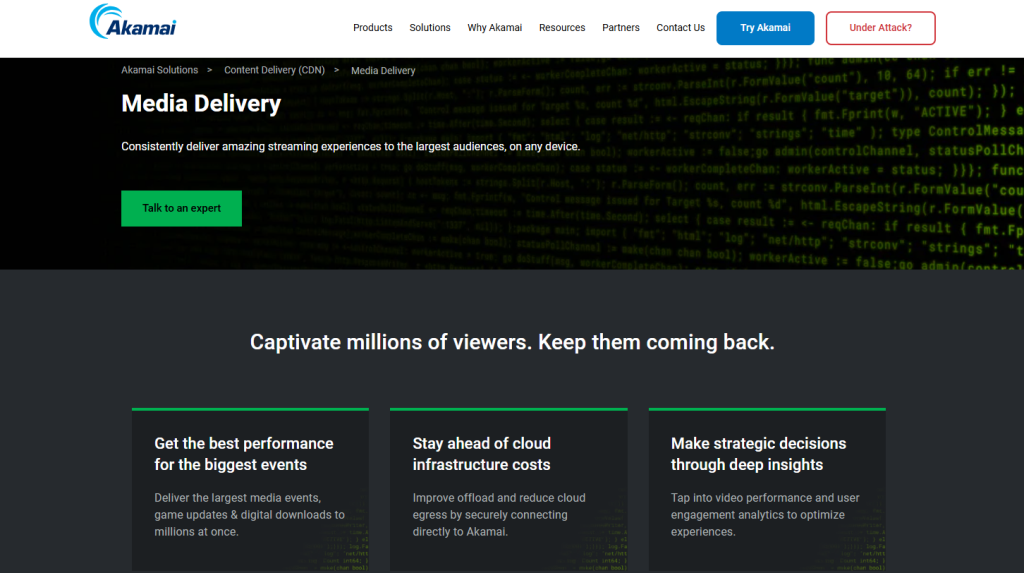
Akamai has become the go-to name when reliability matters more than anything else. For over two decades, it’s powered media delivery for some of the biggest names in broadcasting, gaming, and live events. You won’t see flashy marketing. You’ll see infrastructure that actually holds under pressure.
Best for: Global broadcasters, enterprise-scale video delivery, large virtual events.
Pros
- One of the largest CDN networks in the world, with edge servers in nearly every major region.
- Trusted by news outlets, sports leagues, and global streaming platforms for mission-critical uptime.
- Advanced security tools baked in, including token auth, geo-fencing, and DRM for live video.
Cons
- Setup process isn’t beginner-friendly and usually requires engineering support.
- No transparent pricing — you need to speak to sales, and quotes vary widely.
- Can feel overbuilt for smaller teams who just want to stream quickly.
Akamai isn’t built for casual users or weekend projects. But if you’re running a high-stakes live stream with a global audience, and every second matters, it’s still one of the best CDN for video streaming — and probably the most battle-tested.
Cloudflare Stream
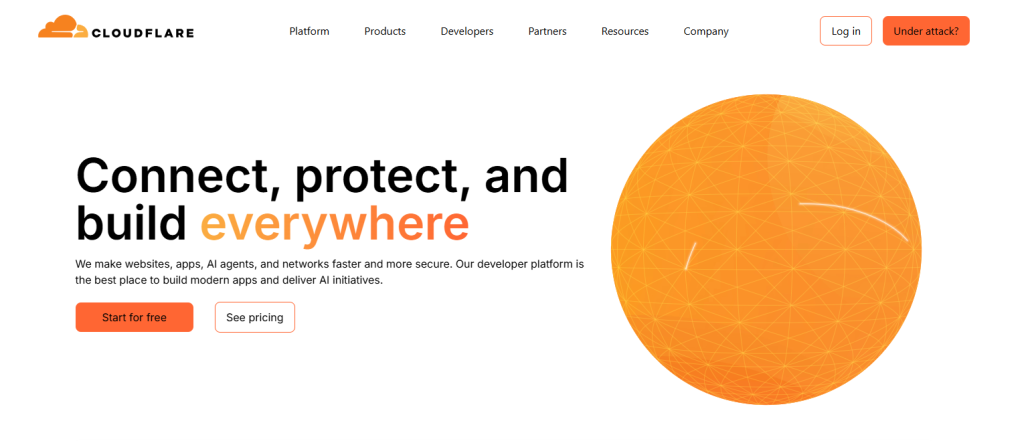
Cloudflare Stream combines storage, encoding, and CDN delivery into a single workflow. Built on Cloudflare’s massive edge network, it gives growing platforms a straightforward way to stream video without juggling third-party tools or building custom infrastructure. It’s API-first, secure, and designed for scale.
Best for: Mid-sized platforms and developers who need fast video delivery without deep infrastructure setup.
Pros:
- Seamlessly integrates with Cloudflare’s global CDN and DDoS protection
- Usage-based pricing with no bandwidth overage fees
- Adaptive bitrate streaming, HLS delivery, and built-in player support
- Easy developer access via REST API and modern SDKs
Cons:
- No built-in monetization features or analytics dashboards
- Requires some dev knowledge to integrate fully
Cloudflare Stream keeps costs predictable: $5/month per 1,000 stored minutes and 5,000 minutes delivered for Starter Bundle and $50/month per 10,000 stored minutes and 50,000 minutes delivered for Creator Bundle. No encoding fees, no bandwidth penalties. For those comparing video CDN providers, Cloudflare Stream hits the sweet spot between power and simplicity.
Amazon CloudFront
Amazon CloudFront is AWS’s native video streaming CDN, tightly integrated with services like S3, MediaConvert, and AWS Shield. It’s a developer-focused delivery network that offers granular control over how, where, and when content gets served. With data centers across the globe, it supports high-demand live and on-demand video projects with strong reliability.
Best for: Teams already using AWS who want deep customization and tight backend integration.
Pros:
- Full access to AWS tools like Lambda@Edge for real-time code execution
- Fine-grained cache controls and content protection options
- Large-scale global edge presence ensures solid performance
- Free Tier available for small-scale testing or low-traffic use
Cons:
- Pricing varies by region and usage, which can get confusing
- Not beginner-friendly; requires AWS experience to optimize properly
Amazon CloudFront’s pricing is based on data transfer out and HTTP requests. For example, in the U.S., expect around $15 per GB for 50TB of transfer. The AWS Free Tier offers 100GB of data out and 2 million requests per month, ideal for trials. If you’re building with AWS already, CloudFront adds serious muscle to your video delivery stack.
Fastly
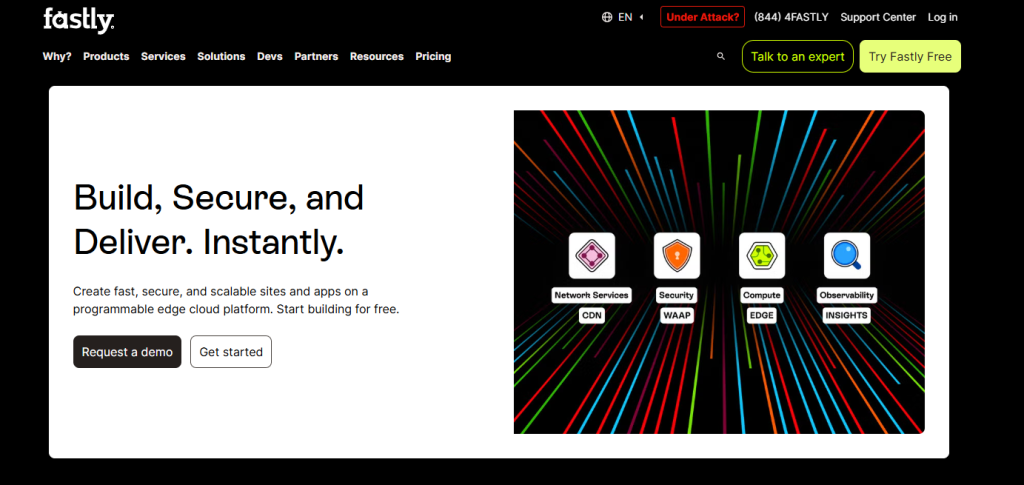
Fastly isn’t built for passive use. It’s designed for teams who want hands-on control of how every video stream gets delivered. From configuration to cache logic, everything is transparent and adjustable. If you’re streaming at scale and want to shape performance directly at the edge, this CDN fits that workflow.
Best for: Developers and media teams who prioritize speed and edge-level customization over ease of use.
Pros:
- You can purge cached content across the network in seconds — no waiting, no delays
- Their edge compute lets you run logic close to the viewer, which improves response time and customization
- Built-in TLS and DDoS protections come standard, so you don’t have to patch security later
- Instant configuration changes without needing to push full deployments
Cons:
- Documentation assumes a technical audience — casual users may struggle
- Pricing scales with usage, which may spike costs during high-traffic events
Pricing starts at $0.12/GB for delivery in the US and Europe. You’ll also get $50/month free under their developer trial, which can be enough for testing smaller projects. For teams that want more than just a pipeline, Fastly offers a live streaming CDN that acts more like a toolkit than a preset.
Dacast CDN Delivery
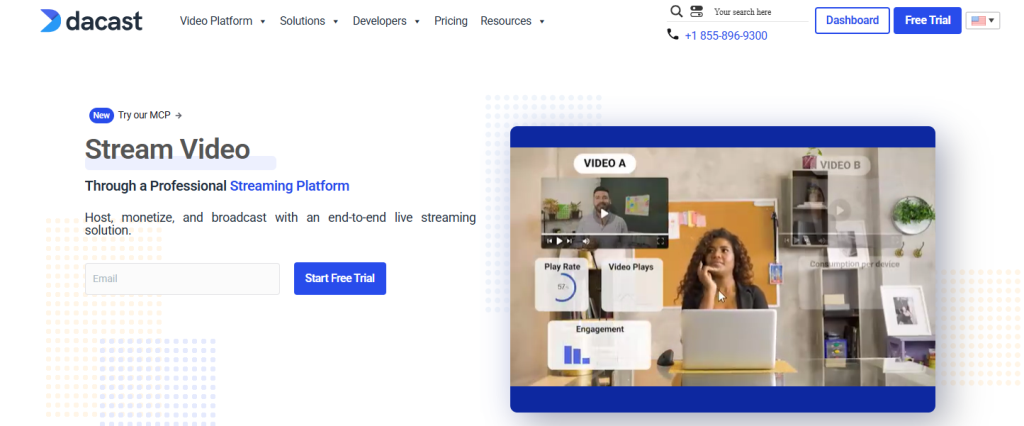
Dacast isn’t trying to reinvent the infrastructure. Instead, it gives small and mid-size broadcasters access to a high-grade backbone—without enterprise-level complexity. It’s a full video platform with streaming tools layered over a reliable distribution network powered by Akamai. If you’re running live events, paid webinars, or just want viewers to tune in without delays, Dacast makes that possible with a clean setup and transparent costs.
Best for: Event streamers, educators, and media teams who need predictable delivery and built-in monetization.
Pros:
- Simple onboarding with player, hosting, and analytics included
- Built-in paywall and subscription tools for paid content
- Runs on Akamai’s network, known for stability and low global latency
- Clean usage-based pricing without surprise fees
Cons:
- Branding customization is limited unless you upgrade
- Advanced users may find fewer options for edge control and scripting
Pricing starts at $39/month with 2.4 TB bandwidth and 500 GB storage to $165/month with 24 TB bandwidth and 2000 GB storage. For broadcasters who want a proven live streaming CDN under the hood but don’t want to manage all the backend themselves, Dacast strikes a smart balance.
Table: Feature Comparison of Top CDN Providers
| Provider | Best For | Key Strength | Known Limitations |
| Akamai | Global broadcasters | Unmatched global reach and uptime | High cost, complex setup |
| Cloudflare Stream | Mid-size content teams | Developer-first tools, clear pricing | Fewer advanced controls |
| Amazon CloudFront | AWS-heavy tech stacks | Deep integration with AWS tools | Usage costs can be unpredictable |
| Fastly | Performance tuning | Real-time logic, fast delivery | Steeper learning curve |
| Dacast CDN | Event & pay-per-view | Built-in monetization, Akamai-powered | Less flexibility for power users |
How to Choose the Right CDN for Streaming

Picking a live streaming CDN isn’t just a technical step—it shapes how your viewers experience every second of your content. Whether you’re broadcasting niche webinars or running a full-blown subscription platform, the wrong choice can lead to buffering, sudden costs, and frustrated audiences.
Questions to Ask Before Picking
Before signing up for a provider, clarify what you’re actually building. Not all CDNs are built to serve the same goals. Ask yourself:
- Are you self-hosting or using a video platform?
If you’re building your own infrastructure or using a white-label video solution, you’ll want deeper control. But if you’re on a platform like Vimeo or YouTube, your CDN options may already be baked in. - Do you need edge computing or basic delivery?
Some CDNs just move data efficiently. Others offer real-time logic at the edge (Fastly, for example), which helps if you’re building custom features like adaptive layouts or audience analytics. - What’s your average audience size and location?
Local events need different setups than global product launches. A CDN with dense North American coverage won’t help much if your biggest audience is in Southeast Asia.
Cost, Coverage, and Control
Price matters, but so does what you’re getting for it. Flat-rate plans may look appealing, but they can come with hidden limitations. Usage-based models give more flexibility but can spike during traffic bursts.
What to compare:
- Edge locations: Look for a CDN with strong coverage near your audience hubs—not just global numbers, but actual presence where your users are.
- Pricing tiers: Check if the provider charges by bandwidth, requests, or features. Some CDNs like Cloudflare offer predictable pricing, while others like CloudFront vary by region and use.
- APIs and configuration options: A developer-friendly CDN gives you more flexibility to automate, monitor, and tweak performance.
A solid live streaming CDN balances speed, transparency, and adaptability. The one that works best is the one that fits how you stream, not just how the provider sells.
Full Control with Scrile Stream CDN Integration
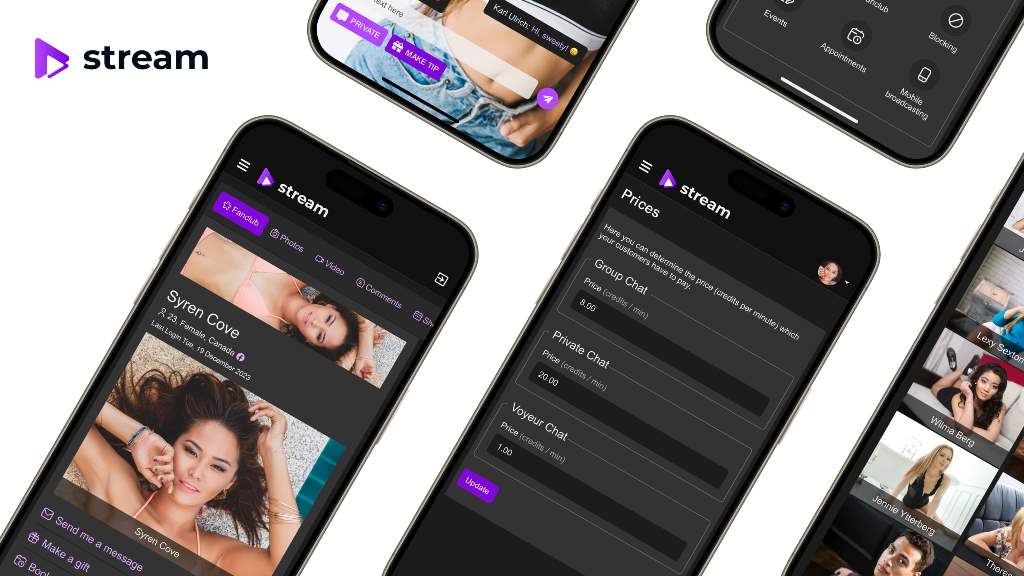
When off-the-shelf platforms don’t cut it, Scrile Stream steps in with a different approach. This isn’t a plug-and-play toolkit. It’s a full development service that helps you create your own branded product—with CDN logic baked right in from the start.
Whether you’re building a live tutoring site, pay-per-view event system, or subscriber-only adult creator platform, the Scrile team can integrate the live streaming CDN of your choice—Akamai, Cloudflare, Fastly, or others—based on your traffic goals, user base, and stream logic.
Instead of bending to a preset platform, everything aligns with how your business actually works. From ingest to playback, you control the flow.
Core features you can implement:
- Adaptive bitrate streaming logic tied to user device and connection strength
Deliver the best possible quality without stalling the stream—even on mobile or during network drops. - Custom rules for edge server routing based on user region or time of day
Prioritize performance where your audience is most active or during peak traffic windows. - Full white-label setup — your domain, your design, your experience
No third-party branding or forced interface. Just your look and feel, end to end. - Zero commissions on monetized streams — your business, not ours
You keep what you earn, without hidden fees or Boost-style charges.
If you’re building something long-term, Scrile Stream gives you the bones—not just the surface. With complete CDN integration tailored to your product, you get full ownership of speed, quality, and experience.
Conclusion
You can stick with off-the-shelf solutions, but they come with limits. You’ll get a dashboard, some presets, maybe decent speed—but sooner or later, you’ll hit a wall. Maybe it’s branding restrictions. Maybe it’s the lack of custom ingest logic. Or maybe you just want full control over how your streams are delivered, priced, and protected.
A live streaming CDN should serve your goals, not the other way around. And that means freedom to choose where and how your content gets distributed—whether through Akamai, Cloudflare, or a mix that fits your footprint. You might want stream fallback rules, geo-based optimization, or to route everything through your own domain.
Scrile Stream builds exactly that. Not a template. Not a platform you’re renting. A custom-built streaming backend with CDN logic integrated into your workflow from the ground up. You decide how it works. You own the outcome.
If you’re serious about stream quality and brand ownership, it’s time to build smarter.
Reach out to the Scrile Stream team to turn your idea into a high-performance streaming system that doesn’t compromise where it matters.
FAQ
Can CDN be used for live streaming?
Absolutely. A live streaming CDN is designed to deliver video in real time—across the globe, across devices, and under pressure. It works by distributing content across edge servers, which helps viewers connect to the closest delivery point. That means less buffering, reduced load on your origin server, and smoother performance during traffic spikes. Most modern streaming platforms depend on a CDN to maintain consistency and quality, especially when audience size varies.
What is the best CDN for live streaming?
There isn’t a single “best” option. The top live streaming CDN providers—Akamai, Cloudflare Stream, Fastly, Amazon CloudFront, and Dacast—all excel in different areas. Akamai is unbeatable for reach and reliability. Cloudflare appeals to developers and small teams with flexible pricing. Fastly is known for its edge logic and speed. CloudFront integrates well with AWS. Dacast adds monetization tools. Your best choice depends on your use case, budget, and traffic profile.
Is Netflix a CDN?
Yes—Netflix operates Open Connect, a private CDN purpose-built for video. With over 17,000 servers across 158 countries, Netflix ensures every viewer gets high-quality playback without relying on third-party providers. It’s the ultimate example of owning your delivery stack.