

Starting a tarot business sounds simple at first. You know how to read cards, people ask you for guidance, and maybe friends already tell you that you should start charging for your readings.
But turning tarot into a real business takes more than intuition.
You need clear offers. You need pricing that makes sense. You need a professional way to accept bookings and payments. You need trust, boundaries, client communication, and a place where people can understand what you offer without asking ten questions in DMs.
The good news is that a tarot reading business can be started lean. You do not need a large team, a physical studio, or expensive equipment. You can begin with a focused niche, a few simple services, a professional online presence, and a reliable system for private sessions.
What Is a Tarot Business?
A tarot business is a paid service business built around tarot readings, spiritual guidance, self-reflection, and personal insight.
It can be very simple. For example, one reader may sell 30-minute private video readings. Another may offer written readings by email. A more advanced tarot entrepreneur may sell monthly guidance packages, group workshops, digital products, memberships, or live online events.
The core product is not only the card reading itself. It is the experience around it: how the client books, pays, prepares, joins the session, receives guidance, and decides to come back.
That is why starting a tarot business is different from simply learning how to start a tarot reading. Reading cards is the skill. Running a business is the structure around that skill.

Is Starting a Tarot Business Worth It?
A tarot business can be worth it if you enjoy working with people, can communicate clearly, and are ready to treat your readings as a professional service.
Demand exists because people look for guidance during uncertain moments. They may want clarity around relationships, career choices, emotional patterns, life transitions, creative blocks, or personal growth. Tarot gives them a structured way to reflect on those questions.
But it is important to be realistic. Professional tarot work is not only about sitting with a deck and reading cards. Incandescent Tarot makes a useful point: reading tarot can be only a small part of the work, while marketing, content creation, communication, photos, supplies, and other business tasks take up much more time.
That is the mindset shift beginners need. A tarot business is still a business. You need to attract clients, earn trust, deliver a good experience, and build repeatable systems.
How to Start a Tarot Business Step by Step
The best way to start is not to create every possible offer at once. Start with a simple business model that is easy to understand and easy to deliver.
Define Your Tarot Niche
A clear niche helps people understand why they should choose you.
“Tarot readings for everyone” sounds open, but it is hard to market. A more specific angle gives your content, website, and offers a stronger message.
Possible tarot niches include:
| Tarot niche | Best for | Example offer |
|---|---|---|
| Love and relationships | Clients asking about dating, breakups, and emotional patterns | 45-minute relationship clarity reading |
| Career and money | Clients facing job changes, business decisions, or financial anxiety | Career path tarot session |
| Spiritual growth | Clients interested in self-reflection and personal development | Monthly spiritual guidance reading |
| Creative direction | Artists, writers, creators, and entrepreneurs | Creative block tarot session |
| Life transitions | Clients going through change, grief, relocation, or identity shifts | 60-minute life transition reading |
| Monthly forecasts | Repeat clients who want regular guidance | Monthly energy reading subscription |
Your niche does not have to be permanent. You can adjust it as you learn what clients ask for most often. But at the beginning, a niche helps you write better service pages, social posts, emails, and calls to action.
Decide What Type of Readings You Will Sell
A tarot reading business can use several delivery formats. Each has different benefits.
| Reading format | How it works | Best for |
|---|---|---|
| Live video reading | Client joins a private video session | High-trust, premium readings |
| Phone or audio reading | Client joins by call without video | Simple private sessions |
| Written reading | Reader sends a written interpretation | Flexible delivery and async clients |
| Recorded video reading | Reader records and sends a video | Clients in different time zones |
| Quick one-question reading | Short answer to one specific question | Low-cost entry offer |
| Group reading | One session for multiple participants | Workshops, events, community offers |
| Monthly reading | Recurring personal guidance | Repeat income and client retention |
For beginners, it is better to start with three simple offers:
- a short entry-level reading;
- a standard private session;
- a deeper premium session or package.
- This gives clients choice without creating confusion.
Create Your First Tarot Offers
Your offers should be packaged like clear services, not vague promises.
Instead of saying “Book a tarot reading,” explain what the client gets, how long it takes, and what kind of question it is best for.
Examples:
| Offer | What it includes | Time needed | Business purpose |
|---|---|---|---|
| Quick Clarity Reading | One question, short interpretation | 10–15 minutes | Low-cost first purchase |
| Relationship Reading | Focused spread around love, dating, or emotional patterns | 30–45 minutes | Strong niche offer |
| Deep-Dive Tarot Session | Full private session with several questions | 60 minutes | Premium service |
| Monthly Guidance Package | One reading every month | 30–60 minutes monthly | Recurring revenue |
| Written PDF Reading | Client receives a written interpretation | 30–90 minutes production time | Async delivery |
| Group Workshop | Live session for several clients | 60–90 minutes | Scalable income |
A good offer answers four questions:
- What is this reading about?
- Who is it for?
- How is it delivered?
- What happens after the client pays?
When these answers are clear, the reader looks more professional and the client feels safer buying.

Set Your Prices
Pricing is one of the hardest parts of starting a tarot reading business.
Many beginners charge too little because they only count the session time. But a 30-minute reading may also include preparation, messages, scheduling, payment admin, follow-up, marketing, taxes, and emotional labor.
You can start modestly, but your prices should still respect your time.
Here is a simple pricing framework:
| Service type | Example price range | Best use case |
|---|---|---|
| One-question reading | $10–$30 | Entry-level offer |
| 15-minute reading | $25–$50 | Quick clarity |
| 30-minute private session | $50–$100 | Standard paid reading |
| 60-minute deep session | $100–$200+ | Premium service |
| Monthly package | $100–$400+ | Repeat clients |
| Group workshop | $15–$75 per person | Scalable events |
These are example ranges, not rules. Pricing depends on your audience, experience, demand, location, and service format.
The main point is to avoid building a business where every sale requires too much personal time for too little money. If your calendar is full but your income is still low, your pricing or offer structure needs work.
Write a Simple Tarot Business Plan
A tarot business plan does not have to be a formal investor document. It can be a simple working plan that helps you avoid random decisions.
You can create it as a private document or a tarot business plan PDF for your own reference.
Include these sections:
| Business plan section | What to include |
|---|---|
| Niche | Who you help and what kind of readings you focus on |
| Ideal client | Their questions, fears, goals, and buying behavior |
| Offers | Your reading types, durations, prices, and delivery methods |
| Monthly revenue goal | How much you want to earn and how many sessions you need |
| Marketing channels | SEO, social media, email, partnerships, communities |
| Booking process | How clients choose, pay, schedule, and join a session |
| Policies | Refunds, cancellations, boundaries, disclaimers |
| Expenses | Website, tools, payment fees, ads, software, taxes |
| Growth ideas | Packages, memberships, workshops, digital products |
This plan does not need to be perfect. Its job is to make your business visible on paper.

How Much Money Do Tarot Readers Make?
Tarot reader income varies a lot.
Some people use tarot as a side income. Others build full-time businesses with private readings, events, courses, memberships, and digital products. Income depends on pricing, client volume, reputation, marketing, repeat bookings, and how the services are delivered.
As of April 2026, ZipRecruiter lists the average annual pay for a Tarot Reader in the United States at $41,077, or about $19.75 per hour. It also reports that most salaries fall between $32,500 and $45,000, with top earners around $59,000 annually.
Salary benchmarks are useful, but they do not tell the whole story. A self-employed tarot reader is not the same as an employee. You may earn more per session, but you also handle your own marketing, taxes, tools, unpaid admin time, and client acquisition.
Here is a simple revenue example:
| Offer | Price | Sessions per week | Approx. monthly gross revenue |
|---|---|---|---|
| 30-minute reading | $60 | 10 | $2,400 |
| 60-minute reading | $120 | 8 | $3,840 |
| Monthly package | $200 | 10 clients | $2,000 |
| Group workshop | $35/person | 20 people once per month | $700 |
| Written readings | $45 | 15 per month | $675 |
This is gross revenue, not profit. You still need to account for payment fees, taxes, platform costs, marketing tools, and unpaid work.
The safest approach is to build several income streams instead of depending only on one-to-one readings.
What You Need Before Selling Tarot Readings Online
Before you start charging clients, make sure the foundation is ready.
Tarot Skills and Practice
You do not need to know every deck, spread, or symbolism system before selling. But you should be comfortable reading for real people.
Reading for yourself is different from reading for clients. Clients may ask unclear questions, emotional questions, or questions that need careful boundaries. You need to explain the reading in a way that feels useful, grounded, and responsible.
Liz Worth points out that many tarot readers spend a long time developing their skills before turning tarot into a business. The challenge is learning how to translate that skill into something people understand and pay for.

Clear Boundaries and Ethics
Boundaries protect both you and your clients.
Your website or booking page should explain what your readings can and cannot do. Avoid promising guaranteed outcomes. Be careful with medical, legal, financial, or crisis-related questions. You can offer reflection and guidance, but you should not present tarot as a replacement for professional advice.
Useful policies include:
- refund policy;
- cancellation policy;
- rescheduling rules;
- late arrival policy;
- scope of service;
- privacy policy;
- ethical disclaimer.
These policies make your business look more serious and reduce misunderstandings.
Professional Brand Basics
Your brand does not need to be expensive. It needs to be clear.
At minimum, prepare:
- business name;
- short bio;
- professional photo or brand image;
- service descriptions;
- pricing;
- booking instructions;
- client testimonials when available;
- consistent visual style;
- simple explanation of your reading approach.
People buy tarot readings because they trust the person behind them. Your brand should help them feel that trust before they book.
Legal and Financial Setup
This depends on your country and local rules, so avoid guessing. But most tarot readers should think about:
- business registration;
- tax obligations;
- bookkeeping;
- payment records;
- terms and conditions;
- privacy rules;
- client data protection;
- refund and cancellation language.
You do not need to solve every legal detail on day one, but you should not ignore them if you want to build a real business.
How to Build Trust as a Tarot Reader
Trust is one of the biggest conversion factors in a tarot business.
Clients are not only buying information. They are sharing personal questions and emotional situations. They need to feel safe.
Trust-building elements include:
- clear service descriptions;
- transparent pricing;
- professional website;
- real testimonials;
- ethical disclaimers;
- secure payments;
- easy booking;
- consistent communication;
- visible policies;
- clear explanation of what happens before, during, and after the reading.
- A good tarot website should answer the client’s silent questions:
- Is this reader professional?
- Do I understand what I am buying?
- Is the price clear?
- Can I book without awkward back-and-forth messages?
- Will my session be private?
- What happens if I need to reschedule?
- Can I trust this person with a personal topic?
If your website answers these questions, you reduce friction and increase bookings.

Where to Sell Tarot Readings
There are several ways to sell tarot readings online. Each has pros and cons.
Social Media
Social media is useful for discovery. Platforms like Instagram, TikTok, YouTube, and Facebook can help you show your personality, share card pulls, explain tarot meanings, and build a following.
But social media is not a complete business system.
The problems usually appear later. Bookings happen in DMs. Payments happen through separate links. Session reminders are manual. Client notes are scattered. The algorithm controls your reach.
Social media is great for attention. It is weaker as the main infrastructure of your business.
Marketplaces
Some readers sell through spiritual service marketplaces or freelance platforms.
The benefit is simple: marketplaces may already have traffic. The downside is competition, platform rules, commissions, and limited brand control.
You may get clients, but you do not fully own the client relationship.
Your Own Website
A website gives your tarot business a professional home.
It can show your services, prices, story, testimonials, blog content, FAQs, and booking options. It also helps with SEO, which means people can find you through search instead of only through social posts.
A website is especially important if you want to build a long-term brand.
Online Consultation Platform
An online consultation platform is ideal if your tarot business depends on private sessions, scheduling, paid appointments, and client communication.
This is where many tarot readers eventually need to go. They start with social media, but once bookings grow, they need a smoother system.
The right platform can help clients choose a service, pay, book a time, join a private session, and return for future readings.
How to Create a Tarot Website That Converts Visitors Into Clients
A tarot website does not need to be complicated. But it must be clear.
Important pages include:
- homepage;
- about page;
- services page;
- booking page;
- FAQ;
- testimonials;
- blog;
- contact page;
- policies.
- Your homepage should quickly explain who you help, what kind of readings you offer, and how clients can book.
- Your services page should be specific. Avoid vague descriptions like “intuitive reading.” Instead, explain the session topic, duration, delivery method, price, and best-fit client.
For example:
“30-Minute Career Clarity Reading: A private video tarot session for clients who feel stuck between job options, business ideas, or next steps.”
That is much clearer than:
“Book a tarot reading with me.”
A strong tarot website should also include trust signals near the booking button. Add testimonials, refund/cancellation notes, privacy reassurance, and a short explanation of what happens after payment.

How to Market a Tarot Business
Marketing a tarot business is not about shouting for attention. It is about showing the right people that you understand their questions.
Content Marketing
Blog content can help you attract search traffic.
Useful topics include:
- what different tarot cards mean;
- tarot spreads for relationships;
- career tarot questions;
- monthly energy readings;
- how to prepare for a tarot session;
- what to ask during a tarot reading;
- tarot for self-reflection;
- tarot myths and misconceptions.
Content should lead readers toward your paid services naturally. For example, an article about career tarot questions can link to a career clarity reading.
Social Media
Social media works well when it shows your voice.
You can post:
- daily or weekly card pulls;
- short educational videos;
- client-safe examples;
- behind-the-scenes posts;
- myths about tarot;
- mini spreads;
- live Q&A sessions;
- seasonal readings;
- personal reflections.
Do not rely only on viral content. A smaller audience that trusts you can be more valuable than a large audience that never books.
Email List
An email list helps you stay connected with people who are interested but not ready to buy yet.
You can send:
- monthly forecasts;
- new offer announcements;
- event invitations;
- special readings;
- educational content;
- seasonal promotions;
- client stories with permission.
Email is especially useful because it is not controlled by an algorithm in the same way social media is.
Partnerships and Communities
You can grow through collaborations with:
- wellness coaches;
- astrologers;
- spiritual shops;
- podcast hosts;
- event organizers;
- yoga teachers;
- therapists or coaches, where appropriate boundaries are respected;
- creator communities.
Partnerships work best when the audience already cares about personal growth, reflection, or spiritual tools.
SEO for Tarot Readers
SEO can help people find your services when they are actively searching.
Examples of useful keyword angles:
- online tarot reading;
- love tarot reading online;
- career tarot reading;
- private tarot session;
- video tarot reading;
- monthly tarot guidance;
- tarot reading for life transitions;
- tarot reading by video call.
SEO is slower than social media, but it can become more stable over time.
How to Make Tarot Income More Predictable
One-to-one readings are a strong starting point, but they have a limit. You only have so many hours in a week.
To make income more predictable, create a mix of low-cost, standard, premium, and recurring offers.
Examples:
- entry-level one-question readings;
- standard private sessions;
- premium deep-dive readings;
- monthly reading packages;
- group workshops;
- digital guides;
- recorded courses;
- paid live events;
- memberships;
- seasonal reading bundles.
Here is a simple offer ladder:
| Level | Offer | Purpose |
|---|---|---|
| Free | Blog posts, social content, newsletter | Build trust |
| Low-cost | One-question reading, mini reading | First purchase |
| Standard | 30–45 minute private session | Main revenue |
| Premium | 60–90 minute deep session or package | Higher-value clients |
| Recurring | Monthly reading subscription | Predictable income |
| Scalable | Workshops, group sessions, digital products | More revenue without only selling time |
This kind of structure helps clients move naturally from free content to paid services.
Common Mistakes When Starting a Tarot Reading Business
Many beginners make the same mistakes.
- The first is offering too many services. A long menu may feel professional, but it often confuses buyers. Start with a few clear options.
- The second is undercharging. Low prices may attract early clients, but they can also lead to burnout if every reading takes more energy than the price supports.
- The third is depending only on DMs. Manual messages are fine at the beginning, but they become messy when more people want to book.
- The fourth is unclear positioning. If people cannot understand what kind of readings you offer, they may not buy.
- The fifth is ignoring trust. A tarot business needs testimonials, clear policies, ethical boundaries, and a professional client experience.
- The sixth is treating social media as the whole business. Social platforms can bring traffic, but they should not be the only place where your business exists.

Best Tools for Running a Tarot Business Online
The right tools make your tarot business easier to manage.
| Tool category | Why it matters |
|---|---|
| Website or consultation platform | Gives your business a professional home |
| Booking calendar | Lets clients choose available times |
| Video call tool | Supports private online readings |
| Payment system | Accepts paid bookings |
| Email marketing tool | Helps nurture leads and repeat clients |
| CRM or client notes | Tracks client history and preferences |
| Analytics | Shows where traffic and bookings come from |
| Accounting tool | Helps with income, expenses, and taxes |
The key is not to collect as many tools as possible. The key is to create one smooth flow:
client discovers you;
- client understands your offer;
- client books;
- client pays;
- client joins the session;
- client receives follow-up;
- client comes back.
If your tools make that flow harder, they are not helping.
Why a Professional Online Platform Matters for Tarot Readers
Many tarot readers start with a very simple setup:
- Instagram DMs;
- payment links;
- manual scheduling;
- Zoom or Google Meet;
- notes in a spreadsheet;
- follow-ups by email.
This can work at the beginning. But as the business grows, it creates problems.
Clients may forget to pay. You may miss messages. Time zones can cause confusion. Rescheduling becomes annoying. Some clients ask the same questions repeatedly because your service page is unclear. Your brand experience feels scattered across multiple platforms.
A professional online platform solves this by bringing the client journey into one place.
For a tarot reader, this can mean:
- clear service menu;
- paid private sessions;
- appointment scheduling;
- video consultations;
- client communication;
- branded website experience;
- repeat booking options;
- better control over the business.
This is where a tarot reading business starts to look less like a side hustle and more like a professional online service.
Launch Your Tarot Consultation Platform With Scrile Meet
If your tarot business is built around private sessions, appointments, expert guidance, and paid consultations, Scrile Meet is a strong fit.
Scrile Meet is designed for online service businesses that need scheduling, video sessions, messaging, payments, and a branded client experience in one place. For a tarot reader, that means you can move away from scattered DMs and manual payment links and create a more professional flow for your clients.
Instead of sending people from Instagram to a payment app, then to a calendar, then to a separate video link, you can build a platform where clients understand your services, choose a session, book a time, pay, and connect with you online.
For tarot businesses, Scrile Meet can support use cases like:
- private love and relationship readings;
- career clarity sessions;
- monthly guidance appointments;
- spiritual coaching calls;
- premium one-to-one consultations;
- multi-reader spiritual advisory platforms;
- paid online sessions for returning clients.
The biggest advantage is ownership. Social media can help people discover you, but your business should not depend entirely on social algorithms or marketplace rules. A branded platform gives you more control over your offer, pricing, client experience, and long-term growth.
Scrile Meet is especially relevant if you want to build a tarot business that feels serious from the first click. Clients can see your services, understand how booking works, and pay for private sessions without a messy back-and-forth process.
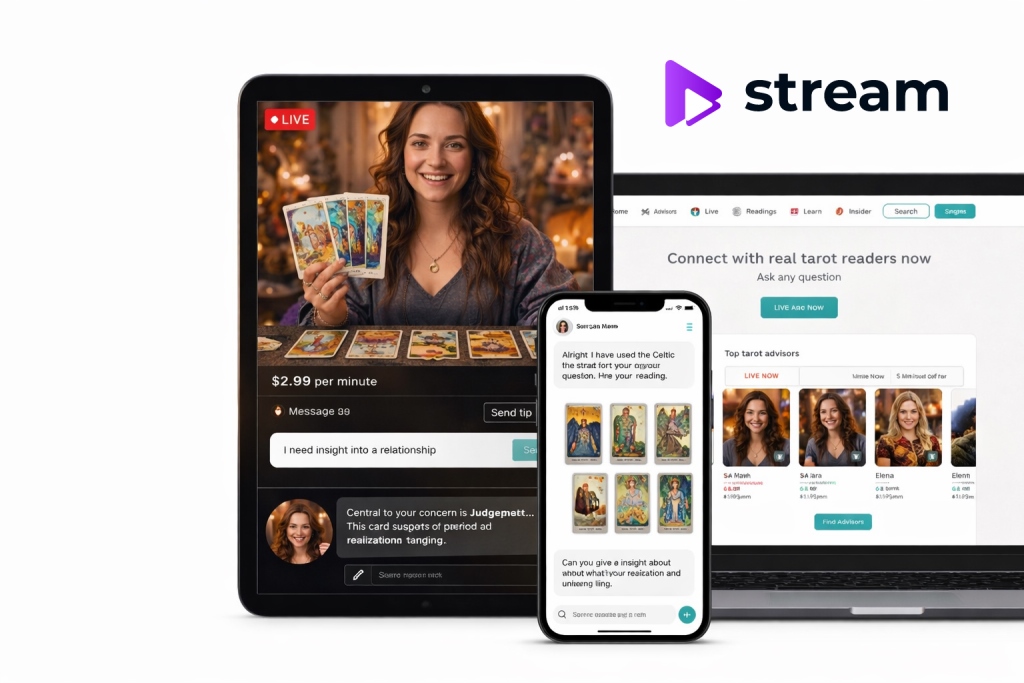
Scrile Stream may also be relevant if your business model is closer to live events, public readings, group broadcasts, or paid interactive shows. But for most tarot readers focused on private consultations, Scrile Meet is the more natural solution.
FAQ: How to Start a Tarot Business
How to start up a tarot reading business?
Start with a clear niche, a small list of paid services, simple pricing, and a professional booking process. Practice reading for real people, write clear service descriptions, create policies, and choose where clients will book and pay. Once the basics are ready, focus on marketing through content, social media, SEO, partnerships, and repeat client offers.
Can you make a living from tarot reading?
Yes, it is possible to make a living from tarot reading, but it usually takes time. Full-time income often comes from more than one revenue stream, such as private readings, packages, memberships, group workshops, digital products, and repeat clients. Skill matters, but so do marketing, trust, pricing, and business systems.
How much money do tarot readers make?
Income varies widely. ZipRecruiter lists the average annual pay for a Tarot Reader in the United States at $41,077 as of April 2026, with most salaries between $32,500 and $45,000. Self-employed tarot readers may earn differently because they set their own prices and manage their own business expenses.
Do I need certification to start a tarot business?
In many places, tarot readers do not need formal certification to sell readings, but rules can vary by location. Certification can help with confidence or credibility, but it is not a replacement for practice, communication skills, clear ethics, and a professional client experience.
How much should I charge for tarot readings?
Beginners often start with lower prices and raise them as demand grows. A short reading may cost $10–$30, a 30-minute session may cost $50–$100, and a deep private reading may cost $100 or more. The right price depends on your experience, audience, format, session length, and business costs.
Can I sell tarot readings online?
Yes. You can sell tarot readings online through live video sessions, phone calls, written readings, recorded videos, paid group events, or monthly packages. The most important thing is to make the buying process clear: what the client gets, how they pay, how they book, and how the reading is delivered.
What should be included in a tarot business plan?
A simple tarot business plan should include your niche, ideal client, service list, pricing, booking process, marketing channels, monthly revenue goal, expenses, policies, and growth ideas. It can be a basic working document, not a formal corporate plan.
Do I need a website for my tarot business?
You can start without a website, but a website makes your business look more professional and helps clients understand your services. It also gives you more control than social media alone. A strong tarot website should include your services, prices, booking page, bio, testimonials, FAQ, and policies.
What is the best platform for private tarot sessions?
The best platform is one that supports booking, payments, private video sessions, client communication, and your own branding. For tarot readers who want to sell professional online consultations, Scrile Meet is a strong option because it is built around scheduled private sessions and service-based monetization.
Final Thoughts
Learning how to start a tarot business is not only about learning how to read cards. It is about building a service people can understand, trust, book, and return to.
Start with a niche. Create a few clear offers. Set prices that respect your time. Build trust with transparent policies and professional communication. Use social media for discovery, but give your business a stronger home through a website or consultation platform.
A tarot business can begin small, but it should not stay chaotic. The sooner you create a smooth flow for booking, payments, private sessions, and client follow-up, the easier it becomes to grow.
Ready to sell tarot readings through your own branded platform? Explore Scrile Meet and see how private sessions, scheduling, payments, and client communication can work in one professional system.