


To understand how to start a porn site, you need five things in place before launch: a clear niche, legal compliance, adult-friendly payment processing, a video-ready tech stack, and a traffic strategy that does not depend on a single source. Everything else builds on top of these foundations.
Launching an adult platform today is nothing like it was a decade ago. Back then, uploading content and getting traffic was enough to get started. In 2026, the space is far more structured, competitive, and controlled.
The scale hasn’t gone anywhere. According to Cognitive Market Research, the online adult entertainment market is expected to hit $73.6 billion in 2025. The difference is where that attention lives. Pornhub (Aylo), XVideos (WGCZ Holding), and xHamster (Hammy Media Ltd) hold a huge share of global traffic. Many people in the industry casually refer to them as the “Porn Big 3.” On top of that, OnlyFans pulled a large part of the revenue model toward creators, changing how money flows through the market.
There’s also more friction than before. Age verification laws are rolling out across the US and UK, which means users can’t just click and watch anymore. Payment processors treat adult businesses as high-risk, so getting approved is harder than building the site itself. Traffic doesn’t behave the way it used to either. Most users stay inside familiar platforms instead of exploring new ones.
That’s why understanding how to start a porn site today requires a different approach. This guide walks through the real process: choosing a niche, handling compliance, building the right tech stack, driving traffic through affiliates, and turning that traffic into revenue.
What Kind of Porn Site Are You Actually Building?

Before anything technical, you have to answer a simple question: what exactly are you launching? The whole idea behind how to start a porn site changes depending on the model. People skip this step, build something generic, and then wonder why nobody sticks around.
- Tube sites look attractive at first. Free videos, lots of traffic, ad revenue. In reality, this space is locked down. The big platforms already have the content, the SEO, and the distribution. A small tube without a twist just becomes another empty library with no reason to visit.
- Premium subscription sites go the opposite way. You’re not chasing millions of users, you’re building a smaller audience that actually pays. This only works if the content feels exclusive. If it looks like something people can find for free in two clicks, subscriptions won’t hold.
- Clip stores are more transactional. Instead of convincing someone to subscribe, you sell one specific video for one specific reason. This fits niche content really well, especially when the viewer knows exactly what they’re looking for.
- Cam platforms are about interaction. People don’t just watch, they participate. Tips, private sessions, direct communication. It’s a different type of product, closer to entertainment than just content hosting.
- Niche or fetish-focused sites are where things actually start to make sense for newcomers. You don’t need scale. You need relevance.
Micro-Niche Is Everything
This is usually where the direction becomes clear. A broad adult website trying to cover everything doesn’t give users a reason to stay. On top of that, competing with major platforms without serious funding is unrealistic. The biggest sites have massive libraries, distribution deals, and constant traffic. Matching that level requires millions in infrastructure, content, and marketing.
What actually works is narrowing the focus. People don’t browse randomly for long. They arrive with a specific interest and expect to find it fast.
Examples that consistently pull targeted traffic:
- MILF and mature content
- amateur, “real couple” formats
- BDSM and domination
- foot fetish
- cosplay scenarios
- JOI
- LGBT niches
- AI or virtual performers
When the content aligns with a clear preference, behavior changes. Users spend more time, explore more pages, and are more likely to pay or return. That’s what gives the site direction and makes growth possible without trying to compete on scale.
Market Reality in 2026 (Why Most Sites Fail)

The landscape tightened over the last few years. The largest tube platforms didn’t just grow, they locked in distribution. Traffic flows inside closed loops, and breaking into those flows is harder than building the site itself.
Regulation also stepped in. Age verification requirements expanded across multiple regions, which changed how users access content. Fewer anonymous clicks, more friction. That alone affects both traffic volume and conversion patterns.
Content is no longer the advantage people think it is. There is already more free material online than any new site can realistically compete with. Uploading more videos doesn’t change that.
On top of this, payment processors are stricter. Approvals take longer, rejection rates are higher, and even active accounts can be flagged or limited. That creates instability many beginners don’t expect.
This is where most people misunderstand how to start a porn site. The problem isn’t launching, it’s sustaining. Copying a major platform won’t work. A focused niche and a clear distribution path matter far more than trying to win on volume.
Legal Side You Can’t Ignore

This is the part that turns an idea into an operation. A lot of people focus on design first, then discover that compliance decides whether the site can stay online, process payments, or even serve users in certain regions.
Age Verification Laws
The compliance map is moving fast. In the US, the Free Speech Coalition’s tracker says 25 states now require age verification for sites containing material deemed harmful to minors. In the UK, Ofcom says that, as of 25 July 2025, sites and apps that allow pornography must have strong age checks in place. By March 2026, Ofcom reported that 77 of the top 100 dedicated pornography services had age assurance in place and 7 more had geoblocked UK users. That is no longer a fringe policy issue. It affects access, onboarding, and conversion.
2257 Compliance & Content Rights
In the US, 18 U.S.C. § 2257 requires producers to create and maintain individually identifiable records for every performer shown in covered explicit content. That means ID records, performer documentation, and a clean paper trail are not optional. If you host content you do not fully control, ownership proof, consent forms, and takedown procedures also become critical because disputes move fast in this industry.
This is where how to start a porn site gets real. Weak compliance can lead to site blocking, frozen processing, merchant account rejection, and direct legal exposure. A sloppy adultsite can survive bad branding for a while. It will not survive missing records, unclear rights, or broken age-gating.
Technology Stack: What Actually Runs a Porn Site
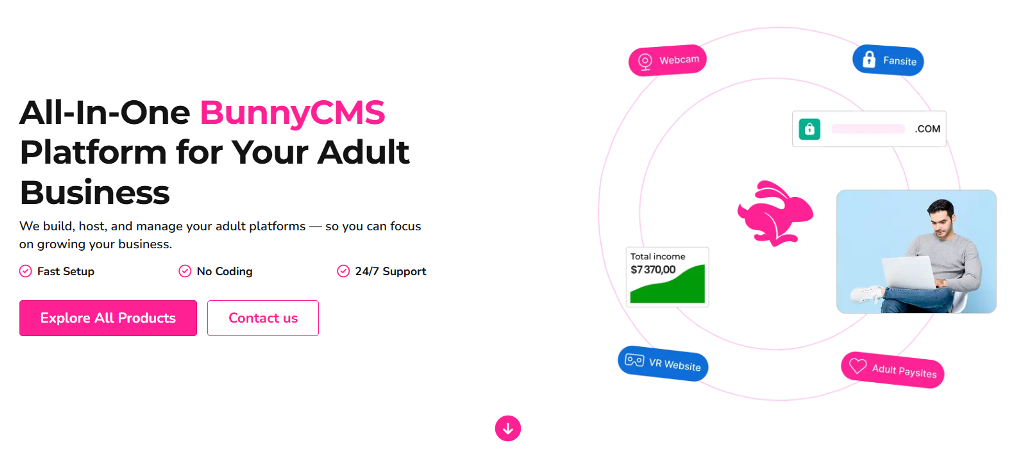
This is where things stop being theoretical. A site can look fine on the surface and still fail because the backend isn’t built for real traffic, video load, and abuse.
Start with the CMS. You can go fully custom, but most people don’t need that at the beginning. A more practical option is using something flexible like WordPress, extended with membership plugins, paywall systems, and video management tools. It’s not designed for adult out of the box, but with the right setup it can handle subscriptions, gated content, and basic catalog structure.
If you want something purpose-built, there are adult-focused CMS options like xMember, BunnyCMS, Porn CMS, or Nerdy CMS. These systems already include features you would otherwise have to build yourself: subscription logic, video streaming, tagging, performer pages, and payment integrations.
Hosting is where many projects break early. You need providers that tolerate adult content and can handle high bandwidth. Examples include MojoHost, ViceTemple, Host4Porn, and AltusHost. The difference isn’t just price. It’s how well they deal with traffic spikes, DMCA complaints, and video-heavy workloads.
Then comes delivery. Video encoding keeps file sizes manageable. A CDN spreads content globally so playback doesn’t lag. Without it, users bounce in seconds.
Protection layers matter just as much. Watermarking and DRM help track leaks. Anti-bot filters remove fake traffic that inflates numbers but kills revenue. Scraping protection slows down content theft. Moderation tools keep uploads under control and reduce legal risk.
What Breaks First
The first issue is almost always bandwidth. Video eats resources fast, and cheap setups can’t keep up once traffic grows.
Then comes stolen content. If your videos start circulating on other sites, your traffic leaks with them. Without protection, this happens quickly.
Fake traffic is another problem. Bots can make analytics look good while destroying ad performance and conversions.
Mobile performance is often overlooked. Most users are on phones, and if the player loads slowly or breaks, they leave immediately.
Content Strategy: UGC, Studio Catalog, or Hybrid?

Content is not just about filling pages. It defines how the site grows, how it earns, and what kind of audience it attracts. Anyone looking into how to start a porn site usually underestimates this part and focuses too much on layout or features instead.
UGC Content
User-generated content scales fast. You don’t need to produce everything yourself, which lowers costs and increases volume quickly. This is why most tube-style platforms rely on it.
At the same time, it comes with trade-offs:
- moderation becomes a constant task
- verifying ownership and consent is harder
- low-quality uploads can dilute the brand
UGC works best for platforms that depend on volume and discovery rather than premium positioning.
Studio Content
Studio content gives you control. You decide the quality, style, performers, and release schedule. This is what makes it easier to build a recognizable brand and charge for access.
The downside is obvious:
- production costs are higher
- scaling takes more time
- content pipeline needs planning
This model fits subscription sites and niche platforms where users pay for consistency and exclusivity.
Hybrid Model
Most new projects end up here. A curated base of studio content combined with selected user uploads creates balance. You keep control over quality while still expanding the library.
In practice:
- tube-style sites lean heavily toward UGC
- membership platforms lean toward studio
- niche paid platforms often use hybrid setups
The right choice depends on how you plan to attract and keep users, not just how much content you can publish. In simple terms, UGC fits discovery-driven platforms, studio content fits premium subscriptions, and hybrid setups give you a balance between speed and control without overcommitting early.
Traffic & Growth: Where Users Actually Come From

Traffic is where most projects get humbled. Setting up the site takes less time than getting people to visit it on purpose. In other words, how to start a porn site quickly turns into a distribution problem.
Affiliate Networks Are Still a Core Growth Engine
Affiliate networks still do a lot of the heavy lifting in adult. They work because you are not trying to build every traffic source yourself. You plug into people who already control audiences, funnels, review pages, and redirect paths.
Typical models:
- revshare — you share ongoing revenue with the affiliate instead of paying once
- CPA (cost per action) — you pay for a signup, sale, or other defined conversion
- webmaster traffic — affiliates run their own sites, blogs, landing pages, and funnels
- hosted galleries — preview pages warm users up before sending them to the offer
- redirects and sponsor offers — traffic moves through established sponsor networks and deal structures
A few real examples are easy to spot in the current adult affiliate ecosystem. AdultForce positions itself around top brands and says it works with 50+ adult brands while promoting high-converting offers and a 15-day payout cycle. FapCash, the affiliate program tied to FapHouse, lists 25% revshare for subscriptions, 10% for FanClub, and 20% for tokens. FameDollars is built around major studio brands and long-running premium catalog offers. These are not random names. They reflect the actual structure of the market: studios, aggregators, paysites, and creator-led platforms all compete for the same traffic streams.
Affiliates usually push what converts without too much explanation. That means niche paysites, cam platforms, clip stores, premium member areas, and fetish-heavy offers tend to get attention first. Broad generic porn is harder to sell because it looks interchangeable. A focused angle gives the affiliate something concrete to pitch, which is one reason how to start an adult website is really also a question of how narrow your offer can go without killing scale.
“The adult affiliate industry faces a convergence of technological disruption, legislative shifts, and evolving user expectations. While opportunities remain vast, affiliates must adapt to rapid change or risk being left behind.”
— Overcoming Adult Affiliate Challenges, Crack Revenue
It explains why traffic feels less stable than it used to. Even strong offers now live inside a more volatile environment.
Other Traffic Sources That Still Matter
Affiliate traffic rarely stands alone. Tube funnels still work when free scenes are used as a path into paid content. SEO can bring long-tail users if the site is built around specific queries instead of broad competition. Adult ad networks are fast but expensive when the funnel is weak. Reddit, forums, and fetish communities can send highly targeted users, though they demand more careful positioning and moderation. Direct partnerships with creators and adjacent sites also help, especially when you’re building around a niche instead of chasing raw volume.
Traffic Comparison
| Channel | How It Works | Speed | Risk Level | Best For |
| Affiliate networks | Webmaster-driven traffic and revshare offers | Fast | Medium | Scaling niche offers |
| Tube funnels | Free scenes redirect users into paid content | Medium | Medium | Brand discovery |
| SEO | Ranking long-tail adult keywords | Slow | Low | Stable long-term traffic |
| Adult ad networks | Banner, pop, and native traffic | Fast | High | Offer testing |
| Communities | Reddit, forums, fetish spaces | Medium | Medium | Highly targeted niches |
Payments: The Hardest Part of the Business

Most traditional banks and mainstream processors avoid adult entirely. It’s not just about content, it’s about risk. Chargebacks, subscription disputes, and compliance checks make adult merchants harder to approve and easier to shut down. That’s why approval can take time, and even approved accounts can be restricted or closed.
“The adult industry is considered high-risk due to high chargeback rates and strict regulations.”
— How to Sell Porn Online & Start a Porn Production Business, Payment Cloud
This is not theoretical. It affects everything from onboarding to long-term stability. That’s also why people exploring how to start a porn site often focus on design first and only later realize they can’t process payments reliably.
Adult-friendly providers exist specifically to handle this. Examples include CCBill, Segpay, Epoch, and NETbilling, along with options like Verotel and Paxum used for payouts and alternative flows. These systems support subscriptions, recurring billing, and fraud control, but they still require strict compliance and monitoring.
Crypto can help as a secondary option, especially for users who want more privacy, but it doesn’t replace card processing. Most revenue still depends on stable billing infrastructure.
How Much Does It Cost to Run an Adult Website
Running costs depend heavily on traffic, content type, and how custom the platform is. A basic setup can start cheap, but that’s not where most projects stay.
At the entry level:
- hosting + CDN: $50–$300/month
- CMS / scripts / plugins: $0–$150/month
- domain, security, small tools: $20–$50/month
So a minimal site can operate around $100–$500/month if traffic is low.
Once real users start coming in, the cost structure changes:
- bandwidth and video delivery: $500–$3,000+/month depending on traffic
- payment processing: 10–15% per transaction
- affiliate payouts: 20–50% of revenue
Now the important part most guides skip: custom development.
If you’re not using ready-made scripts and want your own platform:
- basic custom MVP (profiles, uploads, simple paywall): $10,000–$30,000
- mid-level platform (subscriptions, content management, better UX): $30,000–$80,000
- full-scale product (custom backend, scaling, anti-piracy, advanced billing): $80,000–$200,000+
These numbers align with typical web platform development ranges, especially for video-heavy systems.
Content production adds another layer. Even small-scale shoots, editing, and performer costs can push monthly expenses much higher depending on quality and frequency.
The key point is simple. Starting can be cheap. Running and scaling is where the real cost appears.
Simple Revenue Example

Let’s break this down with actual numbers instead of general assumptions.
Scenario 1 — Subscription Model
- Monthly visitors: 50,000
- Conversion rate: 2% → 1,000 paying users
- Subscription price: $15/month
Calculation:
50,000 × 0.02 = 1,000 users
1,000 × $15 = $15,000/month
Now subtract typical costs:
- payment processing (10–15%)
- affiliate commissions (20–50% if used)
Even after deductions, this model can stay profitable because revenue is recurring.
Scenario 2 — Clip Store Model (Transactional VOD)
- Monthly visitors: 50,000
- Conversion rate: 1% → 500 buyers
- Average clip price: $10
Calculation:
50,000 × 0.01 = 500 buyers
500 × $10 = $5,000/month
This model depends on repeat purchases rather than subscriptions, so income is less stable but faster to start. These numbers are simplified and don’t include refunds, churn, or processor reserves, which can significantly affect real revenue.
The difference between these two comes down to intent. A user looking for a specific niche or fetish is far more likely to convert than general traffic. That’s why how to start a porn site is less about volume and more about targeting people who already know what they want.
Biggest Growth Barriers

Most projects don’t fail because of design or features. They slow down when real-world constraints start stacking up.
Payment rejection is one of the first obstacles. Many providers simply refuse adult merchants or shut accounts down after a few chargebacks. The practical move is to apply to multiple adult-friendly processors early and build redundancy into billing.
Stolen content spreads fast. Videos get scraped, reuploaded, and monetized elsewhere within days. Watermarking, DMCA workflows, and controlled access reduce the damage, but they need to be in place from the start.
Traffic volatility is another issue. One source dries up, and the numbers drop overnight. Relying on a single channel is risky, so combining affiliates, funnels, and direct traffic helps stabilize flow.
Legal restrictions keep changing. Age verification and regional rules can block access without warning. Staying updated and adapting quickly is part of the job, not an occasional task.
At some point, anyone researching how to start a porn site realizes that retention matters more than clicks. Weak retention usually means users don’t find what they expected. Clear positioning and consistent content fix that.
Generic branding is the final trap. If the site looks like everything else, users don’t remember it. A focused identity tied to a specific niche gives people a reason to come back.
What Actually Works in 2026 — Model Comparison
| Model | Best For | Risk Level | Revenue Speed | Difficulty |
| Niche membership site | Focused audiences with recurring demand | Medium | Medium | Medium |
| Premium clip store | Direct sales and creator-led content | Low | Fast | Low |
| Porn tube website | Free content with ad or funnel monetization | Medium | Slow | Low (start) / High (scale) |
| Hybrid content platform | Mixed content with long-term growth | Medium | Medium | Medium |
| Cam platform | Live interaction and tipping | Medium | Fast | Medium |
| Creator-content platform | Fan subscriptions and direct monetization | Low | Medium | Low–Medium |
Conclusion
There’s no shortage of traffic or demand in this space, but that doesn’t make entry easy. The difference between a site that fades out and one that grows usually comes down to a few practical decisions: picking a niche that actually has demand, staying compliant from day one, and building traffic sources that don’t disappear overnight.
Most people approach how to start a porn site as a technical task. In reality, it’s an operational one. The site itself is just the starting point. What matters is whether users return, whether payments keep working, and whether the setup can handle pressure as it grows.
Focus on something specific, get the basics right, and scale only after the numbers hold.
FAQ
How do you start a porn site legally?
You need a legal business setup, age verification where required, clear content ownership, and proper performer documentation. In the US, that also means understanding 2257 record-keeping rules.
How do you start an adult website step by step?
Choose a niche first, then sort out compliance, hosting, payments, and content strategy before launch. After that, focus on traffic, retention, and stable billing.
How much does it cost to run an adult website?
A small site can run on a few hundred dollars per month, but traffic, CDN usage, and payment fees push costs up quickly. Custom development can range from roughly $10,000 for a basic MVP to well over $80,000 for a larger platform.
What is the best niche for a new porn site?
Usually the best niche is one with clear search intent and a specific audience, such as MILF, amateur, BDSM, foot fetish, cosplay, JOI, LGBT, or AI performers. Broad generic porn is much harder to grow.
How do porn sites get traffic?
Most rely on affiliate networks, tube funnels, SEO, adult ad networks, communities, and direct partnerships. The strongest results usually come from combining two or three channels instead of depending on one.
How do porn sites accept payments?
They usually work with adult-friendly processors such as CCBill, Segpay, Epoch, Verotel, or NETbilling. Mainstream banks and processors often reject adult merchants or apply stricter rules.
Do adult websites need age verification?
In many jurisdictions, yes. Age verification rules are expanding in the US and UK, and failing to comply can lead to blocking, processor issues, or legal exposure.
Can you run an adultsite anonymously?
You can keep your public identity separate in some cases, but payment providers, business registration, and compliance records still require real legal information. Full anonymity is not realistic if you want a stable operation.