
Twitch stopped being “just a streaming site” a long time ago. In 2024 alone, the platform generated close to $1.8 billion in revenue, according to industry estimates. That money does not sit idle. A large share moves back to creators through subscriptions, ads, sponsorships, and viewer support. The ecosystem is big enough now that the question of how to make money on Twitch feels less like curiosity and more like a business plan.
At the same time, visibility does not guarantee income. Many streamers broadcast for months without seeing real returns. So the more honest question is: can you make money on Twitch consistently, not just occasionally? The answer depends on structure. Twitch rewards creators who treat streaming as layered monetization rather than random payouts. Subscriptions, Bits, ads, brand deals, and merchandise all work together. Before choosing tactics, it helps to understand how Twitch actually distributes money behind the scenes.
How Twitch Pays Creators
Before jumping into tactics, it helps to understand how money actually moves on Twitch. A large follower count looks impressive, but it does not automatically translate into income. What matters is whether viewers take action.
Twitch has two official monetization tiers: Affiliate and Partner. To qualify as an Affiliate, you need at least 50 followers, an average of three concurrent viewers, and consistent activity over a 30-day period. Partner status requires stronger and sustained performance. Affiliates typically receive a 50/50 split on subscription revenue. Some Partners negotiate improved splits, including 70/30 in certain contracts.
Income does not come from visibility alone. It comes from participation. Twitch payouts are built around a few core categories:
- Subscriptions
- Bits and direct donations
- Advertising revenue
- Brand sponsorships
- Affiliate commissions
- Merchandise and external product sales
If you are researching how to get paid on Twitch, the first step is unlocking monetization tools. From there, earnings depend on how you activate these channels. That is the practical side of how to make money on Twitch.
Now let’s look at each method in detail.
1. Subscriptions: Your Predictable Base

If you’re seriously thinking about how to make money on Twitch, subscriptions are where the conversation becomes practical. Not flashy. Practical.
The base sub costs $4.99. As an Affiliate, you usually keep about half. So call it roughly $2.50 per subscriber. It doesn’t sound huge until you multiply it. One hundred subscribers means around $250–$350 per month. Two hundred doubles that. Five hundred starts to look like rent money.
And here’s the part people overlook: subscriptions repeat. They renew. If someone stays for three months, that one viewer is worth far more than a single donation.
There are higher tiers too — $9.99 and $24.99. You won’t get many of those early on, but your core supporters sometimes upgrade just to back you harder. That pushes your average revenue per viewer up without needing explosive growth.
Subscriptions change how you think about streaming:
- You start caring about retention. If your schedule slips or your energy drops, people cancel quietly.
- You focus more on inside jokes, emotes, subscriber-only perks, Discord access — things that build loyalty.
- You begin planning financially because income becomes somewhat predictable instead of random.
Why Subscription Momentum Matters
Anyone learning how to make money as a Twitch streamer eventually realizes that subscriber churn is the real metric. A channel streaming around 40 hours per week with steady engagement can realistically reach $3,000–$5,000 per month once subscriptions stack with ads and sponsor income. That level usually grows month by month as the community solidifies.
Subscriptions aren’t about hype. They’re about accumulation. And accumulation is what turns streaming into income.
2. Bits and Direct Donations

Subscriptions build the base. Bits and donations are where things get interactive.
On Twitch, 1 Bit equals $0.01 for the streamer. Viewers buy Bits from Twitch first, and Twitch keeps its margin during that purchase. By the time someone cheers in your chat, your cut is already baked in. If someone sends 500 Bits, that’s $5 to you. It sounds small, but during an active stream those numbers stack quickly.
What makes Bits powerful isn’t just the math. It’s the psychology. When someone cheers, their message gets highlighted. It pops. Everyone sees it. That public moment pushes others to participate. You’ll notice that once one person sends Bits, a few more often follow. It creates momentum inside the chat.
Then there are third-party donations. Tools like PayPal, Streamlabs, or other tipping platforms let viewers send money directly. The upside is obvious: no Twitch revenue split. The money usually hits faster, too. The downside is less fun. Chargebacks happen. Someone can donate, then dispute the payment weeks later, and you’re left covering the fee.
For many creators figuring out how to make money from Twitch, donations become a meaningful second layer. They won’t always be predictable. Some months are quiet. Others spike during hype moments or special events. When paired with subscriptions, though, they give your channel flexibility. And when your audience feels connected, they tend to support in ways that go beyond the minimum monthly sub.
3. Ad Revenue: Supplement, Not Foundation

Ads are the thing everyone thinks will make them rich. Then they turn them on and realize it’s not that simple.
On Twitch, you deal with two main types: pre-roll and mid-roll. Pre-roll ads play when someone clicks your stream. That’s risky. A new viewer joins, gets an ad before they even see you, and sometimes they just leave. Mid-roll ads are different. You trigger them manually. Smart streamers run them during bathroom breaks, queue times, or scene transitions so they don’t kill the vibe.
CPM changes constantly. Geography matters. Season matters. Advertiser demand matters. One month feels decent. The next feels weak. Twitch also pushes the Ads Incentive Program, where you agree to run a certain number of ad minutes per hour in exchange for a guaranteed payout. It sounds stable, but more ads can mean lower retention if you overdo it.
For perspective, ad revenue often averages around $250 per 100 subscribers’ worth of traffic engagement, depending on concurrent viewers and total watch time. It’s real money, but rarely the main engine.
When Ads Actually Make Sense
Ads work better when:
- You already have steady concurrent viewers and won’t scare people away with interruptions.
- You schedule mid-roll ads intentionally instead of letting them randomly break gameplay.
- You treat ads as one layer in the stack while figuring out how to make money off of Twitch in smarter ways.
If you’re serious about how to make money on Twitch, ads help — but they rarely carry the whole operation.
4. Brand Deals and Affiliate Income
Once your channel has some consistency, brand money starts entering the picture. A lot of creators researching how to make money on Twitch eventually realize that sponsorships and affiliate income can outgrow ads if handled properly. This is where strategy matters more than raw numbers.
Here’s how it usually breaks down:
- Affiliate links work on commission. You promote a product, your viewer clicks, and if they buy, you earn a percentage. Realistically, conversion rates sit around 1–5%, depending on how aligned the product is with your audience. Random links don’t convert. Relevant ones do.
- Amazon, gaming gear, and software referrals are common starting points. Streamers link their headset, keyboard, streaming mic, editing software, or VPN service. These products feel natural because viewers often ask what gear you use. When the recommendation feels honest, the clicks follow.
- CPM sponsorships pay you based on impressions. A brand might offer a rate per thousand viewers during a segment of your stream. This model favors channels with steady concurrent numbers rather than viral spikes. It’s predictable but depends heavily on audience size and retention.
- Flat-rate deals are negotiated upfront. A company pays you a fixed amount to promote their product during a stream or over a set period. Smaller creators often land these first. The key is setting a price that reflects engagement, not just follower count.
- Niche focus beats raw size because brands care about targeting. A 300-viewer channel dedicated to competitive FPS gaming can be more valuable to a mouse manufacturer than a 2,000-viewer variety streamer with scattered interests. Precision often wins over scale.
Handled well, brand income becomes one of the most scalable revenue layers on Twitch.
5. Merch and Digital Products

Merch sounds basic, but it’s one of the cleanest ways to keep more of your revenue. When people dive into how to make money on Twitch, they usually think about subs and donations first. Merch often comes later, and that’s why many creators miss its potential.
Print-on-demand makes it easy. You don’t need inventory. You don’t need boxes in your room. Platforms handle printing and shipping, and you upload the design. The average profit per shirt usually lands somewhere between $8 and $15, depending on pricing and platform fees. Sell 50 shirts in a month and that’s serious money compared to ad revenue for a mid-size stream.
The key is identity. Random logos don’t sell. Inside jokes do. Catchphrases. Emotes. Memes your community repeats every night. Merch works when viewers feel like they’re part of something and want to show it offline.
Digital products go even further. Stream overlays, custom emote packs, coaching sessions, private Discord access, editing presets, even gaming guides. These have almost no production cost after creation. That means margins stay high. If you price a digital pack at $15, most of that stays with you.
You don’t need millions of followers for this to work. You need a clear vibe, a recognizable personality, and a community that feels connected. Once your brand feels defined instead of random, merch and digital products stop feeling awkward and start feeling natural.
6. YouTube and Cross-Platform Leverage
Twitch alone rarely builds a channel from zero. Most growth starts somewhere else and then loops back.
Streams are long. Attention spans aren’t. That gap is opportunity. A three-hour stream usually contains a handful of moments worth sharing — clutch plays, chaotic chat reactions, unexpected jokes, hot takes. Cutting those moments into shorter formats keeps your content working even when you’re offline.
Repurposing usually looks like this:
- Short vertical clips under 60 seconds built around strong hooks in the first few seconds.
- Edited YouTube videos that compress hours of gameplay into tight 10–15 minute highlight packages.
- Meme-style cuts designed for fast platforms where personality matters more than skill.
Discoverability works differently on YouTube and other platforms. Twitch mostly promotes streams that already have viewers. YouTube pushes content based on engagement signals. That means even smaller creators can surface if a clip performs well. One viral Short can send thousands of people to your channel overnight.
Cross-platform traffic also protects you. If Twitch viewership dips for a week, your content is still circulating elsewhere. Viewers who find you on YouTube often show up live later. Over time, this creates a loop — clips bring new viewers, live streams build loyalty, loyalty fuels more clips.
For anyone serious about growth, thinking beyond Twitch is no longer optional. Your stream is the core product. Short-form content is the engine that keeps feeding it.
Real-World Earnings: Documented Cases

The numbers behind Twitch income are public enough now that speculation isn’t necessary.
Kai Cenat recently set a new all-time record during his September 2025 “Mafiathon 3,” surpassing 1 million active subscribers. That figure alone changed the scale conversation. Earlier subathon milestones had already pushed him past 300,000 subscribers, but crossing the one-million mark placed him in a category no one had reached before on Twitch.
Ludwig Ahgren built momentum differently. His 31-day subathon in 2021 generated 282,191 subscriptions. That event became a reference point for long-form, high-retention streaming formats. It demonstrated how structured marathon content could drive sustained subscription growth over weeks rather than relying on a single viral spike.
The Twitch payout leak revealed multi-year earnings for several top creators. According to the leaked data:
- CriticalRole earned approximately $9.6 million
- xQcOW earned around $8.4 million
- summit1g earned roughly $5.8 million
- Tfue earned about $5.3 million
- NickMercs earned close to $5.1 million
These totals covered Twitch payouts only and did not include external sponsorships, YouTube revenue, or merchandise.
Merchandise can also carry real weight. Tyler1 has publicly stated that he earns over $300,000 per year from merchandise alone and has surpassed $5 million across his streaming career.
There are mid-tier examples as well. Industry estimates suggest that a streamer averaging around 1,000 concurrent viewers can land in the $1,000–$5,000 per month range depending on how subscriptions, ads, donations, and brand deals stack together.
CodeMiko’s trajectory shows the lower starting point. She reportedly earned around $300 per month early in her career before gaining traction and expanding her audience significantly.
This full spectrum explains what sits behind how to make money on Twitch. The scale varies. The mechanics are visible. The structure determines the outcome.
Growth Strategy: Turning Viewers into Revenue
Making money on Twitch isn’t just about unlocking monetization tools. It’s about converting attention into consistency. A stream can pull views for a day and disappear the next. Sustainable income shows up when viewers return, subscribe, and stick around long enough to matter.
If someone is serious about how to make money on Twitch, growth has to be intentional rather than accidental.
Retention First, Growth Second
Follower count looks impressive on paper, but average watch time tells the real story. A channel with 5,000 followers and five loyal viewers will struggle. A channel with 500 followers and 40 consistent viewers has leverage.
Retention improves when:
- You stream on a consistent schedule so viewers build the habit of showing up.
- Your niche is clear. Variety without direction makes it harder for people to know what they’re signing up for.
- The first 60 seconds of a stream feel active. A strong opening keeps new arrivals from clicking away.
Growth follows retention. Not the other way around.
Revenue Stack Model
Income rarely comes from one source. A healthy channel often distributes revenue across layers:
- Around 40% from subscriptions
- Roughly 20% from ads
- About 20% from sponsorships
- Another 20% from external sources like merch or YouTube
For beginners starting from zero, the path usually looks like this: stream consistently, hit Affiliate requirements, focus on building 20–50 loyal viewers, introduce subscriptions, then slowly layer in donations, sponsorships, and external content. That step-by-step approach mirrors how most creators build stable income rather than chasing one viral moment.
Scrile Stream: Expanding Beyond Twitch Limits
Twitch is powerful, but it comes with boundaries. Revenue splits reduce subscription margins. Algorithm shifts can affect discoverability overnight. Branding remains tied to Twitch’s interface and rules. You are building inside someone else’s ecosystem, and that always carries platform risk.
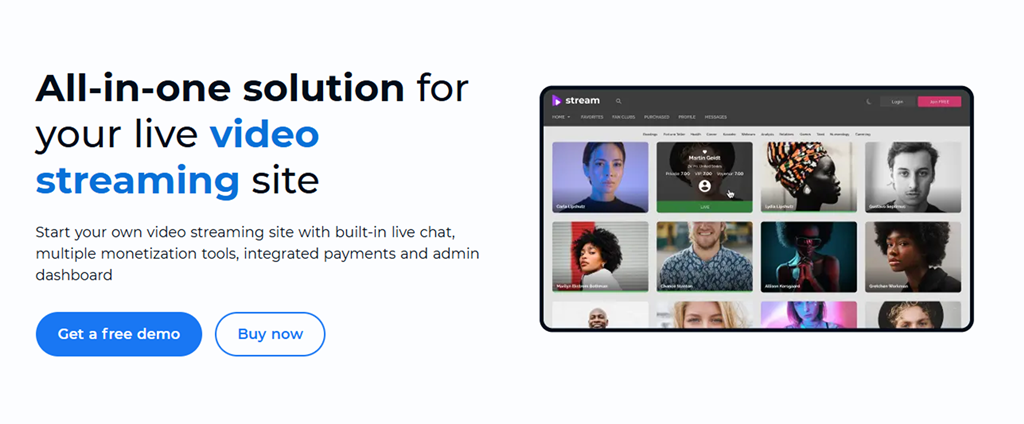
As channels grow, many creators start thinking beyond a single platform. That is where Scrile Stream enters the picture. Scrile Stream is not a ready-made streaming app. It is a custom development service designed to help you build your own streaming platform with monetization logic tailored to your business model.
Instead of relying entirely on Twitch’s revenue structure, you can introduce your own payment system, subscription rules, tipping mechanics, or premium access tiers. White-label control means the branding, user interface, and pricing structure belong to you. You decide how revenue flows.
Importantly, building your own platform does not require abandoning Twitch. Many creators continue streaming on Twitch while directing their most engaged viewers to an owned platform for exclusive content, memberships, or special events.
This approach creates flexibility. Twitch remains a discovery engine. Your own platform becomes a controlled environment where margins, data, and long-term strategy stay in your hands.
Conclusion
Twitch income rarely comes from one single feature. Subscriptions build a base. Donations add volatility. Ads contribute background revenue. Sponsorships and affiliate links expand margins. Merch and external platforms create additional layers. The creators who treat streaming like a stack rather than a lottery tend to last longer.
Earnings also scale with discipline. Consistent schedules, focused niches, and strong viewer retention matter more than occasional spikes. Many mid-tier streamers operate in the $1,000–$5,000 monthly range because they combine multiple streams of income instead of relying on one.
If you’re serious about how to make money on Twitch, structure is the difference between random payouts and steady growth. Once that structure is in place, expanding beyond platform limits becomes the next logical step. If you want more control over branding, payments, and monetization rules, reach out to the Scrile Stream team to explore building your own streaming platform alongside Twitch.
FAQ
How do beginners make money on Twitch?
Most beginners start by building consistent streams and reaching Affiliate status. From there, income usually comes from subscriptions, donations, affiliate links, merch, and eventually brand deals. Many also post content on YouTube to drive extra traffic.
Can you make $1000 a month on Twitch?
Yes. Streamers averaging around 1,000 concurrent viewers can often land in the $1,000–$5,000 monthly range depending on how subscriptions, ads, sponsorships, and external income stack together.
How much do Twitch streamers make?
Mid-tier creators streaming around 40 hours per week commonly reach $3,000–$5,000 per month when revenue layers combine. Ad income alone often averages around $250 per 100 subscribers’ worth of activity, depending on viewership and watch time.