
Most tarot sessions fall between $25 and $100, depending on the reader and format. Quick one-question readings often cost $10–$30. Professional consultations usually land around $40–$100 per hour. Large psychic platforms often charge $1–$5 per minute. Well-known readers may charge $100–$200 or more for a session. So when people ask how much is a tarot card reading, the real answer depends on experience, time, and how the reading is delivered.
A tarot reading can cost almost anything. Scroll through Etsy or TikTok and you will see offers for $5 quick pulls. Book a private session with a well-known reader and the price might reach $120 or more. The spread between those numbers is exactly why people keep searching how much is a tarot card reading and what a normal rate actually looks like.
Part of the confusion comes from how the tarot business works today. Readings are no longer limited to a small shop with candles and a deck on the table. Many readers now work online. They answer questions through chat, send recorded readings, or run live sessions where dozens of viewers watch the cards being laid out in real time.
Prices changed with that shift. A short one-question reading might cost $10. A 30-minute private consultation can sit closer to $60–$100. Understanding where those numbers come from makes the tarot reading cost far less mysterious. This guide explores real tarot reading prices, explains why they differ, and shows what a professional tarot reading cost looks like in 2026.
Market Research: Average Tarot Reading Prices Worldwide

Tarot pricing may look chaotic at first glance, yet clear patterns appear once you compare offers across platforms and independent readers. Most sessions fall into a few recognizable price tiers.
Typical market ranges look like this:
- $25–$100 — standard tarot sessions
- $40–$100 per hour — experienced independent readers
- $100–$150 per hour — well-known professional psychics
Independent tarot readers report similar numbers when discussing pricing publicly. Beginners often start lower while building experience, then gradually increase rates.
Typical progression looks like this:
- Beginner readers: $15–$30 per hour
- Intermediate readers: $30–$100 per hour
- Experienced professionals: $120–$200 per hour
Real services confirm the same pattern. A quick look at booking sites shows examples such as:
- $50 for a 30-minute reading
- $85 for a professional half-hour consultation
- $160 for a premium 30-minute session with an established psychic
Event bookings follow a different model. When hired for parties or corporate events, tarot readers usually charge a block rate rather than individual sessions. A typical booking ranges from $250 to $350 for two hours.
Online Platforms vs Independent Readers
Psychic marketplaces introduced another pricing system: per-minute billing. Instead of booking a fixed session, clients pay only for the time used.
Typical platform prices include:
- $1–$5 per minute for experienced advisors
- $0.99–$1.99 per minute introductory offers for new clients
These rates may look attractive, but platforms usually take 30–50% commission, which significantly reduces reader earnings.
Regional Differences
Prices also shift depending on geography and audience.
Typical ranges include:
- United States / Canada: $50–$120 per hour
- United Kingdom / Europe: £20–£80 per session
- Social media tarot creators: €13–€185 depending on reputation and audience size
Because of these variations, the question how much are tarot readings rarely has one universal answer. The price depends heavily on where the reading happens and who delivers it.
What Actually Determines Tarot Reading Cost

Two readings rarely cost the same. Even when two readers use the same deck and spreads, the final tarot reading cost can differ a lot. Several practical factors shape the price.
Experience of the Reader
Experience plays the biggest role. Someone who just started offering readings usually keeps prices low while building confidence and client reviews. A reader with years of professional work behind them can charge much more.
Typical ranges look like this:
- New reader: $20–$40 per session
- Experienced reader: $80–$150
- Well-known psychic or media personality: $300 or more
This difference explains why people searching how much is a tarot card reading often see very different numbers online.
Duration of the Session
Time matters as well. Most readers sell sessions in clear time blocks.
Common options include:
- 10-minute quick reading
- 20-minute short consultation
- 30-minute standard session
- 60-minute deep reading
A typical 30-minute reading often costs $40–$80, depending on the reader’s reputation and audience.
Format of the Reading
The format changes the price structure. Some types require real-time interaction while others can be delivered later.
Popular formats include:
- live video consultation
- chat-based reading
- voice message interpretation
- email reading with photos of the cards
- prerecorded video explanation
Live sessions are usually the most expensive because they require the reader’s full attention during the call.
Type of Reading
Different tarot topics also influence tarot reading prices. A quick one-question pull is very different from a complex spread.
Examples include:
- love or relationship reading
- career guidance spread
- yearly forecast reading
- spiritual direction session
A detailed yearly reading can easily cost two or three times more than a short reading. The spread is larger, the interpretation takes longer, and clients expect deeper insight when asking how much are tarot readings for long consultations.
Tarot Reading Price List: Common Pricing Models
Tarot readers rarely invent prices randomly. Over time, several business models became standard across marketplaces, social media, and independent websites. Each model answers the same practical question: how much is a tarot card reading when it is sold in different formats.
One of the simplest options is price per question. This model is popular on Etsy and messaging services where clients send a specific question and receive a short interpretation. A single-card pull or short spread typically costs between $5 and $20 per question. It works well for quick guidance and for beginners who want to test a reader without committing to a full session.
Another approach comes from large psychic marketplaces. Instead of selling a fixed session, they charge per minute of conversation. Typical rates range from $1 to $5 per minute, although well-known advisors can reach $10 per minute or more. A 20-minute call at $4 per minute quickly becomes an $80 session, which shows how this model scales.
Many independent readers prefer a simpler structure: fixed session pricing. This format is easier for clients to understand and easier to advertise on a website. A typical tarot reading price list might look like this:
| Session length | Beginner reader | Experienced reader | Premium reader |
| 15 minutes | $15 | $40 | $70 |
| 30 minutes | $30 | $70 | $120 |
| 60 minutes | $60 | $120 | $200 |
Recently another model started appearing online: subscriptions. Instead of paying for a single session, clients join a membership that includes regular readings or group events. A reader might offer $20 monthly access to group tarot streams, $50 for weekly guidance sessions, or a $100 VIP membership with deeper consultations.
Subscriptions change the economics of the business. Instead of unpredictable bookings, readers build steady recurring income while clients gain ongoing access to guidance.
Tarot Platform Comparison
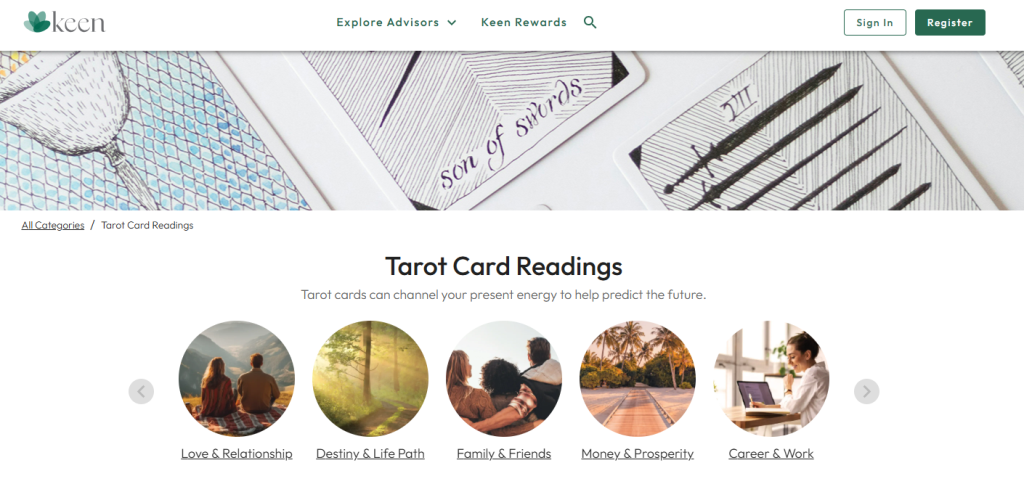
Tarot readings are widely sold through large psychic marketplaces. These platforms connect readers with clients and usually charge per minute. Several major services dominate this segment of the market.
| Platform / Format | Typical pricing | Pros | Cons |
| Keen | ~$3.50 per minute average | large marketplace, thousands of readers | platform commissions |
| Kasamba | from $1.99 per minute | long-established service, free trial minutes | earnings reduced by fees |
| Purple Garden | $0.99–$17.99 per minute | mobile app, video readings available | wide quality differences |
| MysticSense | $1.25–$5.99 per minute | free trial minutes, multiple formats | limited brand recognition |
| Psychic Source | from $0.66 per minute intro rate | strong screening process | fixed pricing packages |
For example, rates on Purple Garden start around $0.99 per minute, while top advisors may charge much higher depending on reputation.
On Kasamba, readers set their own per-minute rate, and clients pay exactly for the time spent during the session.
Large marketplaces such as Keen have facilitated millions of conversations between clients and psychic advisors over the years, showing how large the online tarot market has become.
These services explain why the tarot reading price list varies so much online. A beginner reader on a marketplace may charge a dollar per minute, while a well-known advisor can easily reach $10 per minute or more.
Tarot Pricing Calculator
Understanding how much is a tarot card reading also means looking at the reader’s side of the business. A simple example shows how the numbers work.
Imagine a reader charges $60 for a 30-minute session and books 10 readings per week.
Weekly revenue:
10 × $60 = $600
Monthly revenue:
$600 × 4 = $2400
Now subtract typical costs:
- Payment processing fees (~5%) → $120
- Taxes (about 25%) → $600
Estimated monthly income: $1680
Many readers increase earnings by adding live sessions. A group reading priced at $10 per viewer with 30 participants generates $300 per stream. Two events per week can easily add another $2400 monthly, which shows why livestream formats are growing fast in the tarot space.
Pricing Psychology: How Tarot Readers Package Services

Look at how most readers present their services and you will notice a pattern. Instead of one flat rate, they usually offer two or three options. This makes the decision easier for a client who is still figuring out how much is a tarot card reading worth to them.
A common setup might look like this. A quick 10-minute reading for about $25, a regular 30-minute session around $60–$80, and a longer consultation for $140 or more. Most people naturally choose the middle option. It feels substantial without being expensive.
The cheapest option acts as a low-risk entry point. Someone can try a reader without committing much money. The premium option works differently. Its higher price quietly sets expectations about value and expertise.
This structure appears everywhere in personal services. Therapists, coaches, and consultants use it all the time. Tarot readers simply apply the same logic when deciding how much are tarot readings on their menu.
Explaining Value to Clients
Sooner or later every reader hears the same question: why does a tarot session cost this much? It often comes from people comparing very cheap online readings with professional consultations.
A good explanation usually focuses on the work behind the session. A reader does not simply flip cards and read meanings from a book. They interpret patterns, listen carefully to the client’s situation, and draw on years of practice.
“You actually have to acquire a skill when it comes to reading tarot.”
— Liz Worth, tarot reading teacher
In other words, experience matters. The value of a reading reflects time spent studying the cards, working with clients, and developing interpretation skills.
Trust also grows when pricing is transparent. Many readers publish a short tarot reading price list, explain session length, and clearly describe cancellation policies. When clients know what to expect, they are far more comfortable paying for a professional session.
Payment Methods and Policies
Payment used to be simple: cash on the table after the reading. Online tarot changed that. Now most sessions are booked the same way people pay for coaching calls or online classes.
Cards are still the most common option. Many readers process payments through Stripe or similar systems on their websites. PayPal remains popular too, especially for international clients. Apple Pay appears more often on mobile bookings. Some readers also accept cryptocurrency, although it is still less common.
Policies matter just as much as payment methods. Many readers ask for a small deposit before a session to prevent last-minute cancellations. Others set a clear cancellation window, often 24 hours. Refund rules are usually explained in advance as well.
When these details are visible on the booking page, clients know exactly what to expect before paying for the session.
Live Tarot Readings: The Fastest Growing Format
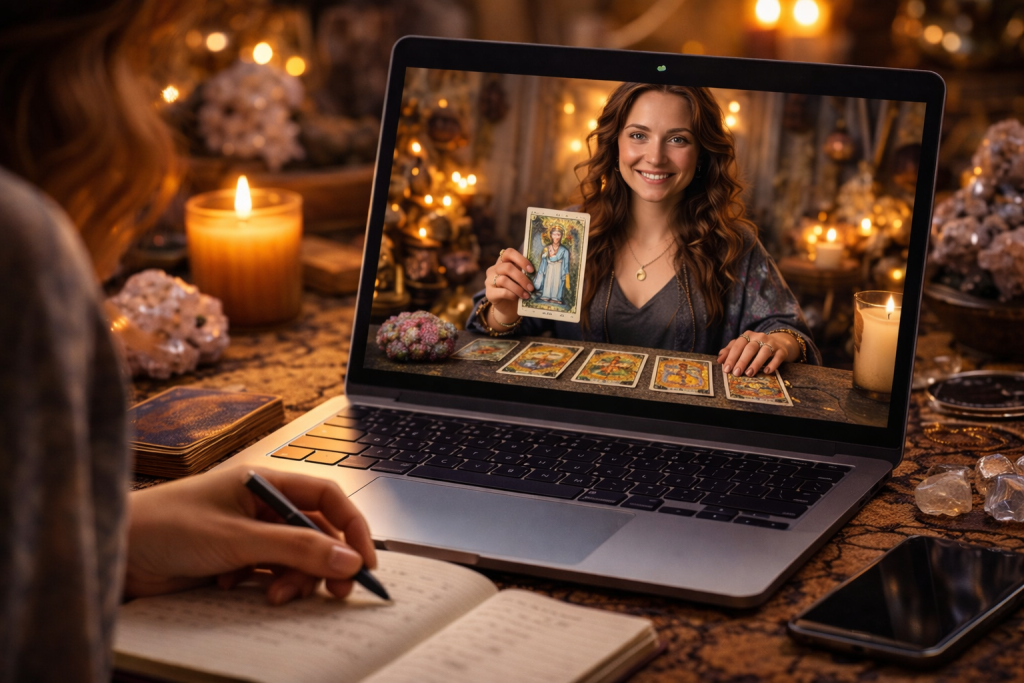
Tarot moved quickly onto live video once creators realized how well it works with an audience. Instead of reading for one person at a table, a reader can now open a stream and interpret cards for dozens of viewers at the same time. Platforms like YouTube, TikTok, and Twitch made this style of reading visible to a much wider audience — and private streaming websites allow readers to host their own shows as well.
The format usually looks different from a traditional one-on-one consultation. A livestream might include:
- group tarot readings for viewers
- paid questions during the broadcast
- donation-based mini readings
- subscriber-only sessions with deeper spreads
The economics change dramatically. A private session might bring $60 for thirty minutes. A live stream with 40 viewers paying $5 each produces $200 in the same time. If recordings are saved and sold later, the same content can generate income again.
That is why many creators experiment with livestream formats when deciding how much is a tarot card reading in the online world. The price per viewer becomes smaller, yet the total revenue can grow much faster than traditional bookings.
Choosing the Right Tarot Pricing Strategy
Different readers succeed with different pricing models. The best option usually depends on experience level and audience size. A beginner often starts with simple fixed prices, while established readers experiment with more scalable formats.
| If you are | Pricing approach that usually works |
| Beginner reader | Lower fixed-price sessions to build reviews |
| Social media creator | Live readings with paid questions |
| Professional consultant | Premium private consultations |
| Large audience creator | Subscription community or memberships |
Building Your Own Tarot Streaming Website with Scrile Stream
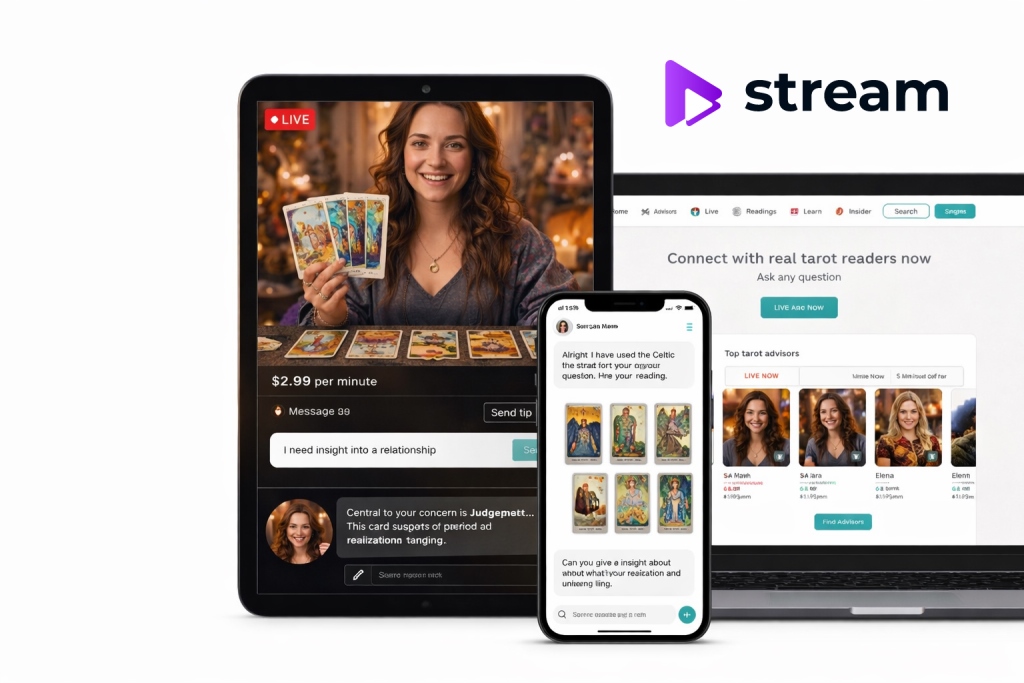
Many tarot readers begin on social platforms. It is the easiest place to find an audience. A few live sessions on TikTok or YouTube can bring the first clients quickly.
Over time the downsides become obvious. Algorithms change without warning. Platform rules shift. Fees increase. Most importantly, the audience technically belongs to the platform, not to the reader.
This is why many professionals eventually move toward their own website. Instead of relying on third-party services, they create a space where they control pricing, bookings, and client relationships.
A custom solution like Scrile Stream makes this possible. The Scrile team develops fully branded streaming websites designed for creators who sell live sessions online.
Key features typically include:
- live video tarot readings with private or public access
- integrated payments for cards and digital wallets
- subscription memberships for regular clients
- one-on-one consultations and group streams
- automated booking and scheduling tools
With this setup, tarot readers run their own platform rather than working inside someone else’s marketplace. Pricing, branding, and audience access remain completely under their control.
Conclusion
Tarot pricing covers a wide range. A quick single-question reading may cost around $10, while an experienced reader might charge $150 or more for a longer consultation. Most professional sessions still land somewhere between $25 and $100. That is why the question how much is a tarot card reading never has a single fixed answer. The price depends on the reader’s experience, the session length, and the format.
For tarot professionals, the bigger opportunity lies in building a sustainable online business. Private consultations can be combined with livestream sessions, group readings, and membership communities.
If you want to run your own tarot streaming platform instead of relying on third-party marketplaces, the Scrile Stream team can help. Their developers build custom live streaming websites with payments, subscriptions, and automation built in. Contact the Scrile Stream team to discuss launching your own tarot reading platform and start monetizing your audience directly.
FAQ
What are the charges of tarot card reading?
Tarot reading prices vary widely depending on the reader and the format. Quick one-question readings often cost $10–$30, while standard private sessions usually range from $50 to $120. Highly experienced readers or long consultations may cost more. In most cases the price reflects the reader’s experience, the session length, and how detailed the reading is.
Is $100 too much for a tarot reading?
Not necessarily. Many experienced tarot readers charge between $80 and $150 for a 45- to 60-minute consultation. If the session includes a detailed spread, interpretation, and time for follow-up questions, $100 is considered a normal professional rate in many markets.
How much should I pay for a tarot reading?
Many services report an average tarot reading cost between $73 and $162 per session depending on location and experience. For most clients, a price between $40 and $100 for a private session is considered a fair and typical range.
What should be included in a 30-minute tarot reading?
A typical 30-minute tarot reading usually includes a full card spread, interpretation of the cards, and time for follow-up questions. Some readers also provide brief advice based on the reading. The session should give enough time to explore one or two questions clearly.
Are online tarot readings cheaper than in-person readings?
Often they are. Online readings can cost less because readers do not need a physical location and can work with clients worldwide. Chat or email readings may start around $10–$30, while live video sessions usually cost $40–$100 depending on the reader’s experience.
Why do tarot reading prices vary so much?
Prices depend on several factors including the reader’s experience, the length of the session, the format of the reading, and the type of tarot spread used. A quick one-question reading costs much less than a detailed one-hour consultation.
How long does a typical tarot reading last?
Most tarot readings last between 15 and 60 minutes. Short sessions answer one question quickly, while longer consultations allow deeper interpretation and follow-up discussion with the reader.
Can tarot readings be done online or by email?
Yes. Many tarot readers offer sessions through video calls, live chat, or email. Email readings are usually cheaper because they do not require real-time interaction, while live video readings tend to cost more due to the personal format.