
Starting a webcam business comes down to a few core pieces: picking a niche, choosing how you make money, setting up software and payments, and bringing in traffic. You can start lean with minimal setup, but scaling is a different game. If you’re learning how to start a web cam business, streaming is just one part of it — real growth comes from building a system around it.
Can you actually launch a webcam business today without a team, studio, or big budget? Yes — but only if you treat it like a business engine, not a random stream with a payment button.
The demand is not theoretical. The global webcam market was valued at $9.1 billion in 2023 and is expected to reach $13.9 billion by 2030, growing at around 7.1% annually. That growth is driven by live streaming, remote interaction, and paid content models that continue to expand across niches.
That scale also explains why beginners get lost fast. They focus on going live, then run into payment issues, creator onboarding, chargebacks, traffic costs, and weak retention. If you want to understand how to start a web cam business, you need more than performers and a homepage. You need a niche, a monetization model, software, compliance, and a plan that survives month two. This guide breaks that down step by step.
What You’re Actually Building (Not Just Streams)

Most people confuse two very different things. Running a performer account on an existing site is one model. Building your own webcam business is something else entirely.
On a marketplace, you’re a participant. The platform owns the traffic, controls payouts, and takes a significant cut. When you build your own setup, you’re creating a system that generates and captures revenue directly. That shift changes everything.
At its core, a real webcam business has three moving parts. First, streaming infrastructure — stable video, low latency, and a user interface that doesn’t break under load. Second, a payment system that can handle high-risk transactions, tips, subscriptions, and payouts. Third, a traffic engine that consistently brings users in and keeps them coming back.
Then comes positioning. Adult niches are not optional, they’re the foundation. Solo models, couples, fetish categories, roleplay, premium private shows — each segment behaves differently and converts differently.
A working webcam business plan connects all of this. Without it, even good content struggles to turn into stable income.
Step-by-Step: Launching a Webcam Business
This part is where most ideas either turn into something real or quietly stall. The steps themselves aren’t complicated, but the details matter more than people expect. In this space, small technical or legal gaps usually show up as lost revenue.
Choosing a Niche and Monetization Model

Most beginners try to copy large platforms like Chaturbate or Stripchat. That almost never works. Those sites already dominate general traffic. A new project only grows when it narrows the focus.
In practice, that means picking something specific from day one. Couples content, niche fetish categories like foot or BDSM, or regional audiences (for example, Spanish-speaking markets) behave very differently. On some fetish segments, users stay longer and spend more per session, even with smaller traffic.
Monetization is rarely a single stream. On platforms like MyFreeCams or Bongacams, revenue usually comes from a mix of:
- per-minute private shows
- token tipping during live sessions
- premium subscriptions or fan clubs
That combination is what stabilizes income. If you rely only on tips, revenue fluctuates too much. If you rely only on subscriptions, growth slows down early. When you’re starting a webcam site, the structure matters more than the feature set.
Legal, Compliance, and Age Verification
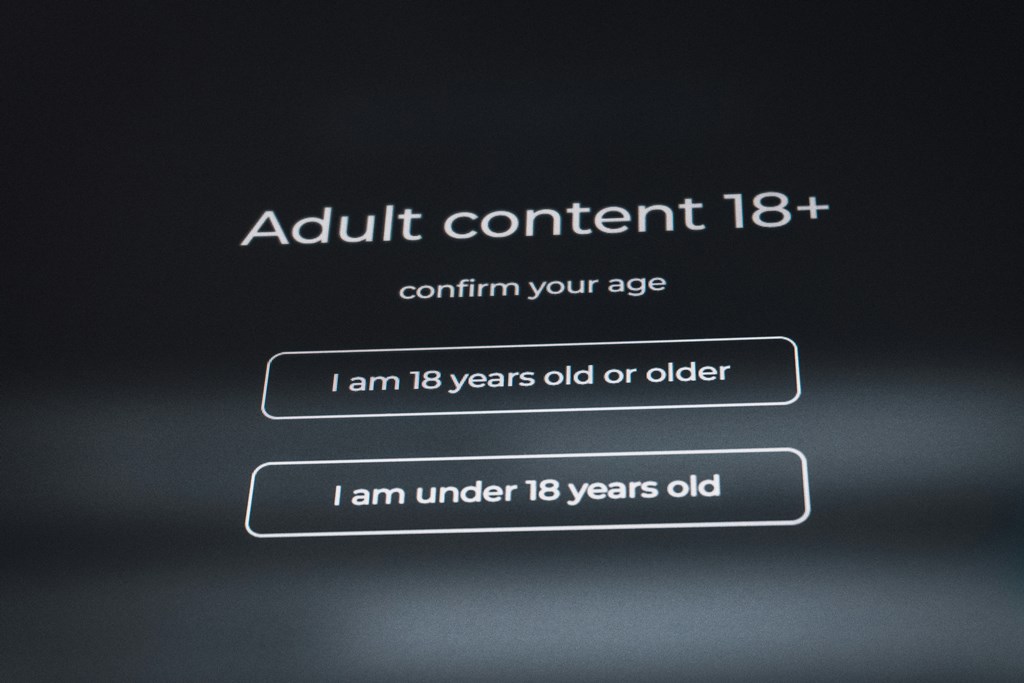
This is where many projects get blocked without understanding why. It’s not just about “following rules.” It’s about being allowed to operate at all.
For example, in the US, platforms must comply with 18 U.S.C. § 2257, which requires keeping records that verify the age and identity of performers. In the EU, new digital regulations increasingly push for stricter age verification systems and content accountability.
“Age verification for adult content is no longer optional, it’s a compliance requirement, a safety measure, and a brand necessity. Platforms that adopt modern verification protect minors, avoid fines, and strengthen user trust.”
— Ondato, Adult Content Age Verification: Technology, Laws and Compliance
This directly affects payments. Providers like CCBill or Segpay won’t onboard a project that can’t demonstrate compliance. So this step isn’t separate from monetization — it’s what enables it.
Brand, Domain, and Positioning
Look at existing domains in this space. The ones that grow fastest are rarely abstract. They signal exactly what they offer.
A niche like “Latina cams” or “BDSM live shows” immediately filters the audience before they even land on the site. That reduces bounce rate and increases conversion without extra marketing.
Generic naming does the opposite. It brings mixed traffic that doesn’t convert. In early stages, that difference is more important than design or features.
Software and Streaming Infrastructure
This is where technical decisions start affecting money directly. Platforms like Chaturbate run on highly optimized infrastructure because even a one-second delay can drop engagement.
If you build your own setup, you’re usually relying on technologies like:
- WebRTC for low-latency streaming
- CDN delivery (Cloudflare, AWS CloudFront)
- scalable backend hosting (AWS, Hetzner, or similar)
The alternative is using a ready-made system that already solves this. That’s why many operators avoid building from scratch.
What matters most here is not features, but stability. A stream that buffers or drops quality kills the session immediately. Users won’t wait — they just switch to another model.
Payment Setup

Payments are where most first-time founders underestimate the difficulty. Adult businesses are classified as high-risk, which changes how everything works. In practice, adult businesses face stricter onboarding, rolling reserves, and higher scrutiny from payment providers compared to standard digital services, which directly affects approval time and cash flow.
Typical setup includes processors like CCBill, Segpay, or Epoch, and they come with conditions:
- transaction fees often around 10–15%
- rolling reserves (holding part of revenue for weeks or months)
- strict approval requirements
On top of that, you need to handle:
- token systems
- subscriptions
- payouts to performers
This creates a chain. If payments are delayed, creators leave. If creators leave, traffic loses value.
That’s why payments are not just a technical step. They’re one of the core bottlenecks that define whether the business survives past the first months.
Attracting Models

Traffic without performers means nothing. But webcam performers won’t stay unless there’s a clear reason.
Look at how platforms like Stripchat or BongaCams grow. They don’t just “find models,” they compete for them. Better payouts, faster withdrawals, and visibility inside the platform matter more than branding at this stage.
Early on, you either build around one or two core performers or try to attract external creators. The second path is harder. Most experienced models already earn on established platforms, so switching only makes sense if the offer is better.
That usually comes down to money. Even a shift from 50% to 70% revenue share can get attention. The rest is friction. If onboarding, verification, or payouts feel slow, people leave before they even start streaming.
Traffic and Retention
Traffic is easy to buy. Retention is what makes the business work.
Most webcam projects rely on a mix of sources:
- paid traffic via networks like TrafficJunky or ExoClick
- affiliate programs that bring external traffic
- SEO through niche pages and performer profiles
Paid traffic gives speed, but it burns budget fast. SEO takes longer but builds stable volume. Affiliates sit somewhere in between.
What actually matters is what happens after the first visit. If users don’t return, you’re just paying for one-time sessions. Platforms that grow focus on small things that keep people engaged — favorites, notifications, subscriptions, direct interaction.
That’s where revenue compounds.
Common Beginner Mistakes
Most problems show up in the same places.
People rush traffic before fixing payments or stability. Users arrive, something doesn’t work, and they leave. Another common issue is assuming standard processors like Stripe will work, only to discover adult payments require providers like CCBill or Segpay.
Then there’s positioning. Trying to compete broadly against platforms like Chaturbate rarely works. Without a niche, conversion stays low.
And finally, retention. Many setups focus only on getting users in, with no system to bring them back. Without repeat users, revenue stays unpredictable no matter how much traffic you generate.
Startup Budget and First Economics

What It Costs to Start
If you’re figuring out how to start a web cam business, the budget depends on how serious you are about building it. There’s a clear difference between testing an idea and launching something that can actually scale.
A minimal setup using pre-built scripts or basic white-label solutions can start around $1,500–$5,000, but that usually limits customization and growth. A more realistic range for a working business sits between $8,000 and $30,000, especially once you include payment integration, stable streaming infrastructure, and early traffic acquisition. This aligns with typical development and launch estimates reported by webcam platform providers and adult industry business guides.
On top of that, payment providers often hold part of your revenue as a rolling reserve, which directly impacts early cash flow.
Simple Revenue Example
To make the economics clearer, here’s a more realistic scenario based on how webcam platforms actually earn:
50 users per day
× 30 days = 1,500 users per month
From those users:
1,500 users
× 5% conversion = 75 paying users
Now break down how they spend:
75 users
→ 40 users tip during public streams (avg $10) = $400
→ 20 users join private chats (avg $30) = $600
→ 15 users subscribe (avg $15/month) = $225
Total estimated revenue:
$400 + $600 + $225 = $1,225 per month
In reality, revenue is driven less by traffic volume and more by conversion quality, ARPU, and retention over time. This is an illustrative scenario, but it reflects how the model actually works. Revenue is rarely coming from one source. It’s the combination of tipping, private sessions, and subscriptions that creates stability.
Marketplace vs Your Own Website
At some point you’ll hit this question, whether you plan it or not. You start on a platform, things work a bit, and then you realize you’re not really running a business. You’re operating inside someone else’s system.
That’s how most people enter the space. You sign up on something like Chaturbate or Stripchat, go live, maybe earn your first money. It feels simple because everything is already there — traffic, payments, even discovery. You don’t build anything, you just plug in.
The problem shows up later. You don’t know where your users come from, you can’t bring them back outside the platform, and a big chunk of every payment is gone before it even reaches you. Some people are fine with that. Many aren’t once they see the numbers over time.
Running your own site is the opposite experience. Nothing is ready for you. You have to think about payments, stability, and how people even find you in the first place. It’s slower, sometimes frustrating in the beginning.
But here’s the shift. Once it works, it’s yours. The traffic, the pricing, the way users interact with the platform — all of it.
| Option | Pros | Cons | Revenue Control | Best For |
| Marketplace | Everything is ready, you can start immediately, built-in audience | High commission, no control over users, dependent on platform rules | Low — platform takes a significant share and controls pricing logic | First steps, testing, solo performers |
| Own Website | You control revenue, users, and positioning, no platform dependency | You have to build and manage everything yourself | High — full control over pricing, monetization, and user lifecycle | Long-term projects, studios, scalable businesses |
If you’re just exploring, marketplaces are fine. If you’re serious about how to start a web cam business that grows over time, this is usually the point where people rethink the setup.
KPIs That Actually Matter in Month One
In the first month, most people look at revenue and panic. That’s the wrong metric this early. If you’re figuring out how to start a webcam studio, you need to watch the signals that actually tell you if the model is working.
Focus on these instead:
- Traffic — not just volume, but where it comes from. Paid traffic behaves very differently from organic or affiliate users.
- Conversion rate — how many visitors actually spend money. Even 3–5% is already workable in this niche.
- ARPU (average revenue per user) — how much a paying user spends per session. This is where private chats usually make the biggest difference.
- Retention — how many users come back. Without repeat visits, everything stays unstable no matter how much traffic you bring in.
If these four numbers move in the right direction, the business usually follows.
Building Your Own Webcam Platform with Scrile Stream
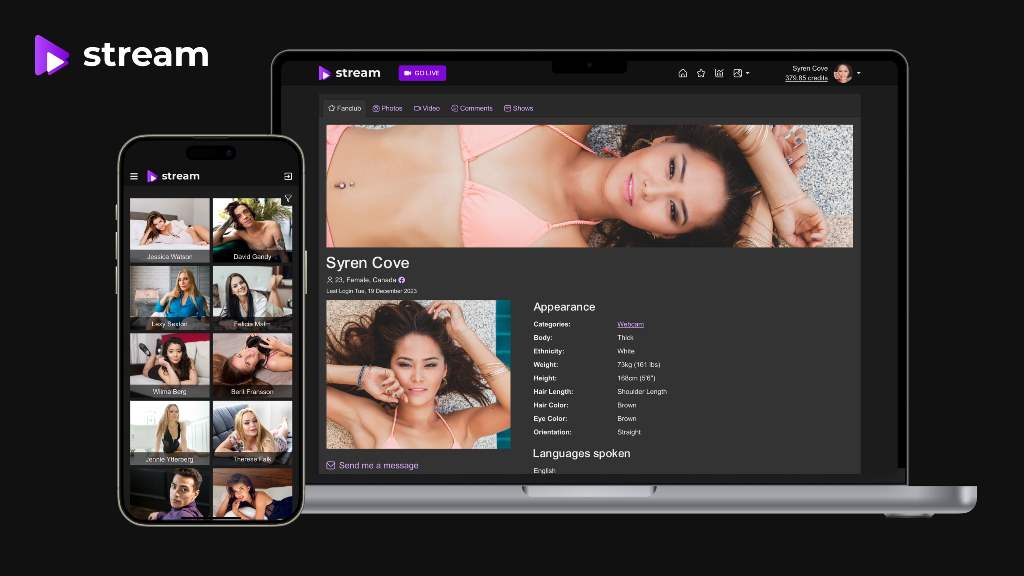
By this point, the pattern is clear. If you’re serious about how to start a web cam business, the hardest part isn’t streaming. It’s putting everything together — payments, infrastructure, performers, traffic, and keeping it all stable.
This is where most projects slow down. Not because the idea is wrong, but because the setup becomes too complex to handle piece by piece.
Scrile Stream is designed exactly for this stage. It’s not a marketplace where you compete for visibility. It’s a white-label development solution that lets you launch your own webcam platform under your brand.
Instead of assembling everything manually, you get:
- built-in live streaming with low latency
- integrated monetization tools (tips, private shows, subscriptions)
- payment system support for high-risk transactions
- full control over users, pricing, and platform logic
The key difference is ownership. You’re not joining a platform — you’re building one.
What Setup You Actually Need
At this stage, the question is no longer theoretical. You’ve seen the structure, the costs, and the trade-offs. Now it’s about choosing what actually fits your situation. If you’re still figuring out how to start a webcam site, the right setup depends on scale, risk tolerance, and how much control you want from day one.
| Situation | Best Approach |
| Solo creator testing the niche | Start on a marketplace to validate demand and learn how users behave before investing in your own setup |
| Small studio with a few models | Use a hybrid approach — combine marketplace traffic with a simple branded site to begin building your own audience |
| Growing business with stable traffic | Move to your own platform to control pricing, user data, and retention without relying on third-party rules |
| Long-term scalable project | Build a white-label platform (Scrile-based) to manage monetization, payments, and growth under your own brand |
Conclusion
A webcam business doesn’t succeed because someone goes live. It works when every part — traffic, payments, retention, and creators — runs as a system. That’s the real difference between random income and something stable. If you’re exploring how to start a web cam business, the goal isn’t just to launch, but to build something that keeps working over time. If you want to move faster and avoid technical bottlenecks, it makes sense to contact the Scrile Stream team and build it properly from the start.
FAQ
What is the first step in starting a webcam business?
The first move is choosing your business model: marketplace, studio, or your own branded site. After that, define the niche, check payments, legal requirements, and your launch budget.
Do you need special legal checks to start a webcam business?
Yes, and this part cannot be skipped. You need to review company registration, performer verification, content compliance, taxes, and local laws related to adult services.
How does a new webcam business make money?
Most projects earn through private shows, token tipping, subscriptions, featured placement, commissions, and service fees charged to performers. The exact mix depends on the niche and platform format.
How much money do you need to launch a webcam site?
A lean launch can start with a few thousand dollars, while a more serious setup usually needs a larger budget for software, payments, and traffic. The final number depends on whether you use a simple script or build a branded platform.
What is better for beginners: a marketplace or a private website?
A marketplace is easier for testing demand because traffic and payments are already built in. A private website takes more work but gives you better margins and full control.
How do you attract models to a new webcam platform?
Usually through better revenue share, faster payouts, and clearer niche positioning. If onboarding feels slow or confusing, creators leave quickly.
What matters most in the first month after launch?
Traffic alone is not enough. Conversion rate, average revenue per user, and retention tell you much more about whether the model works.
How to start a web cam business without a huge team?
Start with a narrow niche, a workable payment setup, and a simple operating model. You do not need a huge team at first, but you do need a structure that can grow.