
Video on demand didn’t become essential overnight. The shift happened quietly, as businesses realized that live streams alone don’t scale. A live session ends. A recorded library keeps working. That difference is now visible in the numbers. According to industry reports, the global video on demand market was valued at USD 133.44 billion in 2025, is expected to reach USD 156 billion in 2026, and is projected to grow to USD 477 billion by 2034, with a 15% CAGR. That growth is being driven by subscriptions, education products, and niche media platforms that rely on repeat viewing rather than one-time events.
Creators were early adopters, but the shift started higher up the chain. Major media companies made the move first. HBO transitioned from scheduled broadcasts to a VOD-first model once it became clear that libraries outperform live programming over time. Netflix and Amazon Prime Video were built entirely around on-demand access, proving that viewers prefer control over schedules.
Smaller businesses followed the same logic later. Online educators moved to structured video libraries when live webinars proved hard to repeat. Fitness brands replaced endless live classes with programs people return to. Media startups stepped away from ad-only platforms once subscriber revenue became more predictable. Across every level, from global studios to niche platforms, the conclusion was the same: ownership and access control matter more than live reach.
This is where VOD software becomes infrastructure rather than a tool. Instead of uploading files and hoping for engagement, businesses manage access rules, pricing logic, playback quality, and user data in one place. Subscriptions, rentals, and bundled libraries all depend on systems that don’t fall apart when the audience grows.
In this article, we compare leading VOD software solutions based on real criteria: features, pricing models, scalability limits, and ownership tradeoffs. The goal isn’t to list platforms, but to understand which tools support sustainable video businesses and which ones create friction later.
What VOD Software Actually Does (And What It Doesn’t)

Most confusion around VOD software comes from marketing language. Everything looks like “video hosting” on the surface, but the underlying mechanics are very different. At a practical level, VOD software exists to turn video into a controlled product rather than a loose file someone can access freely.
Core Capabilities of Modern VOD Software
A serious video on demand setup starts with more than uploads. Raw files are only the input.
At the infrastructure level, VOD software handles:
- Content ingestion and encoding. Videos are uploaded once, then encoded into multiple resolutions and formats so playback adapts to device and connection quality. This is essential for consistent viewing on mobile, desktop, and TV apps.
- Storage and playback delivery. Content is stored across distributed servers and delivered through CDNs to reduce buffering and regional latency. Without this layer, scale breaks quickly.
- Access control and content gating. Users don’t just “watch a video.” They authenticate, subscribe, rent, or unlock content based on defined rules. This is where a video on demand platform separates free viewing from paid access.
- Monetization logic. Subscription video (SVOD), pay-per-view (TVOD), bundles, free previews, and mixed models all depend on logic built into the system rather than handled manually.
- Analytics and viewer behavior tracking. Beyond view counts, platforms track watch time, drop-off points, content completion, and subscriber behavior. These signals drive pricing, content planning, and retention strategies.
This is why businesses rely on VOD software instead of patching together hosting tools. Each capability supports revenue, not just playback.
How VOD Differs From “Just Video Hosting”
Generic hosting tools focus on files. VOD platforms focus on users, access, and transactions.
Cloud storage services can store large video files cheaply, but they don’t manage who can watch them, under what conditions, or how payment ties into access. Everything beyond storage has to be built manually, which quickly becomes fragile.
YouTube-style distribution solves a different problem. It optimizes for reach and discovery, not ownership. That works for advertising-driven models, but it fails for paid libraries. You can’t control pricing logic, user data, or access rules in a way that supports subscriptions or rentals. Revenue depends on algorithms, not your audience.
This is where a VOD platform becomes essential. It keeps content behind your rules, not someone else’s feed.
Where Video on Demand Platforms Break at Scale
Even proper video on demand platforms have limits. Problems tend to appear when:
- content libraries grow large and storage or bandwidth pricing spikes
- monetization logic becomes more complex than basic subscriptions
- compliance, licensing, or regional restrictions are required
- branding and UX need to go beyond templates
At that point, teams start questioning whether their current VOD software still fits the business they’ve become. What worked for the first hundred videos may not survive the next ten thousand.
Understanding what VOD software does—and where it stops—sets the foundation for choosing the right solution instead of chasing features that look impressive but don’t hold up in practice.
Key Features That Separate Serious VOD Platforms From Basic Tools

Not all VOD platforms are designed to solve the same problems. Some are built for creators uploading a handful of videos each month. Others are meant to support thousands of hours of content, paid access, and global audiences. This gap is where VOD software either proves its value or quietly becomes a bottleneck. The difference usually shows up only after traffic, content volume, or revenue starts growing.
Content Delivery and Playback Quality
Playback quality is the first thing users notice, even if they can’t explain it. Encoding plays a major role here. Modern VOD software automatically converts uploaded videos into multiple resolutions and bitrates, allowing adaptive streaming. Without adaptive bitrate, viewers on slower connections see buffering instead of content. Industry benchmarks show that even a 1–2 second increase in buffering can raise abandonment rates by over 20%, especially on mobile.
Device compatibility is another quiet divider. Serious VOD platforms support playback across browsers, mobile devices, smart TVs, and set-top boxes. Basic tools often handle desktop playback well but struggle with TVs or older devices, which becomes a problem once audiences grow beyond early adopters.
CDN coverage also matters more than many expect. Platforms using global CDNs reduce latency by serving video from the nearest node. Without this, international viewers experience long load times or failed playback. This is why VOD streaming infrastructure differs from live-only tools. Live tools optimize for short bursts of traffic. VOD demands sustained, repeat playback with consistent quality.
Monetization and Access Control
Monetization is where many tools fail quietly. Subscription logic looks simple until it isn’t. A basic monthly plan works early on, but serious VOD software supports combinations of subscriptions, rentals, and one-time purchases. Platforms that can’t mix SVOD and TVOD force businesses into awkward workarounds.
Coupons, bundles, and previews aren’t “nice extras.” They’re conversion tools. Platforms that support time-limited discounts or free previews typically see higher trial-to-paid conversion rates, especially in education and fitness use cases. Some platforms report preview-enabled libraries converting 15–30% better than locked-only content.
Regional pricing and taxes add another layer. Selling video globally means handling VAT, GST, and local pricing expectations. Many entry-level tools ignore this, leaving creators to manage compliance manually. At scale, that becomes a legal and financial risk.
Management, Analytics, and Scale
As libraries grow, management becomes a daily challenge. Admin dashboards aren’t just about uploads. They control users, payments, access rules, and content visibility. Platforms that lack granular controls often force teams to rely on external tools, increasing complexity.
Viewer analytics separate intuition from decision-making. Serious VOD platforms track completion rates, drop-off points, and repeat viewing. For example, knowing that 40% of viewers stop watching after the first 10 minutes of a video can directly influence content length and pricing strategy.
Scale introduces hard limits. Storage, bandwidth, and user caps can quietly inflate costs or block growth. Some platforms charge aggressively once bandwidth thresholds are crossed, turning growth into a financial penalty. This is where many businesses reassess whether their VOD software still aligns with their goals.
Core VOD Features vs Business Needs
| Feature | Why It Matters | Who Needs It Most |
| Adaptive bitrate streaming | Reduces buffering and viewer drop-off | Global audiences, mobile-heavy users |
| Hybrid monetization | Enables flexible revenue models | Educators, media brands, fitness platforms |
| Advanced analytics | Informs pricing and content decisions | Subscription-based businesses |
| Global CDN delivery | Ensures consistent playback quality | International platforms |
| Scalable storage and bandwidth | Prevents growth-related cost spikes | Growing VOD libraries |
The gap between basic tools and serious VOD software isn’t cosmetic. It shows up in retention, revenue stability, and the ability to grow without rebuilding everything from scratch.
Top 5 VOD Software Solutions
By the time teams start comparing VOD software seriously, they usually already know one thing: there is no universal “best” option. What works for a solo creator selling monthly memberships breaks down quickly for a business running thousands of hours of content. Branding often hides that reality. Underneath the surface, these tools make very different assumptions about scale, control, and ownership.
Some video on demand platform providers optimize for speed and simplicity. Others focus on security, compliance, or enterprise delivery. A few try to balance everything, usually with tradeoffs that only become visible later. The right choice depends less on feature lists and more on how the platform behaves when usage grows, monetization becomes complex, or branding starts to matter.
Below are five widely used solutions, broken down by what they actually do well, where they impose limits, and which types of video on demand app businesses they realistically support.
Uscreen — Best for Membership-Driven Creators
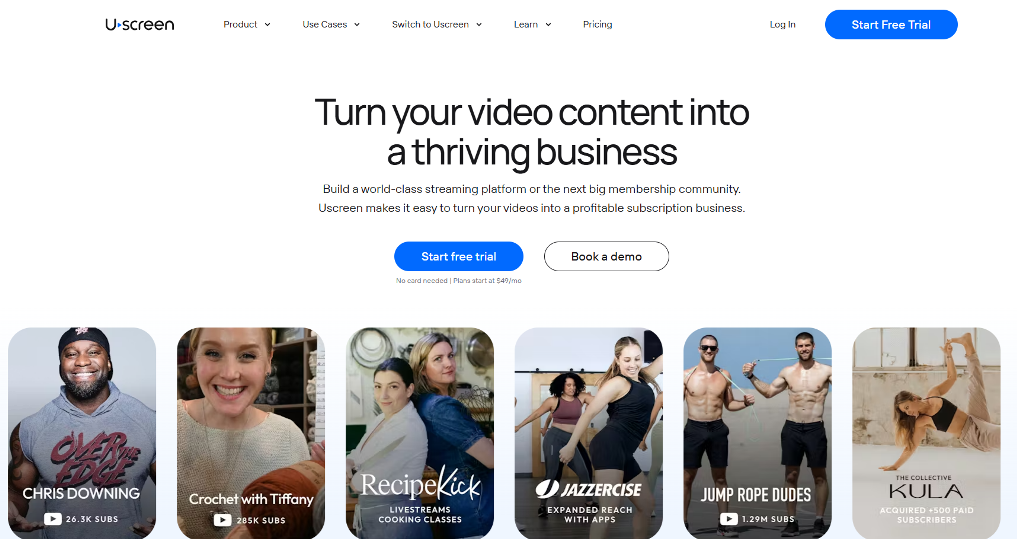
Uscreen is built around a straightforward idea: help creators sell access to a video library through recurring memberships. As VOD software, it focuses on simplifying launch and day-to-day management rather than giving teams deep control over infrastructure. This approach explains why it’s popular with fitness instructors, educators, and niche content creators who want to move fast.
What Uscreen is actually good at
Uscreen works well when the business model is simple and predictable. Uploading videos, organizing them into collections, and gating access behind subscriptions all happen inside one interface. The platform also supports web delivery alongside mobile and TV apps, which matters for audiences that expect a Netflix-like experience.
For teams without technical resources, this bundled approach reduces setup friction. You don’t need to think about encoding workflows, user authentication, or basic monetization logic. It’s already there, opinionated and ready to use.
Pricing logic and typical costs
Uscreen’s pricing starts low but scales with usage. Plans begin at $49 per month, which includes tight limits on subscribers and storage. The more commonly used Growth tier costs $149 per month when billed annually or $199 monthly, and adds per-subscriber fees. Branded mobile apps are available starting at $449 per month. The structure keeps entry accessible, but ongoing costs rise as audiences grow.
Strengths: ease of use, creator focus
- Subscription-oriented plans that work well for businesses selling ongoing access to structured video libraries, especially when content updates follow a regular schedule.
- Built-in monetization focused on memberships, including recurring billing and gated access, without requiring external payment or checkout systems.
- Distribution features centered on controlled environments, with native web playback and optional mobile apps that keep viewers inside a branded experience.
- Operational tools aimed at small teams, covering content management and subscriber handling without the need for dedicated technical resources.
Limits: customization, ownership, scaling beyond templates
- Uscreen functions as a packaged membership system. If your product requires custom user flows or non-standard pricing logic, flexibility becomes limited.
- Branding is available at the surface level, but the underlying architecture remains platform-controlled rather than fully owned.
- Costs increase with audience size and app usage, which requires margin planning as subscriptions scale.
Best-fit use cases
Uscreen fits creators and small teams selling memberships around a focused content library. It works best when the product is consistent and the pricing model doesn’t change often. It becomes harder to justify for businesses that need custom access rules, long-term cost predictability, or full ownership over their VOD software stack.
Dacast — Business-Focused VOD Streaming Infrastructure
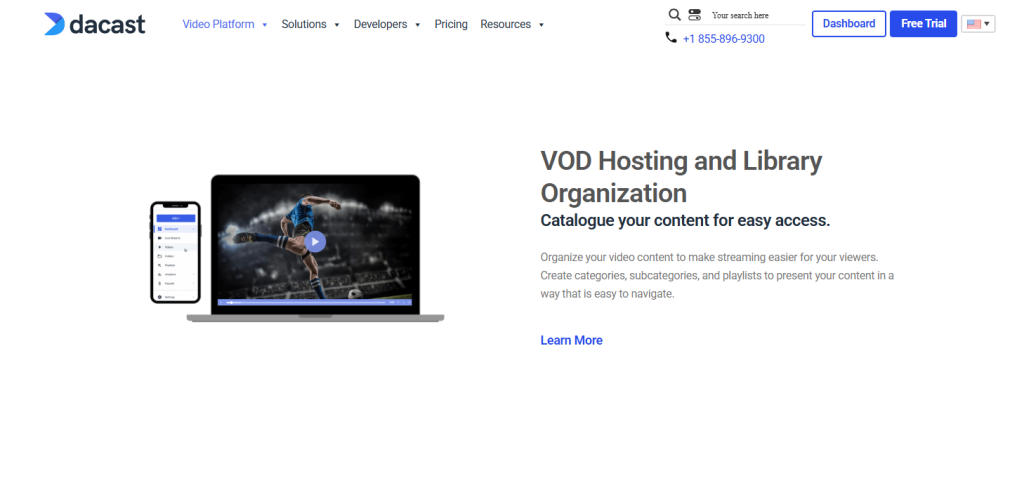
Dacast sits on the more “broadcast-ready” end of the VOD software spectrum. It’s built for organizations that care about delivery reliability, monetization controls, and security features they can justify to clients, sponsors, or internal stakeholders. You’ll see it in the way the product is packaged: bandwidth-first plans, support options, and add-ons for tougher delivery environments.
What Dacast is actually good at
Dacast is strong when video is part of a business operation rather than a side channel. It supports live and VOD in one stack, with features like paywall monetization, advanced analytics, domain/country restrictions, and workflows such as “VOD to Live” for scheduled programming.
It also leans into distribution and control. If you’re building a training portal, an event library, a media hub for an organization, or a platform that needs predictable playback across regions, this kind of VOD software tends to feel more “infrastructure” than “creator tool.”
Pricing logic and typical costs
Dacast’s pricing is primarily shaped by bandwidth and storage, with plans shown both as annual-billed rates and as higher month-to-month rates in the feature grid. On the plan cards, the Starter plan is $39/month billed annually and includes 2.4 TB per year plus 500 GB storage. The Event plan is $63/month billed annually and includes 6 TB upfront plus 250 GB storage. The Scale plan is $165/month billed annually and includes 24 TB per year plus 2000 GB storage and 3 team members.
The practical takeaway: with Dacast you budget around data movement, not just a flat subscription. That matters for VOD streaming libraries that get rewatched heavily.
Strengths: security, monetization options
- Bandwidth-forward plans that map well to businesses planning distribution at scale, especially when viewership is uneven across the month.
- Monetization tools built into the system, including a paywall, with advertising options mentioned under the Event tier (pre-, mid-, post-roll).
- Security and control features such as domain/country restrictions, plus VOD-focused security options listed under Scale like DRM/AES for VOD.
- Operational features that matter to teams: advanced analytics and support options, with phone support included at Scale.
Limits: UI flexibility, frontend ownership
- Dacast behaves like a professional video backend. If your product needs a unique storefront or a custom viewer experience, you will still be building that layer yourself.
- Branding control exists, but it’s not the same thing as owning the whole UX. Teams often pair Dacast with their own site or app for the front end.
- Costs track bandwidth and storage. That makes planning important, especially when a library becomes “evergreen” and viewers keep replaying the same content.
Best-fit use cases
Dacast fits organizations that treat VOD as part of a broader offering: training libraries, internal comms, paid seminars with replays, event archives, and media hubs that need reliable delivery and monetization controls. It’s a sensible pick among video on demand platform providers when security and predictable operations matter more than template-driven design.
Vimeo OTT / Vimeo Streaming — From Video Hosting to OTT
Vimeo’s journey into VOD software begins in a place many other platforms don’t. For years it was known primarily as a video hosting and collaboration tool, favored by filmmakers and agencies for clean embeds and creative workflows. Over time, that base evolved into a more structured video on demand platform once subscription and OTT use cases began to matter. Today, Vimeo has both mainstream hosting tiers (Starter through Advanced) and a separate Vimeo OTT product used by businesses that want subscription, transactional, or branded app delivery.
This history shows up in the product’s strengths and limits — a polished playback experience mixed with a pricing model that leans on volume and platform fees rather than pure subscription revenue.
What Vimeo is actually good at
Vimeo brings strong video quality and broad device compatibility together in a package that feels familiar and professional. The core video hosting tiers — Starter, Standard, Advanced, and Enterprise — offer usable tools for teams that want to build an audience and control playback behavior.
Vimeo OTT, specifically, positions itself as a launchpad for subscription and transactional businesses. Its pricing model — $1 per active subscriber per month for SVOD, plus additional merchant fees — reflects a focus on developers who want flexible monetization without managing raw infrastructure.
For teams that value presentation, Vimeo’s player and delivery stack are reliable and consistent. Whether you’re embedding on a site or building a branded channel, playback tends to feel smooth and ad-free compared with general-purpose video hosts.
Pricing logic and typical costs
Vimeo’s pricing splits into two related but separate threads. The regular hosting plans used by many small businesses — like Starter or Standard — emphasize storage, bandwidth, and seats, with price points often ranging from around $12 to $65 per month depending on features and billing frequency.
Vimeo OTT pricing, by contrast, is built around subscriber economics rather than flat tiers. At the Starter level for OTT, there’s usually a $1 fee per active subscriber per month, with merchant fees (around 2.5% + $0.30) on top for SVOD, and roughly 10% + $0.50 for rental/TVOD transactions.
This means cost scales with audience size, which simplifies entry — you don’t pay a big upfront platform subscription — but also ties your operating cost directly to revenue.
Strengths: brand recognition, video quality
- Recognized and trusted video infrastructure with broad device support, including web, mobile, and OTT delivery via branded apps under certain enterprise arrangements.
- High playback and encoding quality that supports multiple resolutions and adaptive streaming without extensive configuration.
- Monetization options that span subscriptions (SVOD), transactions (TVOD), and even advertising under higher-tier or enterprise contracts, allowing mixed revenue strategies.
- Analytics and behavioral insights that help teams understand viewer engagement, subscriber growth, and content performance across platforms.
Limits: platform dependency, customization depth
- Vimeo’s core product operates inside a managed ecosystem, so customization of monetization logic and user journeys is limited compared with fully customizable VOD software.
- Branded app delivery and advanced features often require enterprise-level contracts or negotiated pricing, so teams may face steep thresholds before unlocking full capability.
- Pricing tied to active subscribers and transactions means costs rise with success — a model that looks affordable early but can pressure margins for high-volume libraries.
- Bandwidth and storage limits in non-enterprise tiers may prompt upgrades once usage spikes or libraries grow large, adding another cost consideration.
Best-fit use cases
Vimeo works well for businesses that want strong video presentation and broad device support without building infrastructure from scratch. It fits brands that plan to sell subscriptions or transactions via OTT channels, teams that value a recognizable video experience, and organizations that prefer a hosted strategy over deep customization. It’s a popular choice among publishers, media teams, and creative agencies that want a reliable player plus subscription logic.
Teams that need fine-grained control over pricing flows, deeply custom UX, or predictable flat-rate costs often find Vimeo limiting once they exceed its standard tiers. For those, more customizable VOD software or custom builds are better aligned with long-term goals.
Sellfy — Video-Centric Use Cases
Sellfy treats video on demand as a digital product, not as infrastructure. That distinction defines its strengths and its ceiling. Instead of behaving like full VOD software, Sellfy wraps video delivery inside a simple storefront designed to sell files, access links, or bundled content with minimal setup.
This approach appeals to creators who want to sell videos quickly without dealing with hosting decisions, encoding settings, or platform architecture. At the same time, it places clear limits on how far Sellfy can stretch once video becomes a core business asset rather than a one-off product.
What Sellfy is actually good at
Sellfy works best when video is sold the same way as other digital goods. Uploading a video, setting a price, and delivering access to buyers can be done in minutes. There is no need to configure separate video hosting, payment gateways, or user systems.
Because Sellfy is store-first, creators can mix video with other products such as PDFs, presets, or templates inside one checkout flow. For solo creators and small teams, this reduces operational overhead and keeps everything in one place.
Pricing logic and typical costs
Sellfy uses flat monthly pricing with no transaction fees on any plan. According to the official pricing page, plans are:
- Starter — $22/month
- Business — $59/month
- Premium — $119/month
All plans allow selling video products, with higher tiers adding marketing tools, upsells, and store customization. There is no usage-based billing tied to bandwidth or views, which makes costs predictable. The tradeoff is that pricing is disconnected from video performance or scale — you pay for store features, not for advanced VOD capabilities.
Strengths: simplicity, transactional video sales
- Flat pricing with no transaction fees, which makes revenue forecasting straightforward for creators selling individual video products.
- Unified storefront and checkout that handle payments, delivery, and customer access without external tools.
- Support for both downloadable and streamed video files, allowing flexibility in how content is delivered.
- Low technical barrier, making it easy to launch video sales without engineering or infrastructure planning.
Limits: VOD depth, scalability, control
- Sellfy is not designed for subscription-based libraries or complex access logic, which limits recurring video businesses.
- Playback features are basic, with no advanced controls for adaptive bitrate, regional delivery, or deep viewer analytics.
- User management is minimal, making it difficult to track long-term engagement or behavior across a growing audience.
- The platform does not provide ownership over a custom video ecosystem, which becomes a constraint as libraries and audiences expand.
Best-fit use cases
Sellfy fits creators who sell video as a product, not as a platform. It works well for filmmakers selling single titles, educators offering standalone courses, and creators bundling video with other digital goods. It is not suited for businesses that plan to build subscription-based video libraries, advanced monetization logic, or long-term VOD infrastructure.
Enterprise VOD Providers — Built for Scale, Not Speed
Enterprise-grade VOD providers sit at the opposite end of the spectrum from creator tools. Platforms like Brightcove, Muvi, and Wowza are designed for organizations that treat video as a core operational asset rather than a product experiment. These systems prioritize reliability, security, and global delivery, often at the cost of speed and flexibility.
Most teams don’t arrive at these platforms by accident. They choose them when scale, compliance, or brand risk becomes non-negotiable. Over time, however, many also discover the tradeoffs that come with enterprise-first architecture.
What enterprise VOD platforms are actually good at
Enterprise VOD providers excel at large-scale, mission-critical distribution. They are built to handle massive libraries, global audiences, and strict uptime requirements. Brightcove, for example, is widely used by broadcasters and media companies that distribute content across regions and devices under tight performance guarantees.
These platforms also support advanced security and compliance scenarios. Features like DRM, tokenized playback, geographic restrictions, and SLA-backed delivery are standard rather than optional. For organizations operating in regulated industries or distributing premium licensed content, this baseline matters.
Pricing logic and typical costs
Enterprise VOD pricing rarely appears on public pricing pages. Costs are usually negotiated annually and depend on bandwidth volume, storage, API usage, support level, and contractual guarantees. Entry points often start in the low five-figure annual range and can scale significantly higher as usage grows.
This pricing model favors organizations with predictable budgets and long planning cycles. It is less forgiving for teams experimenting with formats, pricing models, or audience growth strategies.
Strengths: scale, security, reliability
- Infrastructure designed for global delivery at scale, with mature CDN integration and proven performance under heavy traffic.
- Advanced security options including DRM, encryption, access controls, and compliance tooling required by broadcasters and large enterprises.
- Long-term platform stability with formal SLAs, enterprise support, and dedicated account management.
- API-driven backends that allow integration with existing corporate systems and workflows.
Limits: ownership, agility, customization speed
- Enterprise platforms are complex to deploy and slow to adapt, making iteration costly when business models change.
- Frontend flexibility is limited unless teams invest heavily in custom development on top of the platform.
- Pricing structures can become restrictive for growing libraries, especially when content remains evergreen and continues generating views.
- Product roadmaps are driven by enterprise priorities, not by individual business experiments or niche use cases.
Best-fit use cases
Enterprise VOD platforms fit broadcasters, large media companies, and corporations distributing video at scale under strict performance or compliance requirements. They are appropriate when video operations are stable, budgets are predictable, and change happens slowly.
Many teams start here expecting maximum flexibility and later move away when they realize they are paying for scale and governance they don’t yet need. For businesses that want to own their workflows, evolve monetization logic, or move faster, enterprise platforms often feel heavy once growth becomes more dynamic than planned.
Comparing VOD Software Options Side by Side
When you compare VOD software side by side, patterns appear quickly. Pricing mechanics expose business intent. Monetization models show flexibility limits. Ownership signals whether a platform is a shortcut or long-term infrastructure.
| Platform | Pricing Range | Monetization Models | Customization Level | Ownership & Control |
| Uscreen | $49–$449 / month + subscriber fees | SVOD | Low–Medium | Platform-controlled |
| Dacast | Bandwidth-based plans (starting ~$39/month) | SVOD, TVOD, Ads | Medium | Backend-controlled |
| Vimeo OTT | $1 per subscriber/month + transaction fees | SVOD, TVOD | Medium | Platform-dependent |
| Sellfy | $22–$119 / month | TVOD | Low | Store-level only |
| Enterprise VOD | Custom contracts (often 5-figure+/year) | SVOD, TVOD, Ads | High (with dev effort) | Partial |
Common Mistakes When Choosing VOD Software

Many teams run into trouble with VOD software not because the platform is flawed, but because early assumptions turn out to be wrong. The first mistake is treating all VOD platforms as interchangeable simply because they stream video. Behind the player, architectures differ widely. Scalability, API access, analytics depth, and support quality can vary enough to affect long-term viability once usage grows.
Another frequent issue is underestimating bandwidth and storage costs. High-engagement libraries and global audiences generate sustained traffic, not short spikes. When pricing is tied to delivery volume, margins can erode quickly if growth outpaces planning. What may have felt comfortable at the start may feel constricting as the evergreen content cycles through again and again.
Finally, access controls are often ignored until it’s too late. Projects rely on basic controls until the content is copied or distributed beyond the desired geography. And for premium content, licensing, adding DRM, geo-restrictions, or user-level controls after the fact can be costly or even impossible on some platforms.
And then there are the projects that completely miss the boat on multi-device delivery. With the proliferation of connected devices, users expect a seamless experience from the web, mobile, to connected TVs. Projects that weren’t built with this in mind may require costly add-ons or a complete rebuild in the future. Planning ahead can save costly rebuilds and protect future value.
Emerging VOD Trends and the Future of On-Demand Video

VOD is no longer just about hosting libraries and delivering playback at scale. The direction of on-demand video is being shaped by how audiences discover content, how businesses monetize attention, and how platforms adapt to new devices and markets. Several clear trends are already influencing how VOD software is designed and selected.
- AI-driven personalization and metadata enrichment
Contemporary VOD platforms increasingly depend on the use of AI-driven personalization and the use of enriched metadata. For businesses, this implies that more time is spent watching videos and more opportunities for monetization are created without the need to manage the catalog manually. - Hybrid models and connected device ecosystems
Subscription-only models are no longer the default. Many VOD services combine subscriptions with rentals, free previews, and interactive elements. On connected TVs and mobile devices, this often includes dynamic recommendations, in-video calls to action, and features that blur the line between viewing and commerce. VOD streaming is becoming part of a broader product experience rather than a standalone player. - Accessibility and inclusive design
Playback quality alone is no longer enough. Subtitles, multi-language support, adaptive interfaces, and consistent performance across devices are becoming standard expectations. VOD platforms that handle accessibility well reach wider audiences and reduce churn, especially in international or multi-generational markets. - Expansion into new markets and regional strategies
Growth increasingly comes from outside mature markets. Local providers, telecom companies, and niche platforms are launching region-specific video on demand offerings, often inspired by global OTT strategies but tailored to local pricing, language, and content rules. This shift places more emphasis on geo-controls, regional monetization, and flexible delivery architectures.
Together, these trends point in one direction: VOD software is evolving from a delivery layer into a strategic system. Businesses planning for long-term growth need tools that adapt to changing viewer behavior, new devices, and expanding markets without constant reinvention.
When Off-the-Shelf VOD Platforms Stop Working
At early stages, hosted VOD software feels efficient. You upload content, set prices, and let the platform handle delivery. Problems tend to appear later, not because the tools are “bad,” but because the business outgrows the assumptions those tools were built around. The ceiling usually shows up quietly, then all at once.
Growth Changes the Nature of the Problem
The first pressure point is scale. A small library behaves very differently from a growing one. As catalogs expand into hundreds or thousands of videos, storage and bandwidth stop being abstract metrics. Evergreen content keeps generating views long after launch, which means recurring delivery costs and performance expectations increase. Many SaaS VOD platforms price against this growth through bandwidth tiers or per-subscriber fees, turning success into a margin problem.
Monetization adds another layer. Simple subscriptions or one-time purchases are easy to support. Real businesses rarely stay that simple. Bundles, limited access windows, regional pricing, tiered memberships, or hybrid models combining subscriptions with pay-per-view introduce logic that generic tools struggle to express cleanly. Workarounds pile up, and the system becomes fragile.
Compliance, Rights, and Control
Copyrighted content and regulated markets create a different kind of constraint. Geo-blocking, content takedowns, age gates, and licensing rules are not edge cases for many businesses — they are core requirements. Off-the-shelf platforms may offer some controls, but they often apply globally rather than at a granular, content-level scale. That’s manageable until a single compliance issue risks an entire catalog.
Brand and UX limitations follow closely behind. SaaS VOD platforms are designed to serve many customers with one architecture. You can brand the surface, but the underlying experience stays recognizable. For companies treating video as a product rather than a channel, this becomes a strategic issue. The viewer experience starts to look like the platform’s, not yours.
The common thread is ownership. SaaS tools work best when requirements are stable and growth is predictable. Once libraries grow, monetization evolves, or compliance becomes non-negotiable, teams hit limits that cannot be solved with settings or upgrades. At that point, the question shifts from “which platform” to “how much control do we actually need.”
Build a Custom VOD Platform With Scrile Stream
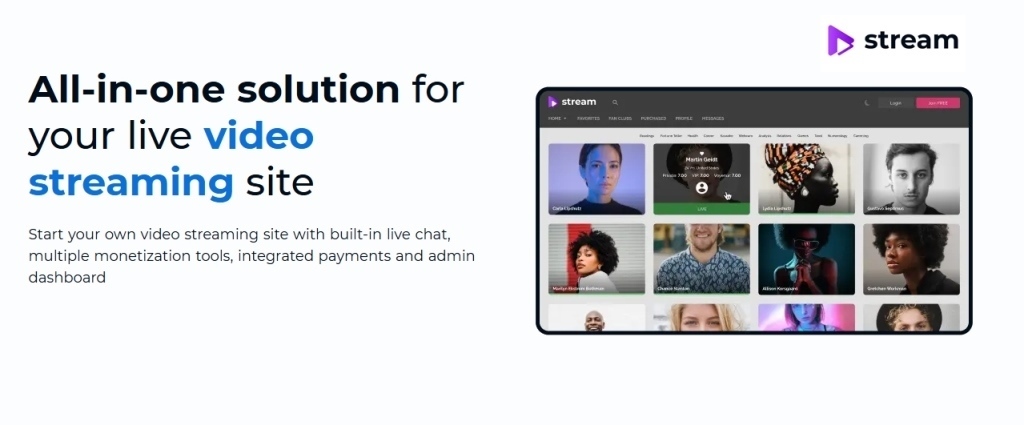
At some point, VOD stops being “content delivery” and becomes infrastructure. That’s the moment when hosted platforms feel constraining and when custom VOD software starts to make sense. Scrile Stream sits exactly in that gap — not as a SaaS product you sign up for, but as a development service that builds a video system around your business logic.
Scrile Stream is not something you log into. It’s something that gets built for you, based on how you plan to distribute, protect, and monetize video over the long term.
What “Custom VOD Software” Means in Practice
Custom VOD software is not about reinventing streaming from scratch. It’s about deciding how video fits into your product instead of bending your product around someone else’s platform.
With Scrile Stream, architecture is designed around your use case. That includes how content is uploaded, processed, stored, delivered, and accessed. You decide where video lives in the user journey, how access is granted or revoked, and how monetization logic connects to playback.
Ownership is the key difference. You control the backend, the data, and the rules — not just the surface branding.
What Scrile Stream Enables
Scrile Stream focuses on building VOD systems that scale without locking you into platform rules. In practice, that includes:
- Custom VOD architecture
Video pipelines built around your traffic patterns, library size, and growth expectations, rather than fixed SaaS limits. - Tailored monetization logic
Support for subscriptions, pay-per-view, bundles, access windows, and hybrid models that reflect how your business actually earns revenue. - Copyrighted content protection
Content-level access rules, geo-restrictions, and secure delivery designed for licensed or sensitive video libraries. - Scalable VOD streaming infrastructure
Architecture that supports growing libraries and repeat viewing without turning success into a bandwidth or margin problem. - Full brand and UX control
Viewer experience designed around your product, not a reusable template, allowing complete control over flows, design, and interaction.
Scrile Stream is built for teams that treat video on demand as a core asset rather than a feature. It suits media businesses, niche platforms, educators, and content owners who need reliability, flexibility, and long-term control.
Instead of adapting to pricing tiers, feature limits, or roadmap decisions made elsewhere, you own the system from day one. That ownership becomes the foundation for sustainable growth, predictable monetization, and a VOD product that evolves alongside the business rather than holding it back.
Conclusion
VOD software becomes infrastructure once video drives revenue, retention, or licensing obligations. At that point, the question shifts from features to control. Hosted platforms work well when requirements are simple and change slowly. They break down when monetization logic evolves, content libraries expand, or compliance and branding become non-negotiable.
Long-term success in video on demand depends on ownership and flexibility. Businesses that control their architecture can adapt pricing models, protect content properly, and design viewer experiences that support growth instead of limiting it.
If video is moving toward the center of your product or business model, it’s worth taking a closer look at a custom approach. Reach out to the Scrile Stream team to discuss your use case, review technical requirements, and understand what building a tailored VOD platform would involve.
That conversation is often the first step toward infrastructure that grows with you instead of holding you back.
FAQ
What is a VOD system?
A VOD system is the technical foundation that allows viewers to watch video content whenever they choose, rather than at a scheduled broadcast time. In practice, it includes content storage, encoding, playback, access control, and monetization rules. For businesses, a VOD system goes beyond hosting files. It manages who can watch which videos, under what conditions, and how revenue is generated. That can include subscriptions, rentals, bundles, or time-limited access. As libraries grow, the system also needs analytics, security controls, and scalable delivery so content keeps performing long after it’s published.
What is the best VOD service?
There is no single best VOD service for every use case. Consumer services like Netflix, Amazon Prime Video, or Hulu are useful reference points because they show what viewers expect from a polished experience. For businesses, the criteria are different. The best VOD software depends on goals such as monetization model, audience size, compliance needs, and desired level of control. Hosted platforms can work well for quick launches and simple subscriptions. Custom or enterprise-focused solutions make more sense when video becomes a core product and flexibility, ownership, and long-term scalability matter.
Does on-demand still exist?
On-demand not only exists, it has become the default viewing behavior for most audiences. What has changed is how it’s packaged and sold. Modern on-demand experiences often combine subscription access with libraries that are continuously updated, rather than one-time purchases. Viewers expect instant access across devices, consistent playback quality, and the ability to return to content on their own schedule. For businesses, this means VOD streaming systems must support recurring engagement, retention tracking, and evolving access rules. On-demand today is less about isolated videos and more about building structured, ongoing content ecosystems that audiences revisit regularly.